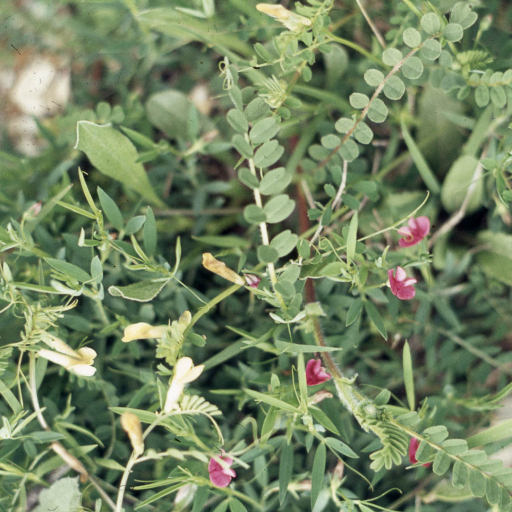
Plant Overview
True to its name, the Inconspicuous Pea (Lathyrus inconspicuus) is a master of blending in. While its flamboyant cousin, the Sweet Pea, steals the garden spotlight with massive blooms and heavy scents, this modest annual prefers to hide among the grasses of meadows and hillsides. It is a delicate traveler, using thin, wiry stems to weave through the landscape unnoticed.
🔍 How to Identify
- 🌸 Petite Blooms: The flowers are remarkably small, usually appearing singly. They range in color from a soft, pale lilac to a dusty pink, often featuring fine veins if you look closely enough.
- 🌿 Narrow Foliage: Unlike broader pea leaves, these leaflets are long, thin, and grass-like (linear), typically appearing in just one pair.
- 🧬 Simple Tendrils: At the tip of the leaf, you will find a short, unbranched tendril that the plant uses to hook onto surrounding stems for support.
🏡 In Your Garden
- ☀️ Sun-Loving Pioneer: This plant thrives in open, sunny spots with well-drained soil. It is often found in "disturbed" ground, meaning it’s one of the first to pop up after soil has been moved or cleared.
- 🦋 Pollinator Support: While it doesn't offer a massive floral display, it serves as a vital niche nectar source for small solitary bees and specific butterfly species that other larger flowers might overlook.
⚠️ Safety & Toxicity
- 🚫 Non-Edible: Do not mistake this for a garden pea. Like many members of the Lathyrus family, it contains amino acids known as lathyrogens.
- 🐾 Pet & Livestock Warning: If ingested in large quantities over time, it can cause "lathyrism," a serious neurological condition. It is best kept away from curious pets and grazing livestock.
✨ Fun Fact
The legendary botanist Carl Linnaeus officially named this species in 1753. He chose the name inconspicuus because the flowers are so tiny and hidden that they are frequently missed by hikers—even when they are standing right on top of them!

Detailed Care Instructions
To grow Lathyrus inconspicuus, also known as the rare Aspalathus peeping-o'-day, you can follow these steps:
- Obtaining seeds: Look for a reputable seed supplier or native plant nursery that specializes in rare or native plants. As Lathyrus inconspicuus is a rare and endangered species, it may be challenging to find seeds, and it is essential to ensure they are ethically sourced.
- Soil preparation: Lathyrus inconspicuus prefers well-draining sandy soils. If your soil is heavy clay, consider amending it with sand or coarse gravel to improve drainage. Additionally, it is good to check the preferred pH range of the plant and adjust your soil's pH accordingly, usually from slightly acidic to slightly alkaline.
- Site selection: Choose a sunny spot in your garden for Lathyrus inconspicuus. Ensure that there is enough space for the plant to grow without competition from other plants. As an inconspicuous plant, it might also benefit from some protection against strong winds or excessive sunlight.
- Planting: Sow Lathyrus inconspicuus seeds directly into the prepared soil. Plant the seeds at a depth of about 1/2 inch (1.25 cm) and space them apart according to the seed packet's instructions. Water gently after planting.
- Watering: Lathyrus inconspicuus prefers moderate watering. Ensure the soil remains moist but not waterlogged. Monitor the moisture levels regularly and adjust your watering accordingly, especially during dry periods. Avoid overwatering, as it may lead to root rot.
- Mulching: Apply a layer of organic mulch around the base of the plant to help retain moisture, suppress weed growth, and protect the roots during extreme temperatures.
- Maintenance: Regularly remove any weeds that may compete with the Lathyrus inconspicuus plant for nutrients and water. Consider providing support, such as a trellis or stakes, as the plant grows.
- Pests and diseases: Monitor the plant for any signs of pests or diseases. Common issues with legume plants include aphids, spider mites, or fungal diseases. If any problems arise, consult with a local plant expert for guidance on appropriate treatments.
- Ethical considerations: As Lathyrus inconspicuus is a rare and endangered species, it is important to respect nature conservation efforts and avoid harming wild populations. If you are propagating from collected seeds, it is recommended to replace them with alternative sources or to consult with an environmental organization to ensure ethical practices.
Remember that this plant requires careful attention and specific conditions due to its rarity. Researching local habitat requirements or talking to experts knowledgeable about Lathyrus inconspicuus can provide you with more specific guidance.
To water this particular plant, you should start by using a watering can or hose that has a gentle spray nozzle. Water the soil around the base of the plant rather than the leaves to prevent water droplets from sitting on the foliage, which can lead to disease. Allow the soil to dry out slightly between watering, but not to the point of wilting. Ensure that the plant is receiving adequate drainage and not sitting in pooling water. Water in the early morning or late evening to reduce water evaporation. Follow these watering guidelines consistently to maintain the health of the plant.
To fertilize this plant, use a balanced fertilizer with equal amounts of nitrogen, phosphorus, and potassium. Apply the fertilizer at the beginning of the growing season and again in mid-summer. Be sure to mix the fertilizer with water before applying and follow the recommended dosage on the package. Avoid over-fertilizing, as it can damage the plant.
In order to choose the appropriate soil for the Lathyrus Inconspicuus plant, it is important to consider its natural habitat and growing conditions. This plant is typically found in forests, meadows, and other natural habitats with well-draining soil that is rich in organic matter. Therefore, it is best to use a soil mixture that is composed of a combination of loam, sand, and organic matter such as compost or leaf mold.
Loam soil is ideal for this plant as it provides good drainage while also retaining moisture and nutrients. Sand is also important to ensure that the soil is well-draining and does not become waterlogged, which can lead to root rot and other fungal diseases. Organic matter such as compost or leaf mold should be added to the soil mixture to provide essential nutrients and improve soil structure.
It is important to avoid using soils that are heavy in clay as they tend to retain too much moisture and can be difficult for the plant to establish its roots. Additionally, soils that are too rich in nutrients can lead to excessive vegetative growth and reduce the overall health and vigor of the plant.
To propagate this plant, you can collect the seeds once they have ripened. Choose pods that are mature and slightly dried out but have not yet burst open. Remove the seeds from the pods and place them in a dry and cool location to dry out fully.
Once the seeds have dried out, you can plant them in soil that has been loosened and fertilized. Water the soil well before planting the seeds, then sow them at a depth of approximately 2-3 times the width of the seed.
Keep the soil moist and ensure that the seedlings receive sufficient sunlight. Once the plants have grown to a sufficient size, you can transplant them to their final location.
To propagate this plant through cuttings, select a healthy and strong stem and remove the leaves from the bottom section of the stem. Dip the cut end of the stem in rooting hormone, then plant it in a pot filled with soil that has been loosened and fertilized.
Keep the soil moist and ensure that the cutting receives sufficient sunlight. Once it has developed roots and a new shoot, you can transplant it to its final location.








