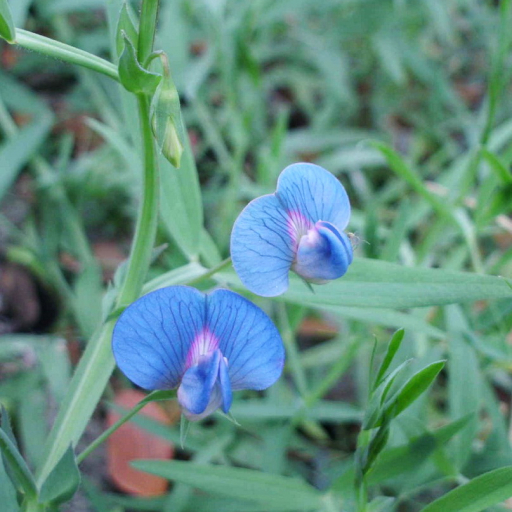
Plant Overview
Commonly known as the Grass Pea or Blue Sweet Pea, this resilient legume is a true survivor of the plant world. While it produces delicate, butterfly-like blooms that could rival any ornamental garden flower, it is most famous—and notorious—as the ultimate "famine food." Throughout history, it has been the crop people turn to when droughts destroy everything else, though it hides a dangerous secret within its seeds.
🔍 How to Identify
- 🌸 The Blooms: Flowers are typically a striking sky-blue or lavender-purple, though white variants exist. They have the classic "pea-flower" shape, resembling tiny butterflies perched on the vine.
- 🌿 Winged Stems: Look closely at the stems; they are unique for being "winged," meaning they have flat, leafy edges running along the sides rather than being perfectly round.
- ➰ Climbing Tendrils: The narrow, grass-like leaves end in sensitive, curling tendrils that the plant uses to hitchhike onto fences or neighboring plants for support.
🏡 In Your Garden
- 🌱 Soil Superpowers: This plant is a nitrogen-fixer, meaning it actually improves the health of your soil by "grabbing" nitrogen from the air. It thrives in heavy clay and poor soils where other plants might struggle to survive.
- ☀️ Drought Resilience: It is incredibly tough. If you live in a dry climate or are a forgetful waterer, the Grass Pea is ideal, as it is evolved to withstand extreme heat and prolonged dry spells.
⚠️ Safety & Toxicity
- 🚫 Neurotoxin Warning: The seeds contain a neurotoxin called ODAP. While occasionally eaten in parts of the world, consuming them as a primary food source for long periods (usually during famines) causes Lathyrism, a condition leading to permanent paralysis of the lower limbs.
- 🐾 Pets & Livestock: It is considered toxic to horses and cattle if grazed in large quantities. Ensure it is planted in decorative areas away from curious pets who might be tempted by the pea-like pods.
✨ Fun Fact
- 🏛️ Despite its "famine food" reputation, the Grass Pea is considered a gourmet delicacy in parts of Italy (known as Cicerchia) and Spain. Chefs prepare it by soaking it for 24–48 hours to leach out the toxins, making it safe for a delicious, one-off culinary experience!

Detailed Care Instructions
| Lighting | Full Sun |
To grow Lathyrus sativus, also known as grass pea or chickling pea, you can follow these steps:
- Climate and Soil Requirements: Lathyrus sativus thrives in warm to temperate climates. It prefers well-drained, sandy loam soil with a pH level of 6.0-7.0.
- Seed Selection: Purchase high-quality Lathyrus sativus seeds from a reputable seed supplier or a local nursery. Make sure the seeds are fresh and disease-free.
- Preparing the Soil: Choose a suitable location with full sun exposure. Remove any weeds or debris from the area. Loosen the soil using a garden fork or tiller to improve aeration and drainage.
- Planting: Sow the Lathyrus sativus seeds directly into the prepared soil. Make sure the soil is moist but not waterlogged. Plant the seeds about 1 inch deep and space them at least 4 inches apart.
- Watering: Keep the soil consistently moist during the germination and early growth stages of the plant. Water deeply, but avoid overwatering to prevent rotting.
- Support: Lathyrus sativus is a climbing plant, so it requires support to grow vertically. Install trellises, stakes, or a fence for the plants to climb on. This will help keep the vines off the ground and allow better airflow.
- Fertilization: Apply a balanced fertilizer, such as a 10-10-10 blend, according to the package instructions. Avoid over-fertilizing, as it can lead to excessive foliage growth at the expense of flower and pod production.
- Pests and Diseases: Monitor the plants regularly for any signs of pests or diseases such as aphids, slugs, or powdery mildew. If any problems arise, take prompt action to control them using organic insecticidal sprays or other appropriate measures.
- Harvesting: Lathyrus sativus typically takes around 90-120 days to mature. Harvest the pods when they are fully grown, green, and plump. The flowers can also be harvested for their decorative value.
- Storage: Store the harvested grass pea pods in a cool, dry place to prolong their shelf life. Avoid storing them in damp or humid conditions, as this can lead to mold or rot.
Remember that Lathyrus sativus contains a neurotoxin called ODAP, so it is essential to cook the seeds before consumption to neutralize the toxin. Always follow safe cooking practices and consume grass pea in moderation.

Place in a window with dappled sun or a spot in the middle of a room. Or directly in a window facing west or east.

To water this plant, first observe the soil to see if it is dry. If the soil is dry to the touch, it needs to be watered. Use a watering can or hose with a gentle flow to avoid damaging the plant. Water the soil slowly and evenly, making sure the water penetrates the root system. Avoid getting water on the leaves and stems, as this can cause fungal diseases. Water the plant regularly, but allow the soil to dry out slightly in between waterings. Be careful not to overwater the plant, as this can cause root rot.
To fertilize the Lathyrus Sativus plant, follow these instructions:
- Choose a balanced, water-soluble fertilizer specifically formulated for flowering plants.
- Dilute the fertilizer according to the package instructions. Typically, a dilution rate of 1 tablespoon of fertilizer mixed into 1 gallon of water is recommended.
- Before applying the fertilizer, ensure that the soil is evenly moist but not waterlogged.
- Use a watering can or sprayer to apply the diluted fertilizer directly to the soil around the base of the plant.
- Avoid applying the fertilizer directly on the leaves or flowers to prevent burning or damage.
- Apply the fertilizer every two to four weeks during the growing season, which is typically spring to early fall.
- Water the plant thoroughly after fertilizing to help distribute the nutrients into the soil.
- Monitor the plant's growth and adjust the fertilization frequency as needed to prevent over-fertilization, which can lead to nutrient imbalances or other issues.
- Finally, read and follow any specific fertilizer recommendations or instructions provided by the plant nursery or supplier for optimal results.
Remember, proper fertilization is an essential part of promoting healthy growth and blooming for your Lathyrus Sativus plant.
Lathyrus Sativus plant prefers well-draining soil that is rich in nutrients. The soil should have a pH value between 6.0 and 7.5. It is essential to use soil that has good moisture retention abilities, as the plant does not tolerate drought conditions. Adding organic materials such as compost or well-rotted manure can help improve soil structure and fertility. It is also recommended to avoid using heavy clay soils, as they can impede root growth and lead to waterlogging. Overall, the ideal soil for Lathyrus Sativus should be deep, fertile, and provide good drainage and aeration to support the growth and development of the plant.
One method of propagating this plant involves collecting mature seeds from the plant. The seeds should be allowed to dry naturally before storage. Once dried, they can be stored in a cool, dry place until ready for planting. When it is time to plant, the seeds should be sown directly into the soil at a depth of about 1 inch. It is important to provide the seeds with plenty of sun and water to encourage germination and growth.
Alternatively, this plant can be propagated through stem cuttings. Cuttings should be taken from healthy plants, using a sharp and sterile knife. Cuttings should be about 4 inches in length and should include at least two leaves. Remove the lower leaves from the cutting and dip the cut end in rooting hormone. Place the cutting in a pot filled with a mixture of potting soil and sand and water thoroughly. Cover the pot with a plastic bag to maintain humidity and place it in a warm, brightly lit area. After a few weeks, roots should begin to form and the new plant can be transplanted into a larger pot or directly into the ground.








