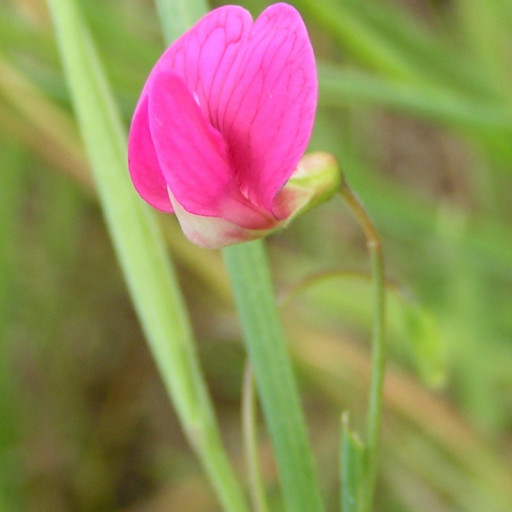
Plant Overview
Often hailed as the "Queen of Annuals," the Lathyrus genus brings a touch of romantic Victorian charm to any landscape. Whether it is the intoxicatingly fragrant Sweet Pea or the hardy, unscented Everlasting Pea, these climbers are famous for their delicate, butterfly-like blooms and lush scrambling vines. In the traditional language of flowers, they symbolize "blissful pleasure" and are a staple of the classic English cottage garden.
🔍 How to Identify
- 🌸 Butterfly Blooms: The flowers are "papilionaceous," meaning they look like tiny butterflies with a large top petal (the standard), two side petals (wings), and a lower keel.
- 🌱 Winged Stems: Many species feature unique, flattened "winged" stems that look like thin green ribbons running along the vine.
- 🪝 Tenacious Tendrils: At the ends of their leaf stalks, you’ll find thin, wiry tendrils that lash out and curl around anything they touch, helping the plant climb toward the sun.
🏡 In Your Garden
- 🧗 The Taproot Secret: Lathyrus plants develop deep, sensitive taproots early on. They famously "hate" being transplanted, so it is best to sow seeds directly into the ground or use biodegradable peat pots to avoid disturbing the roots.
- ❄️ Cool Feet, Warm Head: These plants are most at home when their roots are kept cool and moist with mulch, while their vines are allowed to climb into full, bright sunlight. Regular "deadheading" (snipping off faded flowers) is essential to keep the plant from focusing on seed production and instead producing more blooms.
⚠️ Safety & Toxicity
- 🚫 Not for Eating: Unlike the common garden pea (Pisum sativum), members of the Lathyrus genus are toxic.
- 🐾 Pet & Human Risk: The seeds contain a neurotoxin. If ingested in large quantities by humans, pets, or livestock, they can cause "Lathyrism," a serious condition resulting in muscle weakness or paralysis. Always keep these decorative peas away from the vegetable patch to avoid confusion.
✨ Fun Fact
🧬 A Genetic Pioneer: While Gregor Mendel is most famous for his work with garden peas, the Lathyrus odoratus (Sweet Pea) was instrumental in the early 1900s for discovering "genetic linkage"—the idea that certain traits are inherited together because their genes sit close to each other on the same chromosome!

Detailed Care Instructions

Place in a bright room that is sun drenched almost all day. Or directly in a south-facing window.

To water this plant, first check the soil moisture level by sticking your finger into the soil about an inch deep. If it feels dry, it is time to water. Use a watering can or hose with a gentle stream to water the soil around the base of the plant until the soil is thoroughly moistened. Avoid getting water on the leaves to prevent potential disease. Watering should be done when the soil feels dry, but avoid overwatering as this can lead to root rot. The plant may require more frequent watering during hot, dry weather.
When growing Lathyrus plants, it is important to select the appropriate type of soil. Ideal soil for this plant is loose and well-draining, with a neutral pH level. The soil should also be rich in organic matter, such as compost or leaf mold, as this will provide the necessary nutrients for healthy growth. Lathyrus plants thrive in soil that is consistently moist, but not waterlogged. To achieve optimal soil conditions, it may be necessary to amend the existing soil with compost or other organic matter. It is also recommended to maintain good soil drainage, as excess water can lead to root rot and other problems. Overall, selecting the right soil is key to growing healthy and vibrant Lathyrus plants.







