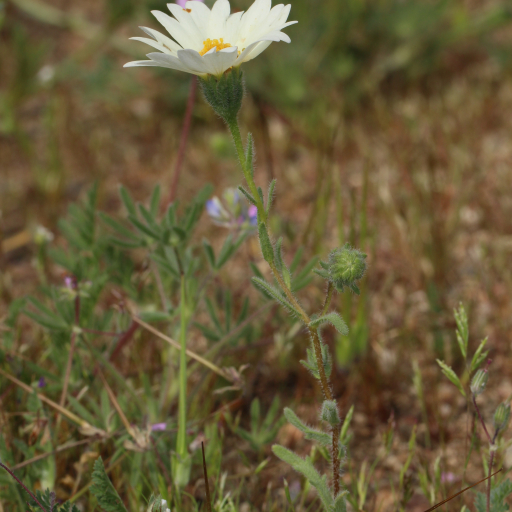
Plant Overview
Often called the White Tidy Tips, this charming wildflower looks like it stepped straight out of a children's coloring book. Native to the rugged landscapes of western North America, it brings a sense of "tidiness" to wild meadows with its perfectly manicured white-edged petals. It is a resilient survivor that thrives in sandy, sun-drenched spots where more delicate flowers might wither.
🔍 How to Identify
- 🌼 The Flowers: Classic daisy-like blooms featuring bright yellow centers surrounded by white petals (ray florets). The petals have a distinct "notched" edge that adds to their neat appearance.
- 🌿 Sticky Stems: If you touch the stem, you’ll notice it feels slightly tacky. It is covered in tiny, dark glandular hairs that give the plant its scientific name, glandulosa.
- 🍃 Foliage: The leaves are narrow, grayish-green, and slightly hairy, often appearing more sparse toward the top of the plant to let the flowers take center stage.
🏡 In Your Garden
- ☀️ Sun & Drainage: These plants are experts at handling heat and prefer "lean" or sandy soil that drains quickly. They are ideal for rock gardens or xeriscaping because they dislike "wet feet" and heavy clay.
- 🦋 Pollinator Buffet: Because they bloom vibrantly in the spring and early summer, they act as a vital nectar station for native bees and butterflies when other resources might be scarce.
- 🌱 Self-Sowing: While they are annuals, they are excellent at dropping seeds. If you leave the dried flower heads alone, they will likely "tidy up" your garden again the following spring.
⚠️ Safety & Toxicity
- ✅ Generally Safe: White Tidy Tips are not known to be toxic to humans, cats, or dogs.
- 🧤 Potential Irritant: Some individuals with sensitive skin may experience mild irritation if they handle the sticky stems extensively, a common trait among members of the Aster (daisy) family.
✨ Fun Fact
The name "Tidy Tips" comes from the remarkably uniform white coloring on the tips of the petals, which makes the flower look as if it has been carefully dipped in white paint or professionally groomed!

Detailed Care Instructions
To grow Layia glandulosa, also known as tidy-tips, follow these steps:
- Purchase seeds: Obtain seeds from a reputable nursery or seed supplier. Layia glandulosa seeds are usually available in packets or online.
- Choose a suitable location: Select a well-drained area that receives full sun. Layia glandulosa prefers sandy or loamy soil but can thrive in a variety of soil types.
- Prepare the soil: Clear the area of weeds, rocks, and debris. Loosen the soil with a garden fork or tiller to a depth of about 6 inches. Add organic matter like compost or well-rotted manure to improve soil fertility and drainage.
- Plant the seeds: Sprinkle the Layia glandulosa seeds directly on top of the prepared soil, ensuring they are evenly distributed. Gently press them into the soil, but do not cover them with soil, as they need exposure to light for germination.
- Water the seeds: After planting, water the seeds gently to moisten the soil. It is important to keep the soil consistently moist, but not waterlogged, until the seeds germinate. Mist the soil regularly if necessary.
- Germination and growth: Layia glandulosa seeds usually germinate within 10-15 days. Once the seedlings emerge, thin them out if they are overcrowded, leaving approximately 6-8 inches between plants. This will allow them space to grow and spread.
- Watering and maintenance: Water the plants regularly, ensuring the soil remains consistently moist but not overly saturated. Avoid overhead watering as this may cause diseases. Mulching around the plants can help retain soil moisture and suppress weed growth.
- Fertilization: Layia glandulosa does not typically require fertilizer. If the soil is poor in nutrients, you can apply a balanced, slow-release fertilizer during the early stages of growth.
- Pruning: Although not essential, deadheading spent flowers can encourage further blooms. Additionally, removing any dried or damaged foliage can help maintain the plant's appearance.
- Enjoy the flowers: Layia glandulosa produces beautiful daisy-like flowers with yellow tips and white petals. Enjoy their vibrant colors and the visits of pollinators like bees and butterflies to your garden.
By following these steps, you can successfully grow Layia glandulosa and enjoy their delightful blooms.

Place in a bright room that is sun drenched almost all day. Or directly in a south-facing window.

Layia Glandulosa is a plant that requires regular watering, especially during the hot and dry season. It is important to ensure that the soil stays moist but not waterlogged. Overwatering can lead to root rot and other diseases.
To water Layia Glandulosa, it is recommended to use a watering can or a hose with a low-pressure nozzle. Avoid splashing water on the leaves, as this can lead to fungal diseases. Water the plant deeply, making sure the water reaches the root zone.
It is best to water the plant early in the morning or late in the evening when the temperatures are cooler. This will help prevent evaporation and ensure that the plant has enough time to absorb the water.
It is important to monitor the moisture level of the soil regularly and adjust the watering schedule accordingly. If the soil feels dry to the touch, it is time to water the plant. If it feels wet or waterlogged, allow the soil to dry out before watering again.
In general, Layia Glandulosa prefers well-draining soil that is rich in organic matter. To improve the soil's moisture-retaining capacity, you can add compost or other organic matter to the planting area.
Lastly, it is important to remember that watering is just one aspect of plant care. It is also important to provide the plant with adequate sunlight, nutrients, and protection from pests and diseases to ensure its overall health and longevity.
To fertilize this plant, apply a balanced fertilizer with equal amounts of nitrogen, phosphorus, and potassium. Use a slow-release fertilizer following label instructions for application rates. Fertilize the plant every four to six weeks during the growing season, from spring through early fall. Avoid over-fertilizing, as this can lead to excessive foliage growth and reduced flower production. Water the plant thoroughly after fertilization to prevent fertilizer burn.
Layia glandulosa plant prefers well-draining soil that is rich in organic matter. The soil should be slightly acidic, with a pH range of 6.0 to 7.5. This plant can tolerate sandy or loamy soil types but avoid soils that are heavy clay or compacted. Additionally, the soil should be well-aerated to promote healthy root growth and prevent waterlogging. It is recommended to add compost or aged manure to the soil before planting to improve soil fertility and texture. This plant is native to California and tolerates drought conditions, but regular watering is necessary during the establishment phase. Once established, the plant can survive with minimal water and nutrients.
To propagate this plant, you can collect the seeds from the dried flower heads. It is best to collect the seeds when they are fully mature but before they begin to drop from the plant. Sow the seeds in well-draining soil in a warm, sunny location with regular watering until germination. You can also take stem cuttings from healthy plants in the spring or summer. Cut a section of stem that is about four inches long, remove the leaves from the bottom half of the stem, and dip the cut end into a rooting hormone before planting it in moist soil. Keep the cutting in a warm, humid location out of direct sunlight until it develops roots.








