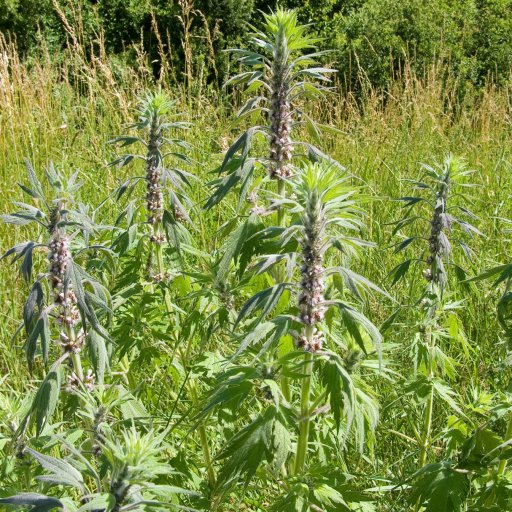
Plant Overview
Often called the Five-lobed Motherwort or simply "Lion’s Tail," this resilient perennial is a staple of traditional herbalism. Its name, Leonurus, translates to "Lion's Tail," referring to the shaggy, upright appearance of its flowering spikes. Historically, it was a "mother’s herb," planted near cottage doors and used in folk medicine to soothe both the physical heart and an anxious spirit.
🔍 How to Identify
- 🍃 Star-Shaped Leaves: The most defining feature is the foliage; the lower leaves are deeply divided into five distinct, jagged lobes, creating a palm-like or star-like shape.
- 🟦 Architectural Stems: As a member of the mint family, it boasts a very rigid, square-shaped stem that can reach heights of up to five feet.
- 🌸 Fuzzy Flower Whorls: Small, hairy, pale pink or lilac flowers grow in dense circular clusters (whorls) nestled where the leaves meet the stem.
🏡 In Your Garden
- 🐝 Pollinator Paradise: If you want to support local biodiversity, this plant is a nectar powerhouse. It is a magnet for bumblebees and honeybees, who will frequent the tiered flowers all summer long.
- 🌱 Opportunistic Growth: It is incredibly hardy and thrives in "waste ground" or sun-drenched, well-drained soil. Because it is a prolific self-seeder, it can become "weedy" if not managed; gardeners often prune the spikes before they drop seeds to keep it in check.
⚠️ Safety & Toxicity
- 🤰 Health Warning: While used medicinally by professionals, it is known to be a uterine stimulant. It must be strictly avoided by pregnant women, as it can potentially cause complications.
- 🐾 Pet & Skin Care: It is generally not considered highly toxic to pets, but the hairy leaves and stems can cause mild skin irritation or contact dermatitis in sensitive individuals. Always wear gloves when pruning a large patch.
✨ Fun Fact
The ancient Greeks were among the first to document the use of Motherwort, giving it to anxious competitors before athletic games to "calm the pulse" without dulling the mind.

Detailed Care Instructions
To grow Leonurus Quinquelobatus, also known as Chinese motherwort or yi mu cao, follow these steps:
- Gather seeds or young plants: Obtain Leonurus Quinquelobatus seeds from a reputable seed supplier, or purchase young plants from a nursery or garden center.
- Choose a suitable location: Ensure that the planting area receives full to partial sunlight. The soil should be rich, well-draining, and slightly acidic with a pH level between 6.0 and 7.5.
- Prepare the soil: Remove any weeds or debris from the planting area. Loosen the soil using a garden fork or tiller, and amend it with organic matter such as compost or well-rotted manure to improve fertility and drainage.
- Sow seeds or transplant young plants: If starting from seeds, sow them directly into the prepared soil in early spring after the last frost. Alternatively, sow the seeds indoors during late winter and transplant the seedlings outdoors after the danger of frost has passed. If using young plants, carefully transplant them into the prepared soil, spacing them about 12-18 inches apart.
- Water regularly: Keep the soil consistently moist but not waterlogged. Water Leonurus Quinquelobatus regularly, especially during dry periods. Avoid over-watering, as this can cause root rot.
- Mulch: Apply a layer of organic mulch, such as compost or straw, around the base of the plants to help retain moisture, suppress weed growth, and provide nutrients as it breaks down.
- Prune and maintain: Trim back any damaged or spent flowers to encourage continuous blooming. It is beneficial to prune the plant's stems in early spring to promote bushy growth and maintain its shape.
- Monitor pests and diseases: Check for common garden pests like aphids or spider mites, and treat them with appropriate organic pest control methods if necessary. Monitor for signs of diseases like powdery mildew or rust, and take appropriate action if detected.
- Harvest: Harvest the leaves and flowers of Leonurus Quinquelobatus as needed for various medicinal purposes. Cut stems just above a leaf node to promote new growth.
By following these steps, you should be able to successfully grow Leonurus Quinquelobatus, an herbaceous perennial that can provide beauty and potential herbal remedies to your garden.

Place in a bright room that is sun drenched almost all day. Or directly in a south-facing window.

Leonurus Quinquelobatus plants prefer regular watering, especially during the warmer months. When watering, it is important to avoid getting too much water on the foliage as this can lead to disease and other problems. Instead, aim to water at the base of the plant, making sure the soil is thoroughly moist but not waterlogged. Depending on your climate and the type of soil your plant is in, you may need to water daily or only once or twice a week. As with any plant, it is important to monitor the soil moisture level and adjust your watering schedule accordingly. In addition to standard watering, these plants will benefit from occasional fertilization and protection from pests and diseases.
To fertilize this plant, it is recommended to use a balanced, granular fertilizer with an NPK ratio of 10-10-10, applied at a rate of 1 tablespoon per square foot of soil. Fertilizer should be applied in early spring, just before new growth appears, and again in mid-summer. Avoid overfertilization, as this can cause the plant to become leggy and weak. Water the plant well after applying fertilizer to help it absorb the nutrients.
The best type of soil to use for the plant is well-draining soil that is moderate in fertility. The soil pH should be slightly acidic to neutral, between 6.0 and 7.0, to promote healthy growth. It is important to ensure that the soil is consistently moist but not overly wet, as the plant can be susceptible to root rot in excessively wet conditions. Additionally, the soil should be rich in organic matter to provide essential nutrients and support healthy root development. A mixture of organic compost, peat moss, and sand can be used to create the ideal growing medium for this plant.
To propagate this particular plant, you must first prepare a handful of stem cuttings. These cuttings should be taken from healthy, mature plants during the growing season. Choose stems that are both healthy and free from disease and cut them just above a node.
After the stems are prepared, you will need to dip them in rooting hormone. This will encourage the stems to develop new roots. Once the stems have been dipped, you can then plant them in a well-draining potting mix.
Water the newly-planted stems thoroughly and place them in a location with bright, indirect light. Be sure to keep the soil moist but not waterlogged.
During the rooting process, it is important to keep an eye out for signs of fungal or bacterial growth. This can be controlled by watering with a fungicide or bactericide as needed.
With proper care, the cuttings should develop new roots within a few weeks. Once the roots have formed, you can transplant the new plants into larger containers or into the ground.








