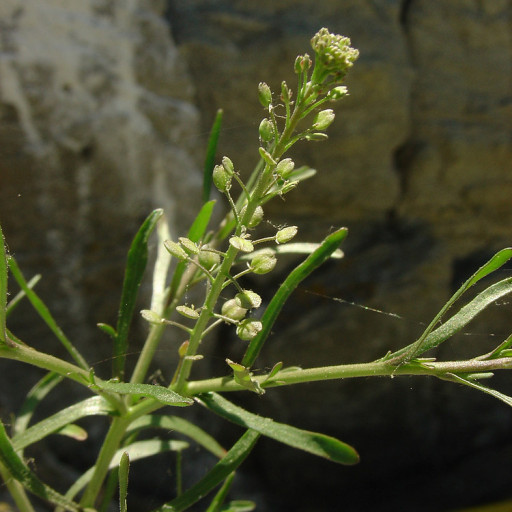
Plant Overview
Known by the unglamorous nickname "Stinking Pepperweed," Lepidium ruderale is a resilient, minimalist member of the mustard family. While it might not win any beauty contests, it is a fascinating "urban pioneer" that thrives in the harsh environments where other plants give up. It earns its name from the sharp, pungent aroma it releases when crushed—a scent that some find spicy and others find downright unpleasant.
🔍 How to Identify
- 🌿 The Flowers: These are unique and easy to miss; they are tiny and greenish, and unlike most flowers, they usually lack petals entirely, consisting only of stamens and sepals.
- 🍃 The Foliage: The plant features a "split personality" in its leaves. The bottom leaves are deeply lobed and feathery, while the upper leaves are narrow, smooth-edged, and "narrowleaf" in appearance.
- 🎾 The Seed Pods: It produces hundreds of small, flat, heart-shaped or oval seed pods (called silicles) that ring the upper stems like tiny green sequins.
🏡 In Your Garden
- 🚜 The Rubbish Lover: The name "ruderale" refers to its love for "rubbish" or disturbed ground. If you find it in your garden, it’s likely colonizing a spot where the soil is highly compacted, gravelly, or poor in nutrients.
- 🧂 Salt Warrior: This plant is exceptionally tolerant of salt. You will often see it thriving along the edges of highways and sidewalks where winter road salt has leached into the soil, killing off grass and more sensitive flowers.
- 🌱 Growth Habit: It grows as a wiry, branching upright herb. Because it has a tough taproot, it can be difficult to pull out once it has anchored itself into dry, hard-packed earth.
⚠️ Safety & Toxicity
- 👃 Status: Generally non-toxic but unpleasant.
- 🐾 Details: While it belongs to the same family as broccoli and watercress, it is not typically grown for food due to its "stinking" odor and bitter taste. It is safe to touch, but the oils may cause mild irritation to very sensitive skin or curious pets who try to sniff it.
- 🛑 Warning: Because it thrives on roadsides, wild specimens often absorb heavy metals or pollutants from car exhaust. Never taste or harvest this plant from urban areas or roadsides.
✨ Fun Fact
The species name ruderale comes from the Latin word rudus, which literally means "rubbish" or "broken stones"—a perfect tribute to this plant's ability to turn a gravel pit into a home!

Detailed Care Instructions
| Humidity | High |
| Lighting | Part Sun |
| Difficulty | Easy |
| Hibernation | Cold Period |
To grow a Lepidium ruderale plant, also known as Narrowleaf pepperweed or Wild peppergrass, you can follow these steps:
- Climate and Soil Requirements: Lepidium ruderale is native to semi-arid and arid regions, so it thrives in sunny and dry climates. It can tolerate a variety of soil types but prefers well-draining and alkaline soil.
- Seed Collection: Obtain seeds from a reputable source or collect them yourself from mature plants. Wait until the seeds have turned brown and are dry before collecting.
- Preparing the Planting Area: Clear the planting area of any weeds or grass and loosen the soil using a garden fork or tiller. Remove any large stones or debris and level the soil surface.
- Seed Sowing: Scatter the Lepidium ruderale seeds across the prepared planting area. It is better to sow more seeds to increase the chances of germination as not all of them may sprout.
- Lightly Cover the Seeds: With a garden rake or by hand, lightly cover the seeds with a thin layer of soil or sand, about 1/8 to 1/4 inch deep. Do not bury the seeds too deep as they require light to germinate.
- Watering: Water the seeds gently immediately after sowing to ensure good contact with the soil. Afterward, water the area lightly every two to three days to keep the soil moist until germination occurs.
- Germination Period: Lepidium ruderale seeds usually germinate within two to three weeks, but it can take up to four weeks. Be patient and keep the soil consistently moist during this time.
- Thinning: Once the seedlings reach a height of 2-3 inches, thin them to allow proper spacing. Remove weaker seedlings, leaving the strongest ones spaced about 8-12 inches apart. This will ensure healthy growth and avoid overcrowding.
- Maintenance: Water the plants sparingly once they are established, as Lepidium ruderale is drought-tolerant. Avoid overwatering, as it can lead to root rot. Remove any weeds or unwanted plants that compete for resources.
- Harvesting: Lepidium ruderale plants can be harvested when they begin to flower and before they produce seeds. Harvest the leaves, stems, or flowers as needed, reserving some for reseeding if desired.
Remember to check with your local nursery or agricultural extension office for specific advice or recommendations based on your region's climate and growing conditions.

Place in a dark room with little light, like a dark bedroom or a spot far away from a window or directly in a north-facing window.

To properly water this plant, you will want to allow the top two inches of soil to dry out before watering thoroughly. It is important to not overwater this plant as it is susceptible to root rot. When watering, be sure to avoid getting water on the foliage as this can increase the risk of fungal diseases. It is recommended to use room temperature water and to allow any excess water to drain out of the bottom of the pot. During the winter months, you will want to reduce the frequency of watering as the plant will naturally go into a period of dormancy.
To fertilize this plant, use a balanced fertilizer with equal amounts of nitrogen, phosphorus, and potassium. Apply the fertilizer to the soil around the plant's base, making sure not to get any on the plant itself. Water the plant thoroughly after fertilizing. Avoid using high-nitrogen fertilizers, as this may cause the plant to produce too much foliage and not enough flowers or seeds. Additionally, do not over-fertilize, as this can cause damage to the plant's roots.
Lepidium ruderale is a plant that requires well-draining soil with high nutrient content and a pH ranging from slightly acidic to neutral. It is best to use a soil mix that contains a combination of organic and inorganic materials such as perlite, peat moss, vermiculite, and sand. The soil mix should also have good water retention capacity to ensure that the plants do not dry out between watering. It is recommended that the soil is enriched with organic matter such as compost, manure, or worm castings. The soil should also be free from any pathogens or pests that may harm the plant. It is important to note that this plant prefers a soil that is low to moderate in fertility, so avoid using soil that is high in nutrients.
To propagate this plant, you should start by collecting seeds from mature plants. Once you have obtained the seeds, you can sow them in a seed tray with moist soil. Cover the tray with clear plastic and place it in a warm, sunny location.
Keep the soil moist and remove the plastic cover once the seeds have germinated. As the seedlings grow, you can transplant them into individual pots or directly into a garden bed.
It is also possible to propagate Lepidium ruderale by taking stem cuttings. Select a healthy stem with several nodes and make a clean cut just below a node. Remove all but the top two leaves from the cutting and dip the cut end into rooting hormone.
Plant the stem cutting into moist soil, cover it with plastic and place it in a warm, sunny location. Keep the soil moist and remove the plastic once the cutting has rooted and begun to grow.








