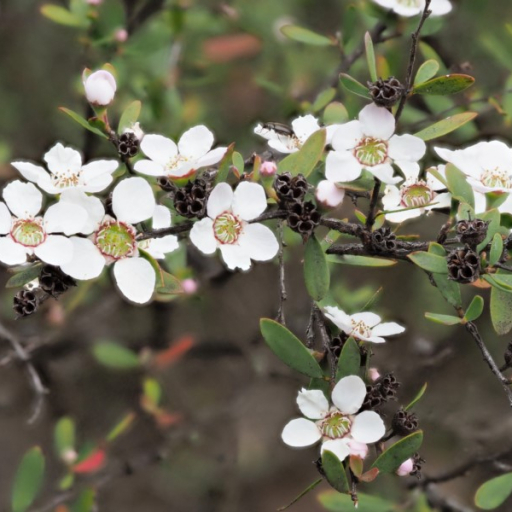
Plant Overview
Known as the Slender Tea Tree, this Australian native is a master of understated elegance. Its name brevipes (Latin for "short foot") refers to the tiny stalks that hold its flowers, giving the shrub a delicate, "sprinkled" appearance when in full bloom. It is beloved by gardeners for its graceful, weeping habit and its ability to thrive where other plants might wither.
🔍 How to Identify
- 🌿 The Foliage: Look for tiny, narrow, needle-like leaves that are a soft grey-green. They are often crowded along the stems, giving the plant a misty, textured look from a distance.
- 🌸 Starry Blooms: In late spring, the branches are smothered in masses of small, five-petaled white flowers. Each flower has a dark, jewel-like center that attracts a variety of tiny pollinators.
- 🪵 Fibrous Bark: As the plant matures, the stems reveal a beautiful, papery or fibrous grey-brown bark that peels slightly, adding visual interest even during the winter months.
🏡 In Your Garden
- 💧 Drought Resilience: Once its root system is established, the Slender Tea Tree is incredibly tough. It has evolved to handle the harsh, dry conditions of the Australian bush, making it a perfect candidate for "xeriscaping" or low-water landscapes.
- 🐝 Pollinator Paradise: This plant is a vital resource for biodiversity. The open, flat shape of the flowers provides an easy landing pad for native bees, butterflies, and hoverflies looking for a nectar snack.
- ✂️ Growth Nuance: While it naturally takes on a soft, weeping shape, it can be pruned into a screen. However, avoid "hard" pruning into the old, thick wood; it prefers a light "haircut" (tip-pruning) right after the flowers fade to stay bushy.
⚠️ Safety & Toxicity
- 🛡️ Safety Status: Generally non-toxic to humans and safe to touch. It is frequently used in public parks and school gardens.
- 🐾 Pets & Kids: The plant is not known to be poisonous. While the leaves contain essential oils that could cause a mild stomach upset if eaten in large quantities by a dog or cat, it is considered much safer than many common ornamental shrubs.
✨ Fun Fact
The common name "Tea Tree" was coined by Captain James Cook. During his voyages, his crew brewed the leaves of various Leptospermum species into a citrusy, spicy tea to help prevent scurvy and provide a refreshing drink in the wild!

Detailed Care Instructions








