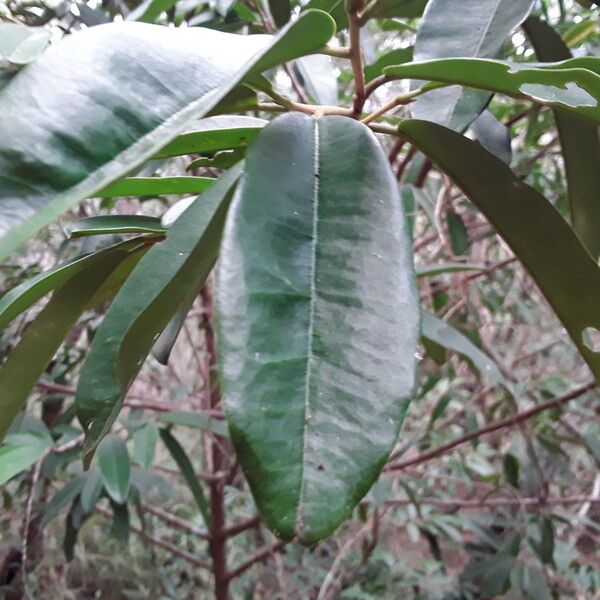
Plant Overview
Meet the Lethedon salicifolia, an elegant botanical rarity hailing from the ancient, mineral-rich forests of New Caledonia. Often referred to as the "Willow-leafed Lethedon," this plant is a true collector’s gem, prized for its slender, sophisticated silhouette. In its native islands, it has evolved to thrive in unique ecosystems, making it a fascinating conversation piece for any serious plant enthusiast.
🔍 How to Identify
- 🍃 Willow-like Foliage: True to its name (salicifolia means willow-leafed), the leaves are remarkably long, narrow, and taper to a fine point, though they are much tougher and more leathery than a true willow.
- 🌼 Subtle Blooms: It produces clusters of small, delicate greenish-white or creamy flowers that emerge tucked away in the leaf axils (the junctions where the leaf meets the stem).
- 🪵 Graceful Habit: It typically grows as a slender, woody shrub or a small tree, featuring smooth, grayish bark that becomes more textured as the plant matures.
🏡 In Your Garden
- 🏝️ Island Humidity: Coming from a tropical archipelago, this plant is a humidity lover. It struggles in dry, air-conditioned environments and thrives best in a conservatory, a humid greenhouse, or a pebble-tray setup.
- 🧪 Mineral Preferences: In the wild, it grows in ultramafic soils—earth that is naturally high in metals like magnesium and iron. While it can adapt to standard high-quality potting mixes, it appreciates a well-draining medium that doesn't stay "soggy" around the roots.
⚠️ Safety & Toxicity
- 🚫 Handle with Care: As a member of the Thymelaeaceae family (relatives of the Daphne), this plant contains compounds that can be irritating.
- 🐾 Pet & Child Safety: The sap may cause mild skin irritation or dermatitis in sensitive individuals. It is considered toxic if ingested, so it should be kept out of reach of curious pets and toddlers to avoid stomach upset.
✨ Fun Fact
New Caledonia is a "biodiversity hotspot," and Lethedon salicifolia is part of a specialized group of plants that have evolved to tolerate heavy metals in the soil—a process scientists call "hyperaccumulation." It is literally built to survive in ground that would be toxic to most other plants!

Detailed Care Instructions
The watering requirements of this plant will depend on several factors such as the size of the plant, its soil type, and the environmental conditions. However, as a general rule, it is important to ensure that the soil remains consistently moist but not waterlogged.
To water the plant, start by checking the soil moisture level by inserting your finger or a moisture meter into the soil. If the soil feels dry to the touch, it's time to water the plant. Water the plant slowly and deeply to ensure that the water reaches all the roots. Avoid watering the leaves or the stem of the plant to prevent moisture buildup, which can lead to fungal growth and other plant diseases.
If the plant is in a container, make sure that the pot has drainage holes to prevent waterlogging. Water the plant until the water starts coming out of the drainage holes, then let the excess water drain out completely.
In general, this plant prefers well-draining soil and slightly acidic to neutral pH levels. Make sure to avoid using water with high salt or fluoride levels, as this can damage the plant's roots and leaves. Allow the soil to dry out slightly between watering to prevent over-watering.
The ideal soil for the plant should be well-draining, with good aeration and moisture retention capacity. It should be rich in organic matter, such as compost or aged manure, to provide essential nutrients for healthy growth. The pH level of the soil should be slightly acidic to neutral, with a range of 6.0 to 7.5. The plant also prefers sandy or loamy soil that is not too heavy or compacted. It is important to avoid using soil that is too clayey or alkaline, as this can cause poor growth and yellowing of leaves. Adding a layer of mulch around the base of the plant can help retain moisture and prevent weeds from growing. During planting, make sure to create a hole that is deep and wide enough to accommodate the root ball without damaging the delicate root system.








