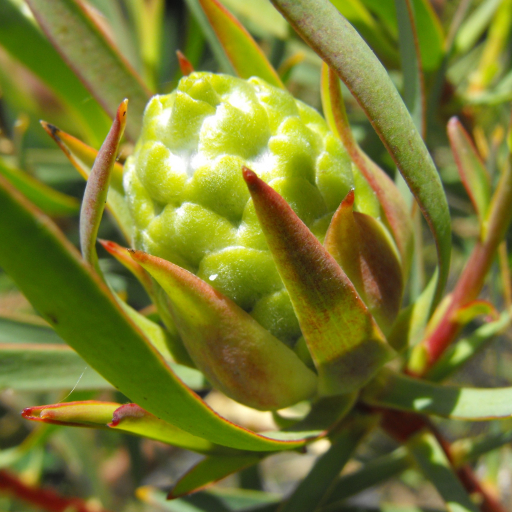
Plant Overview
Known as the Common Stream Conebush, this South African beauty is a standout member of the Protea family. Unlike many of its drought-loving cousins, this shrub thrives where moisture is abundant, often found lining the silver banks of mountain streams in the Western Cape. Its scientific name, salicifolium, literally means "willow-leaved," perfectly describing its graceful, swaying appearance.
🔍 How to Identify
- 🍃 Willow-like Foliage: The leaves are long, slender, and a soft light green, mimicking the look of a weeping willow but with a stiffer, upward reach.
- 🌼 Golden Bracts: During the flowering season (late winter to spring), the leaves at the tips of the branches turn a brilliant, luminous yellow, surrounding the small central flowers.
- 🌲 Dense Growth: It is a large, multi-stemmed shrub that grows into a rounded, fountain-like shape, often reaching heights of 2 to 4 meters.
🏡 In Your Garden
- 💧 The Moisture Exception: While most Proteas demand perfect drainage and little water, the Stream Conebush is a "water-hog." It is the ideal choice for boggy areas, pond edges, or gardens with heavy soil that stays damp.
- ☀️ Light Requirements: To achieve those intense, glowing yellow "flowers" (which are actually modified leaves called bracts), the plant needs a position in full sun.
- ✂️ Pruning Nuance: It responds well to being cut back for floral arrangements, which actually helps the plant stay bushy. However, avoid cutting back into the very old, thick wood, as it lacks the "sleeping buds" needed to sprout new growth from the base.
⚠️ Safety & Toxicity
- ✅ Non-Toxic Status: This plant is generally considered safe and non-toxic for both humans and curious household pets like cats and dogs.
- 🧤 Skin Sensitivity: While not poisonous, the sap can occasionally cause mild skin irritation for people with very sensitive skin. Wearing gloves while pruning is a good practice to avoid any itchiness.
✨ Fun Fact
The Leucadendron genus is "dioecious," meaning there are distinct male and female plants. If you see a Stream Conebush with large, woody, rose-like cones, you are looking at a female; the males produce smaller, yellow flower heads that release clouds of pollen into the wind!

Detailed Care Instructions

Place in a bright room that is sun drenched almost all day. Or directly in a south-facing window.

Some plants require more regular watering than others, which should be done every few days. It's critical to maintain the soil moist all of the time. The water requirements of the same plant placed in pots with varying sizes will differ. Because the water in the smaller pot evaporates faster than the water in the larger pot, it will require more watering. Regardless of pot size, the surface should constantly be maintained moist.








