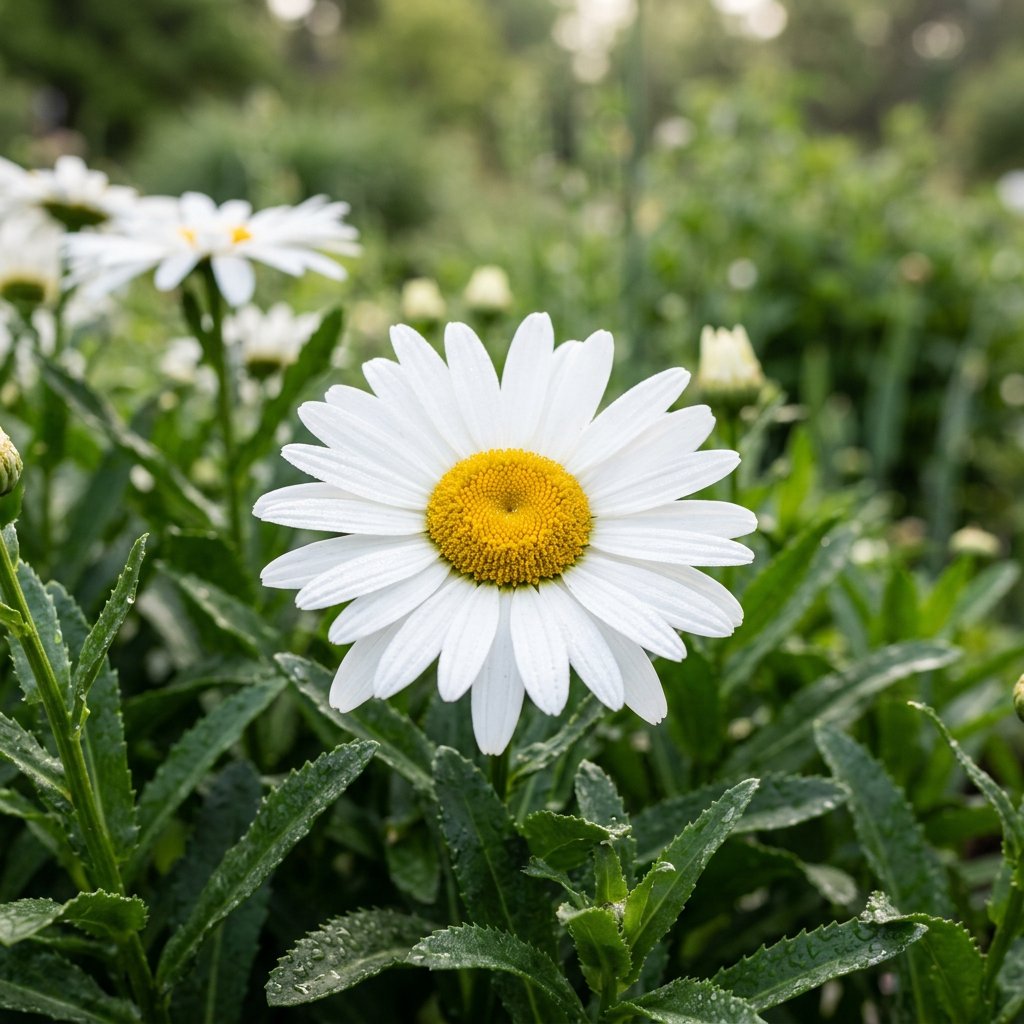
Plant Overview
Often called the "Ultimate Summer Daisy," the Shasta Daisy is a man-made hybrid that looks like a child’s drawing of a flower come to life. Developed in the late 19th century by legendary horticulturist Luther Burbank, these perennials are cherished for their brilliant white petals and sunny yellow centers. They are the quintessential "friendship" flower, bringing an effortless, cheerful cottage-garden aesthetic to any backyard.
🔍 How to Identify
- 🌼 The Bloom: Large, classic daisy flowers featuring a single or double layer of snowy-white "ray" petals surrounding a dense, golden-yellow central disc.
- 🍃 Foliage: Deep green, leathery leaves that are lance-shaped and coarsely toothed (serrated) along the edges, forming a lush basal mound.
- 📏 Growth Habit: Grows in sturdy, upright clumps. Depending on the cultivar, they can range from dwarf varieties (6 inches) to tall border giants reaching 3 feet.
🏡 In Your Garden
- ☀️ Sun Seeker: These daisies are true sun-worshippers. While they can tolerate light afternoon shade in blistering climates, too much shadow makes their stems "leggy" and prone to flopping over.
- ✂️ Deadheading Rewards: To keep the "snowy" show going all summer, pinch off faded blooms. This prevents the plant from wasting energy on seed production and encourages a second flush of flowers.
- 🌱 The Division Rule: Shasta Daisies are fast growers but tend to "hollow out" in the center after a few years. Dig up and divide the clumps every 2–3 seasons to keep the plant vigorous and prevent overcrowding.
⚠️ Safety & Toxicity
- 🐾 Pet Caution: Shasta Daisies contain sesquiterpene lactones and pyrethrins. If ingested by dogs, cats, or horses, they can cause vomiting, diarrhea, and excessive drooling.
- 🖐️ Skin Irritation: Some gardeners may develop mild contact dermatitis (a red, itchy rash) when handling the foliage. If you have sensitive skin, it is best to wear gloves while pruning.
✨ Fun Fact
- ⛰️ A Mountainous Legacy: Luther Burbank spent 15 years cross-breeding four different daisies from around the world to create this plant. He named it after the snow-capped Mount Shasta in California because the petals matched the pristine white of the mountain’s peaks.

Detailed Care Instructions
To grow a Leucanthemum X Superbum plant, also known as Shasta daisy, you can follow these steps:
- Choose a location: Shasta daisies prefer full sun, so select a spot in your garden that receives at least 6-8 hours of direct sunlight per day. They also require well-draining soil.
- Prepare the soil: Before planting, amend the soil with organic matter such as compost or well-rotted manure to improve its fertility and drainage.
- Planting: Dig a hole that is slightly wider and the same depth as the nursery container or root ball of the plant. Carefully remove the plant from its container and place it in the hole, making sure the top of the root ball is level with the soil surface. Space multiple plants about 1-2 feet apart.
- Watering: After planting, water the newly planted Shasta daisy thoroughly to help settle the soil. Regular watering is needed initially, especially during dry periods, but once established, Shasta daisies are relatively drought-tolerant and only require watering during prolonged dry spells.
- Mulching: Apply a layer of organic mulch, such as wood chips or straw, around the plants to help retain moisture, suppress weeds, and regulate soil temperature.
- Fertilizing: Shasta daisies usually don't require heavy fertilization. However, you can apply a balanced slow-release fertilizer or a light application of a general-purpose flower fertilizer in early spring.
- Maintenance: Deadhead the flowers regularly by removing faded blooms to encourage continuous blooming and tidy appearance. In autumn, cut back the plant to about 3-4 inches from the ground to promote new growth in the following season.
- Winter protection: Shasta daisies are hardy plants, but you can provide some winter protection by adding a layer of mulch around the base of the plants in late fall to insulate the roots.
- Division: After a few years, Shasta daisies may become crowded and produce fewer flowers. To rejuvenate the plant and maintain its vigor, you can divide it in early spring or fall. Dig up the clump, separate the outer sections, and replant them in prepared soil.
By following these steps, you can successfully grow Leucanthemum X Superbum plants in your garden.

Place in a bright room that is sun drenched almost all day. Or directly in a south-facing window.

This plant requires regular watering to ensure healthy growth and blooms. It is recommended to water deeply once a week, allowing the soil to completely dry out between watering. When watering, avoid getting water on the leaves as this can lead to fungal diseases. Mulching around the plant can help to retain moisture in the soil. In periods of extended dryness, increase the frequency of watering. It is important not to overwater as this can lead to root rot.
For optimal growth and blooms, apply a balanced fertilizer with equal parts nitrogen, phosphorus, and potassium in early spring. Use a slow-release fertilizer and apply according to package instructions. After the first bloom, apply a high-phosphorus fertilizer to encourage additional blooms. Water deeply after fertilizing to ensure nutrients are absorbed by the roots. Avoid applying fertilizer during periods of drought or extreme heat to prevent burning the plant.
The best soil for this particular plant is one that is well-draining and rich in organic matter. It should have a pH level between 6.0 and 7.5, which is slightly acidic to neutral. The soil should also be fertile and able to retain moisture, without becoming waterlogged. Adding compost or organic fertilizers to the soil can also improve its quality and provide essential nutrients for the plant's growth. Overall, a loose, crumbly soil that allows for good root development is ideal for this plant's health and success in your garden.
Leucanthemum X Superbum plant can be propagated by stem cuttings. First, find a healthy stem with no flowers on it. Then, cut a 4-6 inch section of the stem, making sure to make the cut at a 45-degree angle just below a leaf node. Remove any leaves from the bottom half of the stem, leaving only a few leaves on the top half. Dip the bottom end of the cutting into rooting hormone powder and gently tap off any excess. Plant the cutting in a container filled with potting mix and water it well. Cover the container with a plastic bag to create a mini-greenhouse and place it in a bright, but indirect light. Mist the cutting daily and make sure to keep the soil moist. In a few weeks, the cutting should start to develop roots and new growth. Once the cutting has developed a strong root system, it can be transplanted into a larger container or garden bed.
Common pests of the shasta daisy include Spider mites, aphids, whiteflies. Make a habit of checking your shasta daisy frequently for pests so that any infestations can be caught and managed early.








