Plant Overview
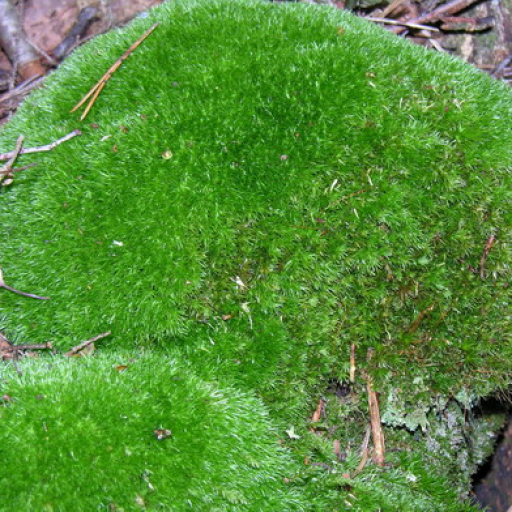
Often referred to as the Pincushion Moss or White Moss, Leucobryum glaucum is the forest’s living velvet. It grows in distinctive, rounded mounds that look exactly like plush pillows scattered across the woodland floor. This moss is a favorite for fairy gardens and high-end terrariums because of its tidy growth habit and its magical ability to shift colors based on how thirsty it is.
🔍 How to Identify
- ☁️ Growth Form: It grows in dense, compact hummocks or "cushions" that can range from the size of a golf ball to over a foot across.
- 🎨 The Color Shift: When hydrated, it displays a soft, glaucous (silvery-green) hue. When dry, it loses its green pigment and turns a ghostly, pale white.
- 🌿 Leaf Structure: The tiny leaves are thick and lance-shaped, packed so tightly together that the cushion feels surprisingly firm to the touch, almost like a sponge.
🏡 In Your Garden & Terrariums
- 💧 The "Pure Water" Rule: Unlike many garden plants, this moss is highly sensitive to the chlorine and minerals found in tap water. To keep it from browning, always use distilled water, rainwater, or reverse osmosis water.
- ☁️ Humidity over Soil: Pincushion Moss doesn't have true roots; it uses "rhizoids" to anchor itself. It drinks primarily through its leaves, meaning high ambient humidity is more important than the quality of the soil underneath it.
- 🌲 Acidic Preferences: In the wild, it loves acidic environments. If you are planting it outdoors, it thrives near the base of oak or pine trees where the soil pH is lower.
⚠️ Safety & Toxicity
- ✅ Status: Non-toxic and safe.
- 🐾 Details: This moss is completely safe for households with curious pets or children. It is also a popular choice for reptile and amphibian enclosures because it provides a soft, moist microclimate without any chemical defenses.
✨ Fun Fact
Leucobryum glaucum acts like a natural sponge for the forest; a single cushion can hold several times its own weight in water. Historically, various mosses in this family were used as a rudimentary stuffing for mattresses and pillows because of their soft texture and ability to stay cool!

Detailed Care Instructions
To grow Leucobryum glaucum, also known as the pincushion moss, you can follow these steps:
- Gather the materials: You will need a container or a terrarium, sphagnum moss, peat moss, distilled water, a spray bottle, a clear plastic or glass cover for the container, and indirect or filtered light.
- Prepare the container: Clean the container thoroughly to ensure no harmful organisms are present. Create a drainage layer at the bottom by using small stones or a thin layer of activated charcoal.
- Create the growing medium: Mix together equal parts of sphagnum moss and peat moss to create a suitable growing medium for the pincushion moss. You can moisten the mixture slightly with distilled water.
- Planting: Take small clumps of the pincushion moss and gently press them into the growing medium, ensuring they have good contact with the substrate. Keep a few centimeters of space between each clump to allow for growth.
- Moisture: Spray the planted moss gently with distilled water to moisten it. Do not overwater as excessive moisture can lead to decay. Keep the growing medium slightly damp throughout the cultivation process.
- Cover the container: Place a clear plastic or glass cover over the container to create a humid environment. This helps to retain moisture and create optimal conditions for the moss's growth.
- Light: Place the container in an area with indirect or filtered light. Leucobryum glaucum prefers bright, indirect light but direct sunlight can be too intense and damage the plant.
- Maintenance: Check the moisture levels regularly and mist the moss with distilled water as needed to keep it moist. Avoid letting the moss dry out completely or become waterlogged.
- Ventilation: Remove the cover for a short time each day to allow fresh air circulation and prevent excessive moisture buildup, which can lead to fungal or mold issues.
- Routine care: Remove any dead or decaying parts of the moss to maintain its health and appearance. If the moss grows too dense, you can gently trim it to promote airflow and prevent overcrowding.
Remember to research and understand the specific needs of Leucobryum glaucum and make adjustments accordingly. Patience is key as moss growth is usually slow and may take some time for noticeable results.

Place in a dark room with little light, like a dark bedroom or a spot far away from a window or directly in a north-facing window.

To water this plant, it is important to ensure that the soil is damp but not soaking wet. You can achieve this by watering it consistently, but allowing the soil to dry out slightly in between waterings. It is also important to avoid getting water on the leaves, as this can cause fungal growth and damage the plant. Instead, water directly at the base of the plant and allow any excess water to drain away. Lastly, consider the humidity levels in your environment, as this plant thrives in high humidity and may benefit from occasional misting or placement near a humidifier.
- Choose a well-draining soil
- Use a balanced fertilizer with equal amounts of nitrogen, phosphorus, and potassium
- Apply the fertilizer sparingly, using a spoon or small shovel to distribute it evenly
- Water the plant generously after fertilizing to help distribute the nutrients
- Fertilize the plant once every 4-6 weeks during the growing season, but avoid over-fertilizing as it can harm the plant.
Leucobryum Glaucum plant prefers to grow in soil with a slightly acidic pH level and a high organic matter content. It requires well-draining soil that retains moisture but does not become waterlogged. The ideal soil for this plant should be rich in nutrients and contain a good balance of sand, silt, and clay particles. It is important to avoid using heavy, compacted soil as it can prevent water and air from reaching the plant's roots. The soil should be kept evenly moist, but not overly wet. It is recommended to use a soil mixture that is specifically formulated for mosses or to create a custom mix using peat moss, sand, and perlite.
Leucobryum glaucum can be propagated using two methods - vegetative propagation and spore propagation.
Vegetative propagation involves using a small section of the plant to grow a new one. The process involves selecting a healthy and mature plant, and carefully cutting off a small section of it, being sure to include both the stem and leaves. This section can then be planted into a new pot or directly into soil, where it will eventually grow into a new plant.
Spore propagation is a more complex process that involves collecting the spores produced by the plant and using them to grow a new one. This process typically involves collecting spores from a mature plant and placing them onto a sterile growing medium that is kept moist. Over time, the spores will germinate and grow into new plants. This method requires a bit more expertise and patience, but can be very rewarding for those who are willing to put in the effort.
Regardless of the propagation method used, it is important to ensure that the new plants are given adequate care and attention to ensure their survival and growth. This may include providing them with proper lighting, watering, and fertilization, as well as ensuring that they are kept in an appropriate environment. With proper care, a propagated Leucobryum glaucum plant can thrive and grow into a beautiful specimen.







