Plant Overview
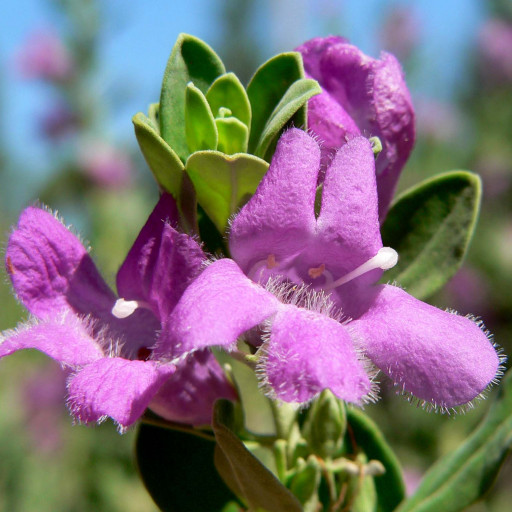
Affectionately known as the Texas Ranger, Silverleaf, or the mystical Barometer Bush, Leucophyllum frutescens is a desert-dwelling beauty that seems to predict the weather. This hardy shrub is a staple of the American Southwest, prized for its ability to explode into a cloud of purple blooms just as summer humidity rises or a storm approaches. Its shimmering, silvery foliage makes it a standout even when it isn't in flower.
🔍 How to Identify
- 🍃 The Foliage: Small, oval-shaped leaves that are covered in a dense layer of tiny, silvery hairs. This "felted" texture gives the plant its signature dusty-gray or sage-green appearance.
- 🔔 The Flowers: Tubular or bell-shaped blossoms, usually in shades of lavender, purple, or magenta. They appear tucked among the leaves rather than on long stalks.
- 🌳 Growth Habit: A woody, multi-stemmed evergreen shrub that typically reaches 5 to 8 feet in height. It has a naturally rounded shape but can look "wild" and architectural if left unpruned.
🏡 In Your Garden
- 🏜️ The Drainage Rule: This plant is a desert native; it hates "wet feet." The most common cause of failure is overwatering or planting in heavy clay. It thrives in rocky, alkaline, or sandy soils where water moves quickly away from the roots.
- ☀️ Sun Seeker: To keep its foliage dense and silvery, it needs as much direct sunlight as possible. In shady spots, the plant becomes "leggy" (stretches out) and the distinctive silver color fades to a dull green.
- ⛈️ The Rain Trigger: Gardeners often notice it blooming all at once across a neighborhood. This is because the plant responds to high humidity and soil moisture changes—earning it the name "Barometer Bush" for its ability to "predict" rain.
⚠️ Safety & Toxicity
- 🐾 Non-Toxic Status: Great news for pet owners and parents! Leucophyllum frutescens is generally considered non-toxic to dogs, cats, and humans.
- 🌵 Physical Safety: Unlike many other desert plants, it lacks thorns or spines, making it a "friendly" choice for walkways or areas where children play.
✨ Fun Fact
The Texas Sage doesn't just bloom because of the water hitting the ground; it actually reacts to the drop in barometric pressure and the increase in humidity that precedes a storm, often opening its buds before the first raindrop even falls!

Detailed Care Instructions
To grow Leucophyllum frutescens, also known as Texas sage or barometer bush, here are some general guidelines:
- Climate: Leucophyllum frutescens grows best in arid or semi-arid regions with dry summers and mild winters. It is most commonly found in the southwestern United States, Mexico, and parts of South America.
- Location: Choose a sunny location with well-draining soil. This plant thrives in full sun and can tolerate poor soil conditions, as long as it is well-drained.
- Planting: Dig a hole that is slightly larger than the nursery pot. Gently remove the plant from its container and place it in the hole, making sure the top of the root ball is level with or slightly above the soil surface. Backfill the hole with soil, firming it gently around the roots.
- Watering: Initially, water the plant regularly to help establish its root system. Once established, Leucophyllum frutescens is drought-tolerant and will only need watering during extended dry periods. Over-watering can lead to root rot, so make sure the soil is dry before watering again.
- Pruning: Prune Leucophyllum frutescens annually to maintain its shape and encourage new growth. Pruning should be done in late winter or early spring before new growth emerges. Remove dead or damaged branches, and shape the plant as desired.
- Fertilizing: Leucophyllum frutescens generally does not require much fertilization. However, if your soil is poor, you can apply a slow-release, balanced fertilizer in early spring.
- Pests and diseases: Leucophyllum frutescens is relatively pest and disease resistant. However, it can occasionally be susceptible to aphids or root rot if the soil remains overly damp.
By following these guidelines, you should be able to successfully grow and care for Leucophyllum frutescens.

Place in a bright room that is sun drenched almost all day. Or directly in a south-facing window.

Leucophyllum Frutescens requires watering at regular intervals to maintain its healthy growth. The plant thrives in well-draining soil, and therefore, it is essential to water it sparingly. Overwatering can lead to root rot, which can ultimately kill the plant.
One way to water this particular plant is to use a watering can with a long-spouted nozzle. This method allows the water to reach deeper into the soil and soak the roots. Alternatively, you can use a hose with a nozzle set on a low setting, as high-pressure water can damage the leaves.
Always ensure that the top inch of soil is dry before watering the plant. This would help prevent waterlogging and ensure that the soil is properly aerated. In hot and dry weather conditions, watering every two to three days may be necessary, while in humid and cooler environments, watering once a week may be enough.
It would be best to water early in the morning or late in the evening when the sun is not too harsh, as this would help reduce water evaporation and minimize leaf burn.
Lastly, always check for any signs of stress or disease in the plant. Yellowing leaves or drooping branches may indicate overwatering or underwatering, respectively. A parched soil also suggests that the plant needs more water, while a soggy soil indicates that the plant has been overwatered.
To fertilize this plant, apply a well-balanced slow-release fertilizer in the spring, following package instructions for the appropriate amount. Avoid fertilizing during the winter months or during periods of drought. Water thoroughly after fertilizing to ensure the fertilizer reaches the root zone.
The ideal soil for this particular plant should be well-draining, deep, and loamy. It should have a pH level that is slightly acidic to neutral, ranging from 6.0 to 7.5. It is recommended that the soil be enriched with organic matter, such as compost or well-aged manure, prior to planting. Leucophyllum frutescens prefers soil with good moisture retention, however, excessive moisture can lead to root rot, so it is important not to overwater. Additionally, this plant is tolerant of various soil types, including sandy or clay soils.
The method of propagating this plant is through stem cuttings. First, select a healthy branch from the main plant that is at least 4-6 inches long. Then, prepare a container with well-draining soil and make a hole in the center. Remove the leaves from the bottom of the stem, leaving only a few at the top. Dip the cut end of the stem in rooting hormone powder. Then, gently place the stem cutting in the prepared hole and cover it with soil, lightly pressing down to secure it in place. Water the cutting and ensure that the soil stays moist but not waterlogged. Place the container in a warm and bright location but out of direct sunlight. After a few weeks, the cutting should have developed roots and can be transplanted into a larger container or directly into the ground.








