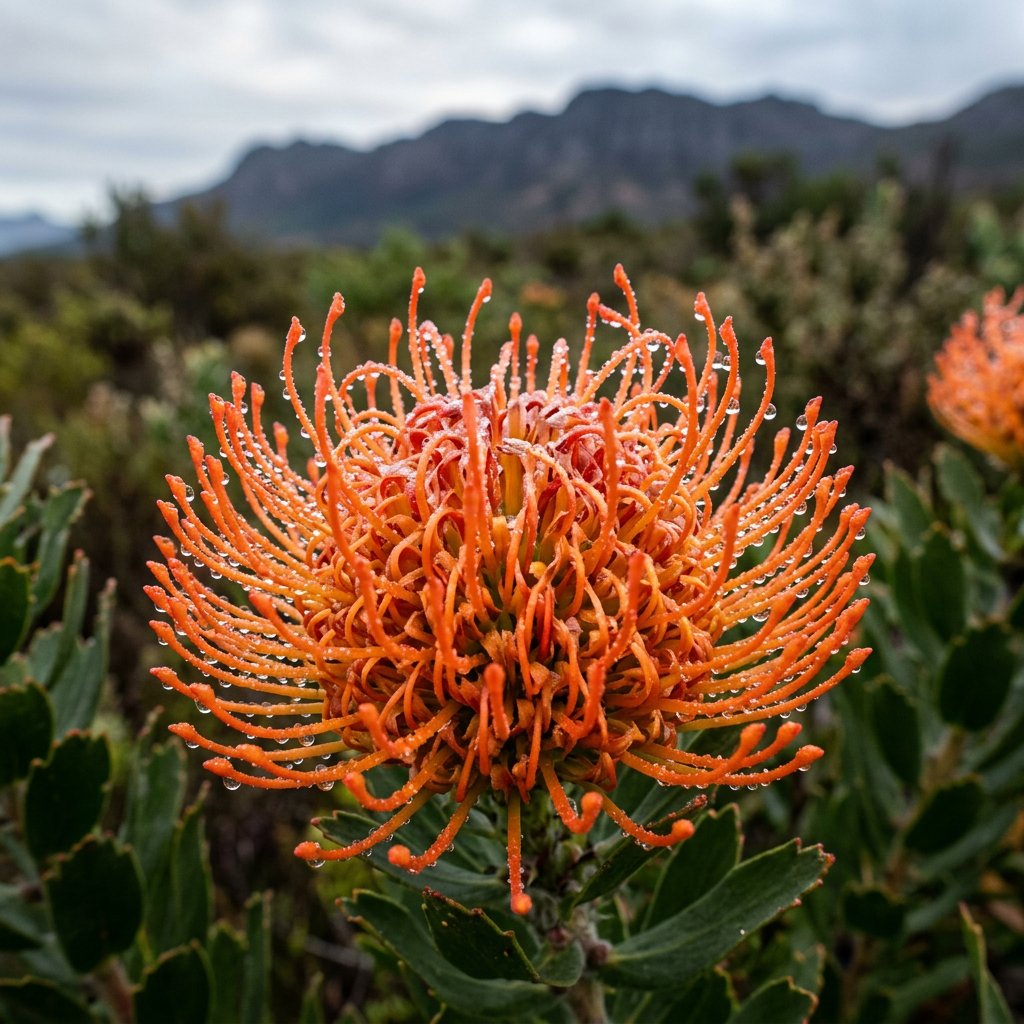
Plant Overview
Often called the Nodding Pincushion, this spectacular South African shrub looks more like a piece of coral or a mid-century modern sculpture than a typical flower. Native to the fynbos of the Western Cape, it is famous for its massive, dome-shaped blooms that look like colorful cushions stuck full of pins. It’s a favorite in the floral industry because its vibrant orange and yellow "fireworks" can last for weeks in a vase.
🔍 How to Identify
- 📍 The "Pins": The most striking feature is the flower head, which consists of hundreds of long, stiff, upward-curving styles that resemble pins in a pincushion.
- 🧡 Vibrant Colors: Typically found in brilliant shades of orange, apricot, or yellow, often with a subtle "nodding" lean to the flower heads.
- 🍃 Heart-Shaped Leaves: Its Latin name cordifolium literally means "heart-shaped leaf," referring to the tough, leathery, grey-green foliage that hugs the woody stems.
🏡 In Your Garden
- ☀️ Sun-Seeker: This plant is a true sun worshipper. It requires full, direct light to produce those iconic blooms and to keep its foliage dense and healthy.
- 🏜️ The "Less is More" Diet: Unlike most garden plants, the Pincushion Protea has evolved to thrive in nutrient-poor soil. It uses "proteoid roots" to scavenge for tiny amounts of phosphorus—giving it standard fertilizer can actually "overdose" and kill the plant.
- 🌬️ Air Circulation: It hates "wet feet" and stagnant air. Plant it in well-draining, sandy soil where the wind can move through its branches to prevent fungal issues.
⚠️ Safety & Toxicity
- ✅ Low Risk: Leucospermum cordifolium is generally considered non-toxic to humans and common household pets like cats and dogs.
- 🧤 Garden Safety: While not poisonous, the stems are very woody and the leaves can be quite stiff. Wear gloves when pruning to avoid scratches from the dense, shrubby growth.
✨ Fun Fact
The Pincushion Protea is a "bird-pollinated" masterpiece. Its "pins" are specifically designed to withstand the weight of African Sunbirds and Sugarbirds. As the birds land on the flower to drink nectar, the stiff styles act as a sturdy perch while dusting the bird’s chest with pollen to be carried to the next plant!

Detailed Care Instructions
To grow a Leucospermum Cordifolium plant, also known as the Pincushion Protea, you can follow these steps:
- Plant selection: Choose a healthy plant from a nursery or obtain seeds from a reputable source.
- Soil preparation: Prepare well-draining soil with a pH level between 6-7. Leucospermum Cordifolium prefers acidic to mildly acidic soil. If needed, amend the soil with organic matter such as compost or peat moss.
- Planting: Dig a hole that is slightly larger than the rootball of your plant. Place the plant into the hole, ensuring that it is at the same depth as it was in its original container. Fill the hole with soil and gently firm it around the plant.
- Watering: Water the plant deeply after planting to ensure the roots are well-established. Afterward, water regularly to keep the soil moist but not waterlogged. Water deeply but less frequently once the plant is established.
- Sunlight: Leucospermum Cordifolium thrives in full sun, so choose a location that receives at least 6-8 hours of direct sunlight each day.
- Pruning: Prune the plant to maintain its shape and remove any dead, damaged, or diseased branches. Do this during late winter or early spring before the new growth begins.
- Fertilization: Apply a slow-release, balanced fertilizer specifically formulated for flowering plants in spring and again in midsummer. Follow the package instructions for proper dosage.
- Mulching: Mulch around the plant to conserve moisture, suppress weeds, and provide insulation for the roots. Use an organic mulch such as bark chips or straw, and ensure that it is not in direct contact with the stems to prevent rot.
- Protection: If planting in colder climates, provide protection from frost and cold winds by covering the plant with a frost blanket or temporarily moving it to a sheltered area.
- Pests and diseases: Leucospermum Cordifolium is generally pest and disease-resistant. However, it is still necessary to monitor for common pests such as aphids, scale insects, or spider mites. Treat any infestations promptly with horticultural oils or insecticidal soaps as necessary.
With proper care and attention to its specific needs, your Leucospermum Cordifolium plant should grow and thrive, rewarding you with its beautiful pincushion-like flowers.

Place in a window with dappled sun or a spot in the middle of a room. Or directly in a window facing west or east.

The best way to water this plant is to provide a deep, thorough watering once a week rather than giving it frequent, shallow watering. Before watering, check the soil moisture by inserting your finger into the soil to a depth of at least an inch. If the soil feels dry, it's time to water. When watering, make sure not to get water on the leaves or flowers, as this can cause damage or disease. If the plant is in a container, water slowly and ensure that all the soil is moistened. If the plant is in the ground, water slowly and deeply, making sure the water reaches the roots. In areas with high temperatures or low humidity, the plant may require more frequent watering.
To fertilize this plant, wait until it has finished blooming before applying a balanced, slow-release fertilizer. Spread the fertilizer evenly around the base of the plant and water thoroughly. Avoid fertilizing during hot weather or when the soil is dry to prevent damage to the roots. Repeat fertilization annually in the early spring to promote healthy growth and strong blooms.
The Leucospermum Cordifolium plant requires well-draining, nutrient-rich soil. The ideal soil mixture should consist of equal parts of sand, peat moss, and perlite. The sand provides aeration and drainage, while the peat moss and perlite retain moisture and provide essential nutrients. A slightly acidic soil pH between 5.5 to 6.5 is preferred. Additionally, the Leucospermum Cordifolium plant is sensitive to high levels of phosphorus, so it is essential to avoid over-fertilizing with phosphorus-rich fertilizers. Before planting, it is recommended to amend the soil with organic matter such as compost or leaf mold to improve soil structure, increase water retention, and provide nutrients to the plant.
To propagate this plant, you will need to take a stem cutting from a mature plant in early spring or late summer. Choose a stem that is at least 4-6 inches long and has several healthy leaves. Cut the stem at a 45-degree angle using a clean, sharp pair of pruning shears.
Remove the bottom inch of leaves from the stem and dip the cut end in rooting hormone powder. Plant the stem in a pot filled with a well-draining potting mix and water thoroughly. Place the pot in a warm, bright location, but out of direct sunlight.
Keep the soil moist and mist the cutting regularly to maintain humidity. After a few weeks, you should see roots beginning to form. Once the cutting has established a healthy root system, you can transplant it either into a larger pot or directly into the ground.
Be sure to keep the newly propagated plant well-watered and protected from extreme heat or cold until it has fully established itself.
Common pests of the ornamental pincushion include Scale insect, mealybugs, larvae. Make a habit of checking your ornamental pincushion frequently for pests so that any infestations can be caught and managed early.








