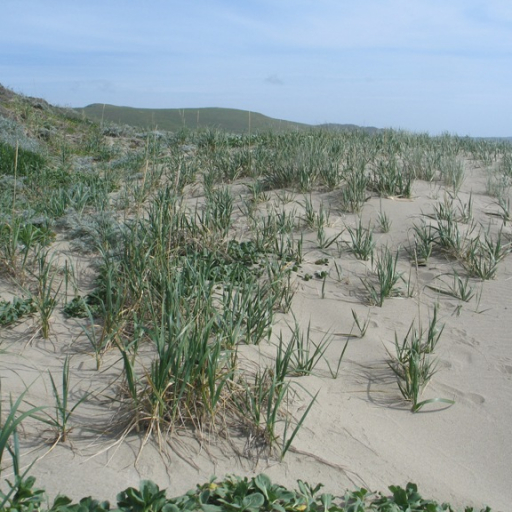
Plant Overview
Commonly known as American Dunegrass or Sea Lyme Grass, this striking perennial is the "guardian of the coast." With its distinctive silvery-blue foliage and architectural height, it creates a cooling aesthetic even in the harshest seaside winds. Historically, its sturdy fibers were used by indigenous coastal peoples to weave intricate baskets and mats, making it a plant of both ecological and cultural significance.
🔍 How to Identify
- 🌊 Foliage Color: The leaves are a stunning metallic blue or glaucous green, covered in a waxy coating that protects the plant from salt spray and dehydration.
- 🌾 Growth Habit: It grows in robust, upright clumps that can reach up to 4–5 feet tall, spreading via aggressive underground stems (rhizomes) to form dense mats.
- 🥖 Flower Spikes: In mid-summer, it produces thick, wheat-like seed heads (spikes) that emerge green and transition to a soft, golden-tan as they mature.
🏡 In Your Garden
- 🏖️ Coastal Powerhouse: This plant is a specialist in stabilizing shifting sands; its deep root system acts like a net, preventing beach erosion. If you have a seaside property, it is an essential "pioneer" species.
- ☀️ Soil & Sun: It thrives in full sun and sandy, well-draining soil. Avoid planting it in heavy clay or "rich" garden beds, as too much moisture can cause the roots to rot. Because it spreads via rhizomes, it is best used in large open areas or contained with root barriers if used in a small landscape.
⚠️ Safety & Toxicity
- ✅ Non-Toxic: Leymus mollis is generally considered safe and non-toxic for cats, dogs, and humans.
- ✂️ Physical Irritation: While not poisonous, the leaf blades are very stiff and can have slightly sharp edges. Wear gloves when pruning or thinning the clumps to avoid "grass cuts" or skin irritation.
✨ Fun Fact
- Did you know that Leymus mollis is a master of the "sand trap"? It can tolerate being completely buried by shifting sand dunes, which actually triggers the plant to grow taller and faster to reach the sunlight!

Detailed Care Instructions
To grow Leymus Mollis (also known as American dune grass or beachgrass), you can follow these steps:
- Choose the right location: Leymus Mollis prefers sandy or well-draining soil and full sun. It is commonly found in coastal areas and dunes.
- Prepare the soil: If your soil is heavy or clayey, consider adding sand or organic matter to improve drainage. Clear the area of weeds or grass before planting.
- Planting method: Leymus Mollis can be propagated from seeds, rhizomes, or plant divisions. Choose the method that suits you best:
- Seed propagation: Sow the seeds in early spring or fall directly into the prepared soil. Lightly cover them with soil and keep the area damp until germination occurs.
- Rhizome propagation: Plant rhizomes by digging a shallow trench and placing the rhizomes horizontally, covering them lightly with soil. Space them approximately six inches apart.
- Plant division: If you have established plants, you can divide them by digging up clumps and separating them into smaller sections. Replant the divisions immediately and water thoroughly.
- Seed propagation: Sow the seeds in early spring or fall directly into the prepared soil. Lightly cover them with soil and keep the area damp until germination occurs.
- Watering: Water newly planted grass regularly, especially during the first few weeks until they are established. Afterward, Leymus Mollis is quite drought-tolerant and requires minimal watering.
- Maintenance: Keep the area around the Leymus Mollis clear of weeds and grass. Provide regular light fertilization with a balanced fertilizer, following the package instructions. Occasional trimming or shearing can help maintain a neater appearance.
- Winter care: Leymus Mollis is hardy in USDA zones 3-9. In colder regions, the grass can benefit from added mulching around the base to protect it during harsh winters.
By following these steps, you can successfully grow Leymus Mollis, creating a beautiful and functional addition to your landscape.

Place in a bright room that is sun drenched almost all day. Or directly in a south-facing window.

The watering requirement for this particular plant depends on multiple factors such as the temperature, soil type, and humidity level. However, as a general rule, these plants require regular watering, particularly during their initial growth period.
The plant should be watered deeply, but avoid overwatering as it can lead to root rot. It is recommended to allow the topsoil to dry out slightly before watering again.
The best time to water this plant is in the morning when the temperatures are cooler, and the sun isn't as intense. Watering at this time allows the plant to absorb the water efficiently and reduces evaporation.
To water the plant, use a watering can or a garden hose with a gentle spray nozzle to ensure that the water is distributed evenly and doesn't cause any damage to the plant. Focus the water on the base of the plant, avoiding the leaves, as wet foliage can lead to disease and fungal issues.
During hot summer months, the plant may require more frequent watering, but be sure to adjust the frequency based on how the plant responds. If the leaves appear wilted, give the plant a deep soak and increase watering frequency.
In summary, this plant needs regular, deep watering, avoiding overwatering, and keeping a consistent watering schedule. Water at the appropriate time of the day, use a gentle spray, and focus on the plant's base. With proper watering, this plant should thrive and grow beautifully.
To fertilize this plant, apply a slow-release, balanced fertilizer in early spring before new growth appears. Alternatively, you can apply a liquid fertilizer every 2-3 weeks during the growing season. Be sure to follow the manufacturer's instructions for application rates and frequency. Avoid over-fertilizing as this can lead to excessive foliage growth at the expense of root development.
Leymus Mollis requires a well-draining soil with a pH range between neutral to slightly acidic. A sandy loam soil with good aeration is preferred. The plant is noted for its ability to tolerate salts, so a slightly saline soil would not be a problem. The soil should be moist but not waterlogged. Adding organic matter to the soil can increase soil fertility and water-holding capacity, but over-fertilizing can lead to excessive foliage growth and weak stems. It is also important to avoid planting Leymus Mollis in soil that retains too much water, as this can lead to root rot and other diseases.
To propagate this plant, you can cut it into smaller sections in the spring or fall. Each section should have at least one healthy rhizome and a few shoots. Plant each section in well-draining soil and water regularly until it establishes roots. It's also possible to propagate this plant by seed, which can be sown in the spring or fall. The seeds should be lightly covered with soil and kept moist until they germinate. Once the seedlings have grown large enough, they can be transplanted into their permanent location.








