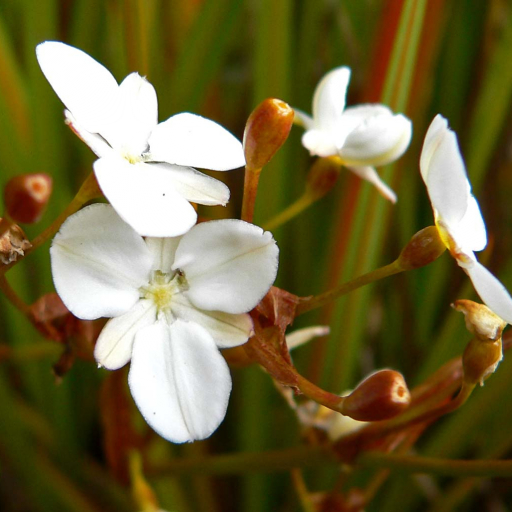
Plant Overview
Known as the New Zealand Iris or Mikoikoi, this striking evergreen perennial is a favorite for modern architectural gardens. Unlike its purely green cousins, this Libertia wears a stunning coat of copper and burnt orange that seems to glow when hit by the afternoon sun. Its botanical name, peregrinans, hints at its adventurous nature as it slowly "wanders" through your garden beds to find its favorite spot.
🔍 How to Identify
- 🌿 Blade Shape: Narrow, stiff, sword-like leaves that grow in flat, fan-shaped clusters rather than a chaotic bush.
- 🎨 The "Bronze Glow": Deep olive-green leaves featuring a prominent, bright orange-to-copper midrib that intensifies in color during cold weather or when exposed to full sun.
- 🌸 Delicate Blooms: Small, pure white, three-petaled flowers that appear in clusters on short stems nestled among the foliage in late spring.
🏡 In Your Garden
- 🏗️ Architectural Impact: Because of its upright habit and fiery color, it is perfect for adding vertical interest and a pop of warmth against gray stone, gravel, or dark green shrubs.
- 🚶 The Wanderer: It spreads via underground rhizomes (runners). While it isn't aggressively invasive, it will "travel" slowly to fill gaps, making it an excellent choice for a low-maintenance groundcover.
- ☀️ Color Secret: If planted in deep shade, the plant will lose its signature sunset tint and turn a plain olive green. To keep the orange "fire" alive, ensure it receives plenty of direct light.
⚠️ Safety & Toxicity
- ✅ General Status: Non-toxic and considered safe for residential landscapes.
- 🐾 Pets & Kids: There are no recorded toxic effects for cats, dogs, or humans. However, the stiff, pointed tips of the leaves can be quite sharp, so avoid planting it directly next to narrow walkways where toddlers or pets might brush against it.
✨ Fun Fact
The species name peregrinans is Latin for "traveling" or "wandering," which perfectly describes the way the plant’s roots creep outward to "walk" across the garden floor over several seasons!

Detailed Care Instructions
To successfully grow Libertia Peregrinans, also known as Orange Libertia or Mikoikoi, follow these steps:
- Climate: This plant is native to New Zealand and thrives in temperate climates. It can tolerate some heat and cold, but it prefers a mild, humid environment. Make sure to choose a planting location with partial shade or filtered sunlight.
- Soil: Libertia Peregrinans prefers well-draining soil that is slightly acidic to neutral (pH 6.0-7.0). Enhancing the soil with organic matter like compost can help improve drainage and fertility.
- Planting: Dig a hole slightly larger than the size of the root ball and place the plant in the hole. Backfill the hole with soil, gently pressing it down around the plant to eliminate air pockets. Leave some space at the top to allow for watering.
- Watering: This plant prefers consistently moist soil, but not waterlogged conditions. Water deeply but infrequently, allowing the top inch of soil to dry between waterings. Adjust the frequency based on the climate and rainfall in your area.
- Mulching: Apply a layer of organic mulch, such as bark chips or straw, around the base of the plant to help conserve moisture, suppress weed growth, and protect the roots from temperature extremes.
- Fertilizing: Libertia Peregrinans generally doesn't require a lot of fertilization. If you notice poor growth or yellowing leaves, you can apply a balanced, slow-release fertilizer in early spring.
- Pruning: Prune any damaged or dead foliage from the plant regularly. This will not only maintain its appearance but also promote airflow and reduce the risk of fungal diseases.
- Propagation: Libertia Peregrinans can be propagated through division or by collecting and planting the seeds. Divide the plant by carefully separating the clumps and re-planting them in suitable locations. If using seeds, sow them in well-prepared soil and keep them moist until they germinate.
- Pests and diseases: This plant is generally resistant to pests and diseases, but it may occasionally face issues like aphids, snails, or leaf spot diseases. Regularly inspect the plant for pests and treat as necessary with organic pest control methods or insecticidal soaps.
Remember to always consider the specific needs of the plants in your area and adjust the care accordingly. Regular monitoring, maintenance, and giving attention to your Libertia Peregrinans will help keep it healthy and vigorous.

Place in a bright room that is sun drenched almost all day. Or directly in a south-facing window.

To provide adequate water for the Libertia Peregrinans plant, it is important to follow a few guidelines:
1. Observe the plant: Regularly examine the foliage and soil to determine if watering is required. Look for signs of wilting or dryness, such as drooping leaves, brittle foliage, or cracks in the soil.
2. Soil moisture: Before watering, check the moisture level of the soil by inserting your finger about an inch into the soil. If it feels dry at this depth, it's time to water the plant.
3. Watering frequency: Although the Libertia Peregrinans plant requires regular watering, it is crucial not to overwater it. Aim to water the plant about once a week during the growing season, ensuring the water reaches the root zone.
4. Watering method: Instead of simply pouring water over the foliage, focus on delivering water directly to the root system. This can be achieved by gently and evenly applying water around the base of the plant.
5. Water quantity: Provide enough water to moisten the soil thoroughly, allowing it to penetrate the root zone. Avoid excessive watering that leads to waterlogged soil, as this can damage the plant's roots.
6. Container plants: If the Libertia Peregrinans is potted, ensure that the container has drainage holes at the bottom to prevent water from accumulating. Water the plant until you see water flowing out of the drainage holes, indicating sufficient watering.
7. Seasonal adjustments: During the colder months or when the plant enters its dormant phase, reduce the frequency of watering to prevent water saturation in the soil. Monitor the moisture level and water only when necessary.
Remember, it is always better to slightly underwater than overwater this plant, as excessive moisture can lead to root rot and other diseases. Regularly check the plant's condition and adjust the watering routine accordingly to promote healthy growth.
To fertilize Libertia Peregrinans, you can follow these instructions:
- Choose a balanced fertilizer with an NPK ratio of 10-10-10 or similar.
- Dilute the fertilizer according to the package instructions, usually at a rate of 1 tablespoon per gallon of water.
- Apply the fertilizer during the plant's active growing season, which is typically in spring or early summer.
- Water the plant thoroughly before fertilizing to ensure the soil is moist.
- Pour the diluted fertilizer mixture directly onto the soil around the plant's base, avoiding getting it on the leaves or stems.
- Use a watering can or a gentle stream to apply the fertilizer evenly and avoid over-fertilization.
- After fertilizing, water the plant again to help the nutrients soak into the soil.
- Repeat this fertilizing process once every four to six weeks during the growing season, but be cautious not to over-fertilize as it can harm the plant.
Note: It's always recommended to read and follow the specific instructions provided on the fertilizer package for the best results.
Libertia Peregrinans, a perennial plant native to New Zealand, has specific soil requirements to thrive and reach its full potential. It prefers well-drained soils that are slightly acidic to neutral in pH. The soil should be loose and loamy, allowing for good airflow and preventing waterlogging, which could lead to root rot.
The ideal soil for Libertia Peregrinans should be rich in organic matter, providing necessary nutrients and promoting healthy growth. Adding compost or well-rotted manure to the soil prior to planting can greatly improve its fertility. This plant has a preference for soil that retains some moisture while also draining well, allowing the roots to access water without becoming waterlogged.
To ensure proper soil quality, it is recommended to avoid heavy clay soils or those prone to compaction, as they do not allow for adequate moisture absorption. Sandy soils, on the other hand, may drain too quickly, leading to dryness and drought stress.
Regularly testing the soil's pH level using a soil testing kit can help monitor and adjust it if needed. If the pH is excessively acidic, incorporating lime can help raise it to a more neutral range.
In summary, Libertia Peregrinans thrives in slightly acidic to neutral, well-drained soils that are rich in organic matter. By providing the proper soil conditions, you can provide an optimal environment for the growth and vitality of this beautiful plant.
Libertia peregrinans, a perennial plant native to New Zealand, can be propagated through several methods. Here is a step-by-step guide on how to propagate the plant:
- Prepare a healthy parent plant: Choose a mature Libertia peregrinans plant that is disease-free, well-established, and showing signs of vigorous growth.
- Select the propagation method: There are three main methods to propagate Libertia peregrinans: division, seeding, and taking stem or rhizome cuttings. Choose the method that suits your preferences and available resources.
- Division: This method involves separating the parent plant into smaller sections, with each section having its own root system. Carefully dig out the parent plant, ensuring minimal damage to the roots. Using a clean, sharp knife or garden spade, gently divide the clump into smaller sections. Each section should have at least a few roots and intact foliage. Replant the divided sections in desired locations, making sure to water adequately.
- Seeding: Collect ripe seed capsules from the Libertia peregrinans plant. Allow the capsules to dry and split to release the seeds naturally. Sow the seeds in well-draining potting mix, either indoors or in a greenhouse. Keep the soil consistently moist and maintain a temperature range of 65-75°F (18-24°C). Germination typically occurs within two to four weeks.
- Stem or rhizome cuttings: Select healthy stems or rhizomes from the parent plant. Cut 4-6 inch (10-15 cm) sections, ensuring each cutting has at least one node. Dip the cut end in rooting hormone powder to encourage root growth. Plant the cutting in a container filled with a well-draining potting mix, burying about half of the stem or rhizome section. Keep the soil slightly moist and place the container in a warm, bright location. Roots should start forming within several weeks.
- Care for the newly propagated plants: Regardless of the propagation method, treat the newly propagated Libertia peregrinans plants with care. Provide them with appropriate sunlight exposure, watering, and well-draining soil. Regularly monitor the moisture levels to avoid overwatering or underwatering. Once the plants are established, continue to maintain their ideal growing conditions.
By following these propagation techniques, you can successfully propagate Libertia peregrinans and expand your collection or share this unique plant with others.








