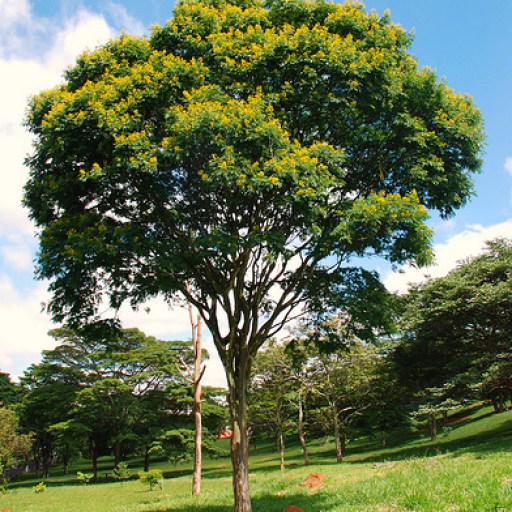
Plant Overview
Known as the Leopard Tree due to its strikingly mottled trunk, Libidibia ferrea is a majestic Brazilian native that commands attention in any landscape. Its other common name, Brazilian Ironwood, pays tribute to its incredibly dense, heavy timber which is legendary for its strength and durability. In the wild, it creates a delicate, airy canopy that filters sunlight into a soft, dappled glow.
🔍 How to Identify
- 🐆 The Bark: The most iconic feature; smooth, creamy-grey bark peels away in patches to reveal chocolate-brown layers underneath, creating a distinct leopard-print pattern.
- 🌿 The Foliage: Features fine, bipinnate leaves that look almost fern-like. These small leaflets give the tree a soft, ethereal texture despite its massive structural strength.
- 🌼 The Blooms: During the warmer months, it produces small, lightly scented yellow flowers that grow in upright clusters (racemes) at the ends of branches.
🏡 In Your Garden
- 🏗️ Root Awareness: While beautiful, this tree is a "pavement lifter." Its roots are incredibly strong and often grow near the surface; keep it at least 10–15 feet away from pools, driveways, or house foundations to prevent structural damage.
- ✂️ Structural Pruning: Because the wood is so heavy, the tree can sometimes develop "heavy leans." Pruning while young is essential to encourage a strong central leader and prevent large branches from snapping during high winds.
⚠️ Safety & Toxicity
- 🐾 General Safety: Libidibia ferrea is generally considered non-toxic to touch, and its bark has even been used in traditional Brazilian medicine.
- 🥜 Seed Pods: The dark, hard seed pods are not considered edible and can be a choking hazard for curious pets or toddlers. They are also notoriously "rock-hard," making them a tripping hazard on flat walkways.
✨ Fun Fact
The wood of the Brazilian Ironwood is so dense and heavy that it actually sinks in water. Because of its hardness and beautiful grain, it is a prized material for making high-quality guitar fingerboards and luxury furniture!

Detailed Care Instructions
To grow Libidibia Ferrea, also known as Jurema Preta or Ironwood, follow these steps:
- Purchase or acquire seeds: Look for reputable seed suppliers or botanical gardens that offer Libidibia Ferrea seeds. Alternatively, you can collect seeds from mature plants if they are available in your area.
- Prepare a suitable planting medium: Libidibia Ferrea prefers well-draining soil with a pH range between 6.5 and 7.5. Mix sand, peat moss, and organic compost to create an ideal potting mix.
- Germinate the seeds: Soak the seeds in water for 24 hours to facilitate germination. Plant the seeds 1-2 inches deep in the prepared soil mixture. Place the pots or seed trays in a warm location with indirect sunlight.
- Provide optimal growing conditions: Libidibia Ferrea thrives in tropical to subtropical environments. Maintain a temperature range between 60°F and 85°F (15°C and 29°C). Ensure the plants receive bright, indirect sunlight for at least 6-8 hours a day.
- Watering and humidity: Keep the soil consistently moist but not waterlogged. Water the plant regularly, allowing the top inch of soil to dry out before the next watering. Maintain humidity levels by misting the leaves or using a humidifier if necessary.
- Transplanting: Once the seedlings reach a height of around 6 inches, you can transplant them into larger containers or outdoor locations. Choose a spot with full sun or partial shade.
- Fertilization: Use a balanced, slow-release organic fertilizer or liquid fertilizer during the growing season to provide essential nutrients to the plant. Follow the package instructions for proper application.
- Pruning and shaping: As the plant grows, you may need to prune and shape it to maintain its desired form. Remove any dead or damaged branches and promote a bushier shape by pinching off the tips of new growth.
- Potential pests and diseases: Monitor the plants regularly for pests such as aphids, scale insects, or spider mites. Treat any infestations with organic insecticidal soap or neem oil. Pay attention to signs of diseases such as root rot or leaf spot and take appropriate measures if necessary.
- Patience and care: Growing Libidibia Ferrea from seeds can take time and requires patience. Provide consistent care, including regular watering, proper sunlight, and fertilization, to help the plant grow strong and healthy.
Remember to research any specific regional requirements or regulations regarding the cultivation of Libidibia Ferrea in your area.

Place in a bright room that is sun drenched almost all day. Or directly in a south-facing window.

To water the Libidibia Ferrea plant effectively, you must follow these guidelines:
1. Understand the plant's water requirements: Libidibia Ferrea plants prefer a moderate amount of water, neither too much nor too little. Providing them with the right amount of water will help maintain their health.
2. Perform regular watering: Ensure that you water the plant regularly, especially during the growing season. You should aim to water it approximately once every 7-10 days, or when the top inch of the soil feels dry to the touch.
3. Use the right watering technique: It's important to use a gentle watering technique to prevent water runoff and ensure deep penetration of the water into the soil. Avoid pouring water directly onto the foliage, as it can lead to leaf damage or fungal diseases. Instead, direct the water carefully to the base of the plant, allowing it to be absorbed by the roots.
4. Water in the morning: Watering in the morning is recommended as it allows the excess moisture to evaporate throughout the day. This helps in preventing the growth of fungus or diseases caused by prolonged dampness.
5. Observe the soil moisture: Regularly check the moisture level of the soil by inserting your finger or a moisture meter into the soil up to a few inches deep. This will help you ensure that you are not over or under watering the plant.
6. Adjust watering during different seasons: It is crucial to adjust the watering frequency based on the plant's needs during different seasons. During winter or dormant periods, the water requirements of Libidibia Ferrea may decrease, so adjust your watering schedule accordingly.
7. Monitor water drainage: Ensure the plant is in a container with proper drainage holes to prevent waterlogging. Excess water should be able to drain freely, as stagnant water can lead to root rot and other issues.
Remember, while watering is crucial for the plant's health, overwatering can be equally harmful. Therefore, it's important to strike a balance and provide the Libidibia Ferrea plant with the appropriate amount of water to thrive.
- Start by selecting a well-draining potting mixture suitable for tropical plants.
- Fill a pot with the potting mixture, leaving a few inches of space at the top for watering.
- Choose an organic, balanced fertilizer that is formulated for tropical plants, preferably one with equal proportions of nitrogen, phosphorus, and potassium (NPK).
- In the initial stage, use a quarter-strength dilution of the fertilizer. For example, if the recommended ratio is 1 teaspoon per gallon of water, use 1/4 teaspoon instead.
- Apply the diluted fertilizer once every two weeks during the growing season (typically spring and summer), avoiding over-fertilization to prevent nutrient burn.
- Water the plant lightly before fertilizing to prevent root damage.
- Apply the diluted fertilizer evenly around the base of the plant, taking care not to let it touch the leaves or stem.
- If the plant shows signs of nutrient deficiency, such as yellowing leaves or stunted growth, increase the frequency of fertilization slightly.
- During the dormant season (usually fall and winter), reduce the frequency of fertilizing to once a month or suspend fertilization until the next growing season.
- Regularly monitor the plant's overall health and adjust the fertilizing schedule as needed to promote healthy growth and development.
When choosing soil for Libidibia Ferrea plants, it is recommended to provide a well-draining and nutrient-rich medium that allows for proper root development. This promotes healthy growth and minimizes the risk of root rot or other moisture-related issues. The ideal soil for this plant is typically loamy or sandy, with good water-retention capabilities while also allowing excess water to drain away.
A mix of organic and inorganic components can be used to create an optimal soil environment. Incorporating organic matter such as compost, leaf mold, or well-rotted manure adds essential nutrients and promotes soil structure. This improves moisture retention and aeration, enabling roots to access oxygen while maintaining consistent moisture levels. Mixing in perlite or coarse sand can further enhance drainage in heavy soils.
It is important to note that Libidibia Ferrea plants prefer a slightly acidic to neutral pH range. Testing the pH of the soil beforehand and adjusting it if necessary can help create a suitable growing environment. Additionally, adding a slow-release fertilizer during planting or using organic liquid fertilizers during the growing season can supplement nutrient levels for better overall plant health.
Regularly monitoring soil moisture and not allowing the plant to sit in saturated conditions is crucial. Overwatering can lead to root rot and other fungal diseases, whereas underwatering can cause the plant to become stressed and hinder its growth. Therefore, it is advisable to water the Libidibia Ferrea plant thoroughly but allow the top inch or so of soil to dry out before watering again.
In conclusion, providing a well-draining, nutrient-rich soil with good moisture retention is essential for optimal growth and health of the Libidibia Ferrea plant.
The propagation of Libidibia Ferrea plants can be achieved through various methods, including seeds, cuttings, and air layering. Here are the steps involved in propagating this plant:
- Seed Propagation:
- Collect seeds from mature Libidibia Ferrea fruits.
- Soak the seeds in water for 24-48 hours to soften the hard coating.
- Prepare a well-draining potting mix consisting of equal parts sand and peat moss.
- Fill small seed pots with the potting mix.
- Plant the soaked seeds about 1 inch deep into the potting mix.
- Water the pots gently to keep the soil slightly moist.
- Place the pots in a warm location with indirect sunlight.
- Seed germination can take several weeks. Once the seedlings develop a few leaves, they can be transplanted into regular potting soil or larger pots.
- Collect seeds from mature Libidibia Ferrea fruits.
- Cutting Propagation:
- Select healthy stem cuttings from a mature Libidibia Ferrea plant.
- Ideally, each cutting should be around 6-8 inches long and contain at least two sets of leaves.
- Remove the lower set of leaves from the cutting.
- Dip the cut end of the stem in a rooting hormone powder to enhance root development (optional).
- Fill a pot with well-draining potting mix.
- Insert the cut end of the stem into the potting mix, making sure at least one set of leaves is above the soil surface.
- Water the soil gently and keep it slightly moist.
- Place the pot in a warm location with indirect sunlight.
- Roots should develop in a few weeks. Once the roots have formed, the cutting can be transplanted into a larger pot or directly into the ground.
- Select healthy stem cuttings from a mature Libidibia Ferrea plant.
- Air Layering:
- Select a healthy, mature branch on the Libidibia Ferrea plant.
- Make a horizontal cut just below a node, removing a small ring of bark and exposing the inner tissue.
- Dust the exposed area with rooting hormone powder.
- Wrap the cut section with moist sphagnum moss or a similar rooting medium.
- Cover the moss with plastic wrap to retain moisture and create a humid environment.
- Secure the plastic wrap in place with twine or tape.
- After a few weeks, roots should develop from the exposed section.
- Cut the rooted section below the new root system and transplant it into a pot or directly into the ground.
It's important to note that propagating plants can sometimes be challenging and success rates may vary. However, by following these guidelines and providing the appropriate care, you can increase your chances of successfully propagating Libidibia Ferrea.
- Select a healthy, mature branch on the Libidibia Ferrea plant.








