Plant Overview
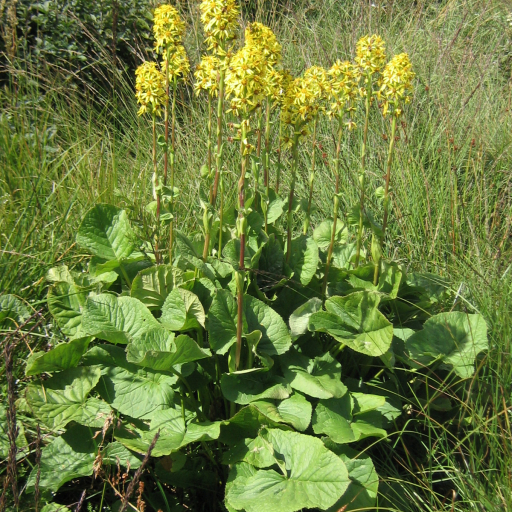
Often called the Siberian Leopard Plant, this towering perennial is a true "drama queen" of the wetlands. Known for its tall, torch-like yellow flower spikes, it has journeyed from the damp marshes of Siberia and Central Europe to become a favorite for gardeners with soggy soil. It is a bold, architectural plant that commands attention, signaling its presence with massive leaves and golden blooms that light up shady corners.
🔍 How to Identify
- 🍃 Lush Foliage: The leaves are impressively large, heart-shaped or triangular, with jagged, saw-toothed edges that give the plant a rugged, wild appearance.
- 🕯️ Dark Spires: In mid-to-late summer, it sends up sturdy, dark-colored flower stalks that can reach heights of 4 to 5 feet, standing well above the leaves.
- 🌼 Golden Blooms: The flowers are bright yellow, daisy-like florets that cluster densely along the top of the tall stem, blooming from the bottom upward.
🏡 In Your Garden
- 💧 The Thirsty Resident: This plant is an "obligate wetland" species in the wild, meaning it thrives where its "feet" are permanently wet. It is the perfect choice for the edge of a pond, a bog garden, or that one corner of the yard where the hose always leaks.
- ⛅ The Midday Wilt: Do not panic if your Ligularia looks limp during a hot afternoon! This is a defense mechanism; the large leaves lose moisture faster than the roots can pump it. Once the sun goes down and the air cools, the plant will "perk up" almost instantly.
⚠️ Safety & Toxicity
- 🐾 Pet Friendly: Ligularia sibirica is generally considered non-toxic to cats and dogs, making it a much safer choice for a lush garden than many other large-leaved perennials.
- 🥣 Ornamental Only: While not classified as a deadly poisonous plant, many members of the Ligularia family contain pyrrolizidine alkaloids, which can be harmful to the liver if eaten in large quantities. It should never be consumed by humans.
✨ Fun Fact
In many parts of Central and Eastern Europe, Ligularia sibirica is considered a "Glacial Relict." This means it is a survivor from the last Ice Age, clinging to specific cool, damp microclimates for thousands of years while the rest of the world warmed up around it!

Detailed Care Instructions
Here are some steps you can follow to grow Ligularia Sibirica plant:
- Choose a suitable location: Ligularia Sibirica prefers partial shade to full shade and moist soil. Select a spot in your garden that receives limited direct sunlight or an area with dappled shade.
- Prepare the soil: Ligularia Sibirica thrives in rich, moist soil. Amend the soil with organic matter such as compost to improve drainage and fertility. Ensure that the soil remains consistently moist but not waterlogged.
- Plant the seeds or seedlings: Ligularia Sibirica can be grown from seeds or seedlings. Sow the seeds in early spring or plant the seedlings in the desired location. Space the plants about 2-3 feet apart to allow for proper growth.
- Water regularly: This plant requires constant moisture, especially during dry periods. Water the plants thoroughly and deeply to keep the soil consistently moist. However, avoid waterlogging as this can lead to root rot.
- Mulch the soil: Apply a layer of organic mulch around the base of the plants to help retain moisture, suppress weeds, and maintain a cool root zone. Avoid direct contact between the stems and the mulch to prevent rot.
- Provide fertilization: Ligularia Sibirica benefits from an application of balanced fertilizer, such as a slow-release granular fertilizer, in early spring. Follow the manufacturer's instructions regarding the application rate and frequency.
- Monitor for pests and diseases: Keep an eye out for common garden pests such as slugs and snails, which can damage the foliage. Additionally, watch for signs of leaf spot or powdery mildew. Address any pest or disease issues promptly.
- Prune and divide: Ligularia Sibirica may benefit from periodic pruning to maintain its shape and remove dead or damaged foliage. Divide the plants every few years to control their size and propagate new plants.
By following these guidelines, you should be able to successfully grow Ligularia Sibirica in your garden. Remember to provide consistent moisture and shade to keep the plant healthy and thriving.

Place in a bright room that is sun drenched almost all day. Or directly in a south-facing window.

1. Determine the ideal growing conditions for the plant. Ligularia Sibirica plants thrive in consistently moist soil with partial shade. Make sure the plant is planted in a spot that gets partial sunlight and is protected from harsh winds.
2. Check the soil moisture regularly. Before watering, stick your finger in the soil about an inch deep. If the soil feels dry, it's time to water. If the soil feels moist, wait a few days and check again.
3. Water the plant thoroughly. Slowly pour water around the base of the plant until the water starts to pool on top of the soil. Allow the water to soak in, then repeat the process until the soil is evenly moistened. Avoid getting water on the leaves, as this can promote fungal growth.
4. Use a watering can with a long spout or a hose with a gentle spray setting to avoid damaging the plant or creating runoff. If you are using a sprinkler system, make sure it is set up to water the plant at the base and not overhead.
5. Adjust the watering schedule as needed. The amount of water Ligularia Sibirica plants need depends on various factors, such as temperature, humidity, wind, and soil type. Monitor the plant's growth and appearance regularly and adjust the watering schedule accordingly.
- Choose a well-draining potting mix or soil for your Ligularia Sibirica plant.
- Fill a container or garden bed with the chosen soil, leaving enough space for the plant's root system.
- Dig a hole that is slightly larger than the plant's nursery container or root ball.
- Remove the plant from its container, gently loosening the roots if they are compacted.
- Place the Ligularia Sibirica plant into the hole, ensuring that the top of the root ball is level with the surrounding soil.
- Backfill the hole with soil, gently firming it around the base of the plant.
- Water the plant thoroughly after planting to help settle the soil and eliminate any air pockets.
- Apply a slow-release, balanced fertilizer according to the manufacturer's instructions. Alternatively, use a liquid fertilizer diluted to half strength.
- Spread the fertilizer evenly around the base of the plant, avoiding direct contact with the stem or foliage.
- Water the plant again after applying fertilizer to help it absorb the nutrients.
- Repeat the fertilization routine every 4-6 weeks during the growing season, typically from spring to fall.
- Monitor the plant for any signs of nutrient deficiencies or excesses, such as yellowing leaves or stunted growth. Adjust the fertilization accordingly.
Note: It is always advisable to follow the specific instructions provided with the fertilizer you choose, as different products may have variations in application rates and schedules. Additionally, it is best to conduct a soil test to determine any specific nutrient deficiencies or imbalances for more accurate fertilization.
Ligularia Sibirica thrives in well-drained soil that is rich in organic matter. A good soil blend for this plant is made up of a mixture of garden soil, peat moss, and compost. It is important to avoid soils that are too sandy or too heavy, as these types of soil can hinder the plant's growth and development. The pH level of the soil should ideally be between 5.5 and 7.5. Additionally, Ligularia Sibirica prefers a soil that is consistently moist but not waterlogged, so be sure to choose a pot or garden location that provides adequate drainage.
Ligularia sibirica, a perennial plant native to Eastern Asia, can be propagated through various methods to create new plants. Here are the steps for propagating Ligularia sibirica:
- Division: In early spring or late autumn, dig up the mature Ligularia sibirica plant. Carefully separate the plant into multiple sections, making sure each division has several healthy shoots and roots attached. Use a sharp and clean knife or garden tool for this process.
- Preparing the planting site: Choose a suitable location for planting the divided Ligularia sibirica. It prefers partial shade to full shade, moist and well-draining soil. Prepare the soil by removing weeds and loosening it to create a suitable environment for the new plants.
- Planting the divisions: Dig holes for each Ligularia sibirica division, ensuring they are wide enough to accommodate the roots without bending or crowding. Place the divisions into the holes, making sure the crown of the plant (where the shoots meet the roots) is level with the soil surface. Backfill the holes and gently firm the soil around the divisions.
- Watering and care: Immediately after planting, water the new Ligularia sibirica divisions thoroughly to settle the soil and ensure good root-to-soil contact. Keep the soil consistently moist, but not waterlogged, during the establishment period. Mulching around the plants can help retain moisture and reduce weed competition.
- Monitoring and maintenance: Regularly monitor the newly planted Ligularia sibirica divisions for signs of growth and health. Remove any weeds that may compete with the plants for nutrients and water. Provide supplemental watering during dry periods to prevent stress.
- Growth and establishment: With proper care, the Ligularia sibirica divisions should establish themselves and start growing within a few weeks. Over time, they will develop into mature plants, producing attractive foliage and vibrant yellow flowers. It may take a couple of years for the new plants to reach their full size.
By following these propagation steps, you can successfully propagate Ligularia sibirica and enjoy the beauty of this captivating plant in your garden.








