Plant Overview
Often called "Veitch’s Leopard Plant," this Chinese native is the undisputed king of the shade garden's dampest corners. With its towering golden spires and massive, prehistoric-looking foliage, it brings a sense of high-altitude drama to any landscape. It is a favorite for hobbyists looking to add architectural height to boggy areas where other plants might struggle with "wet feet."
🔍 How to Identify
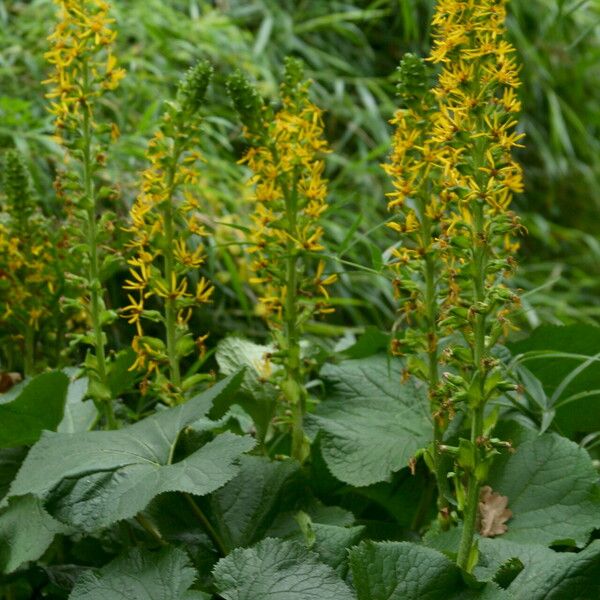
- 🍃 Elephantine Foliage: It features broad, heart-shaped (cordate) leaves with deeply serrated edges that can grow nearly a foot across, forming a lush, mounding base.
- 🏰 Sky-High Spires: In mid-to-late summer, the plant sends up dramatic, unbranched stems that can reach up to 5 or 6 feet in height.
- 🌼 Golden Racemes: The flowers are bright yellow and daisy-like, densely packed along the upper half of the tall stems, blooming from the bottom upward.
🏡 In Your Garden
- 💧 The Hydrology Indicator: This plant is a "water-gobbler." If the soil dries out even slightly, the massive leaves will dramatically wilt to signal its thirst, though they usually perk up instantly once deep-watered.
- 🐌 Slug Magnetism: Because it thrives in the cool, moist environments that slugs and snails love, its succulent leaves are often targeted; keeping the area clear of debris helps protect the foliage.
- 🌑 Afternoon Relief: While it loves bright light, the large leaf surface area loses moisture quickly; it performs best with protection from the harsh midday sun to prevent leaf scorch.
⚠️ Safety & Toxicity
- 🐾 Pet Safety: Ligularia veitchiana is generally considered non-toxic to dogs, cats, and horses, making it a safe choice for pet-friendly backyards.
- 👶 Mild Irritant: While not poisonous, the sap can occasionally cause mild skin irritation for those with sensitive skin. It is best to wear gloves when dividing the plant or pruning dead stalks.
✨ Fun Fact
🏛️ A Victorian Legacy: This plant is named after the famous Veitch family of Chelsea, who operated the most influential nursery of the Victorian era. They were responsible for introducing thousands of exotic species to Europe via their legendary "plant hunters."

Detailed Care Instructions








