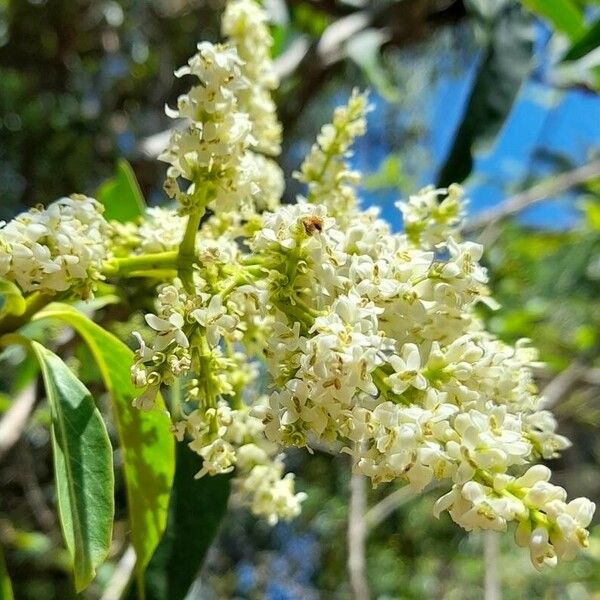
Plant Overview
Often called the Himalayan Privet, this sturdy evergreen is the "dependable neighbor" of the garden world. Originating from the high-altitude slopes of the Himalayas and Southwest China, it is celebrated for its dense, glossy foliage and its ability to create a living wall of privacy. It is a favorite among landscapers because it maintains a neat, structural look even with minimal intervention.
🔍 How to Identify
- 🍃 Leathery Leaves: The foliage is dark green, lance-shaped, and grows in opposite pairs. The leaves have a thick, waxy texture that helps the plant retain moisture.
- ☁️ Frothy Blooms: In early summer, it produces upright clusters of tiny, creamy-white flowers that emit a heavy, sweet fragrance that can fill an entire yard.
- 🟣 Inky Berries: Following the flowers, the plant produces small, oblong berries that turn a deep purple-black, providing a stark contrast against the green leaves in autumn.
🏡 In Your Garden
- ✂️ Pruning Pro: True to its "compactum" name, this plant loves a haircut. It is one of the best species for formal hedging or topiary because it flushes out with new, dense growth immediately after being trimmed.
- 💪 Urban Warrior: This plant is incredibly resilient against air pollution and poor soil quality. It is an excellent choice for city gardens or roadside borders where other, more delicate plants might struggle to breathe.
⚠️ Safety & Toxicity
- 🚫 Toxic if Ingested: All parts of the Ligustrum compactum, especially the berries and leaves, are poisonous to humans and most mammals.
- 🐾 Pet Warning: If you have dogs or cats that like to chew on garden greenery, keep them away from this shrub. Ingestion can lead to vomiting, diarrhea, and general weakness.
- 🤧 Allergy Alert: The pollen and the strong scent of the summer blooms can be a significant trigger for individuals with hay fever or asthma.
✨ Fun Fact
- 🦋 While the berries are toxic to us, they serve as a vital winter food source for birds! Additionally, in some traditional cultures, the wood of the Privet is so hard and fine-grained that it was historically used to make specialized tools and even "everlasting" charcoal.

Detailed Care Instructions
To grow Ligustrum Compactum (also known as compact privet), follow these steps:
- Choose the right location: Ligustrum Compactum requires full sun to partial shade. Select a spot that receives at least 4-6 hours of direct sunlight daily.
- Prepare the soil: Ligustrum Compactum thrives in well-draining soil. Amend the soil with organic matter such as compost to improve its fertility and drainage. Ensure the soil pH is between 6.0-8.0.
- Planting: Dig a hole that is at least twice as wide and as deep as the root ball of the plant. Place the plant in the hole, ensuring that the top of the root ball is level with or slightly above the soil surface. Backfill the hole with soil, gently firming it around the plant.
- Watering: Water the plant immediately after planting to settle the soil. After that, water deeply but infrequently, allowing the soil to dry out slightly between watering sessions. This encourages the development of a robust root system.
- Mulching: Apply a layer of organic mulch around the base of the plant, such as wood chips or shredded bark. Mulch helps retain moisture, regulates soil temperature, and suppresses weed growth.
- Fertilizing: Feed Ligustrum Compactum with a balanced slow-release fertilizer in early spring. Follow the package instructions for application rates. Avoid excessive use of nitrogen-rich fertilizer, as it can lead to increased susceptibility to pests and diseases.
- Pruning: Ligustrum Compactum responds well to pruning. Regular pruning helps maintain its compact shape and encourages bushier growth. Prune in late winter or early spring before new growth appears. Remove dead, damaged, or diseased branches. Shape the plant by selectively pruning branches to maintain its desired size and form.
- Pests and diseases: Monitor for common pests like aphids, spider mites, and scale insects. Treat infestations promptly using appropriate insecticides or by handpicking insects. Ligustrum Compactum is generally resistant to diseases, but occasionally it can be affected by leaf spots or root rot. Proper watering practices and good soil drainage can help prevent these issues.
Remember to check with your local gardening center or extension office for any specific guidance or recommendations based on your location and climate.
Ligustrum Compactum is a beautiful and popular plant that requires proper watering to thrive and remain healthy. Here are some detailed guidelines on how to water this plant:
- Observe the soil moisture: Before watering, check the moisture level of the soil. Stick your finger about 1-2 inches into the soil near the plant's base. If it feels dry at that depth, it's time to water.
- Watering frequency: Ligustrum Compactum should be watered deeply but infrequently. Aim for once or twice a week during the growing season (spring and summer) and reduce watering to once every 10-14 days during colder months (fall and winter).
- Watering method: Use a gentle and controlled watering method to ensure even distribution of moisture. Avoid using high-pressure sprays, which can damage the plant. Instead, use a watering can or a hose with a gentle spray nozzle attachment.
- Watering amount: Each watering session should provide enough water to penetrate the root zone. Generally, it is recommended to apply an inch of water during each session. However, this may vary based on the size of the plant, soil type, and climate conditions. The goal is to moisten the soil to a depth of 6-8 inches.
- Watering technique: Direct the water around the plant's base in a steady, slow, and controlled manner. Keep watering until the soil feels damp to the specified depth, but avoid overwatering, as excessive moisture can lead to root rot or other fungal problems.
- Mulching: Apply a layer of organic mulch around the base of the plant, but make sure to keep it a few inches away from the stems. Mulch helps retain moisture in the soil, reduces weed growth, and regulates soil temperature. It also minimizes evaporation and consequently reduces the frequency of watering.
- Weather conditions: Adjust your watering schedule based on weather conditions. If there is heavy rainfall, you may need to reduce or skip watering sessions. On the other hand, during extremely hot or dry periods, you may need to increase watering frequency to prevent the plant from becoming stressed.
Remember, proper watering is crucial for the health and growth of Ligustrum Compactum. However, it's always advisable to monitor your specific plant's needs and adjust watering accordingly, taking into account factors like plant size, overall health, and local climate conditions.
- Choose a slow-release fertilizer designed for hedge plants or shrubs.
- Read the fertilizer package instructions to determine the recommended application rate based on the size and age of your Ligustrum Compactum plant.
- Apply the fertilizer during the early spring, just before new growth emerges, to provide nutrients for the upcoming growing season.
- Sprinkle the fertilizer evenly around the base of the plant, extending slightly beyond the dripline (the projected area of the plant's foliage).
- Use a garden hoe or rake to lightly work the fertilizer into the top inch of soil without damaging the plant's roots.
- Water the soil thoroughly after fertilizing to help activate the nutrients and ensure they reach the plant's roots.
- Avoid over-fertilizing, as excessive amounts of nutrients may harm the plant. Follow the package instructions and do not exceed the recommended dosage.
- Reapply the fertilizer annually or as recommended by the specific fertilizer product, usually during the spring or early summer.
- Monitor the plant's overall health and growing conditions to adjust future fertilizer applications if needed.
- Always follow safety guidelines when handling chemicals, including fertilizers, and keep them out of reach from children and pets.
The optimal type of soil to use for Ligustrum Compactum plants is a well-draining soil that is rich in organic matter. This type of soil allows for proper root development and prevents waterlogging, which can lead to root rot.
The soil should have a slightly acidic to neutral pH level, ranging from 6.0 to 7.5. This pH range ensures that the plant can take up essential nutrients efficiently.
Additionally, the soil should be able to retain moisture without becoming waterlogged. Sandy loam or loamy soil types are generally recommended as they maintain a good balance of drainage and water retention.
It is advisable to amend the soil with organic matter, such as compost or well-rotted manure, before planting Ligustrum Compactum. This organic matter improves the soil structure, enhances nutrient availability, and promotes beneficial microbial activity.
Regularly add a layer of mulch around the base of the plant to conserve moisture, suppress weed growth, and regulate soil temperature.
It is essential to avoid using heavy clay soils, as they have poor drainage and can promote root suffocation. Additionally, poorly-draining soils can lead to stagnant water, causing root diseases.
Choose a soil mix that meets the above requirements to ensure optimal growth and health of Ligustrum Compactum plants.
Ligustrum Compactum is a popular shrub that can be propagated using various methods. Here are the details on how to propagate this plant:
- Stem Cuttings: Take 4-6 inch long stem cuttings from the parent plant during the spring or summer months. Ensure that the cutting has at least three sets of leaves and remove any flowers or buds. Dip the cut end in a rooting hormone to enhance the chances of successful rooting.
- Prepare the Potting Mix: Use a well-draining potting mix, which can be a combination of peat moss, perlite, and coarse sand. Moisten the mix before planting the cuttings.
- Planting the Cuttings: Make a small hole in the prepared potting mix using a pencil or your finger. Insert the cut end of the stem cutting into the hole, ensuring that at least one set of leaves is above the soil line. Gently press the soil around the cutting to secure it.
- Provide Proper Care: Place the potted cuttings in a warm location with indirect sunlight. Maintain a consistent temperature around 70-75°F (21-24°C) to encourage root development. Keep the soil moist but not soggy, as excessive moisture can cause rotting. Mist the cuttings regularly to maintain humidity.
- Rooting Time: It may take around 4-8 weeks for the cuttings to develop roots. Keep checking for root development by lightly tugging on the stem. If you feel resistance, it indicates that roots are forming.
- Transplanting: Once the cuttings have developed an adequate root system, they can be transplanted to individual pots or directly into the garden in well-prepared soil. Gradually acclimate the plants to direct sunlight to prevent sunburn.
- Continued Care: Water the newly transplanted plants regularly, especially during dry periods. Apply a balanced fertilizer once every few weeks during the growing season to promote healthy growth. Prune the plants as needed to maintain their desired shape and size.
By following these propagation steps, you can successfully propagate Ligustrum Compactum plants and enjoy their dense foliage and beautiful white flowers in your garden.








