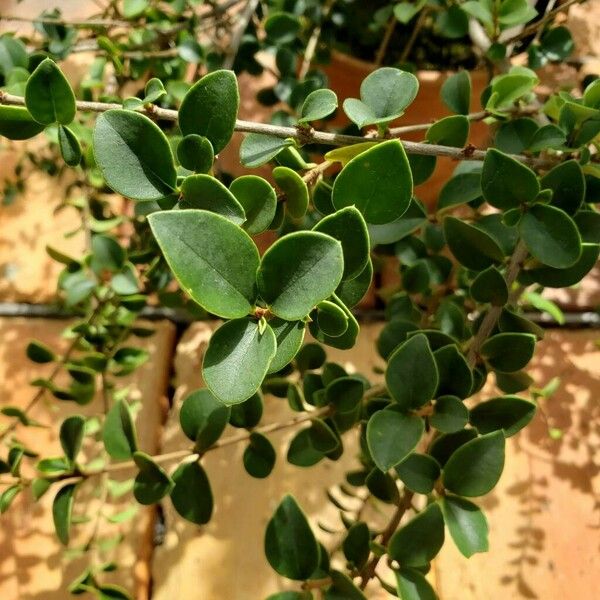
Plant Overview
Often called the Evergreen Privet or Privet-leaf Lilac, this plant is a master of endurance and year-round color. Native to the mountain slopes of China, it offers a sophisticated, waxy green backdrop that remains lush even in the depths of winter. It serves as the perfect "living wall" for gardeners who want the privacy of a hedge without the aggressive, weed-like growth of its more common relatives.
🔍 How to Identify
- 🍃 Leathery Foliage: The leaves are small, oval, and notably thick or "coriaceous." They have a deep green, glossy upper surface that helps the plant retain moisture and shed frost.
- 🌸 Tubular Blooms: In early summer, it produces terminal clusters of tiny, creamy-white flowers. These blooms are tubular and resemble miniature Lilacs, emitting a soft, honey-like fragrance.
- 🫐 Ink-Colored Berries: Following the bloom, the plant develops small, globular fruits that turn a dark purple-black. These berries often persist into the winter months.
🏡 In Your Garden
- ⏳ Slow and Steady: Unlike the Common Privet, which can quickly become unruly, Ligustrum sempervirens is a slow grower. This makes it an excellent choice for low-maintenance borders or rock gardens where you don't want to prune every two weeks.
- 🌤️ Adaptable Exposure: While it thrives in full sun, it is surprisingly tolerant of partial shade. However, if it’s tucked into a dark corner, the foliage may lose some of its characteristic "gloss" and the flowering will be less dense.
- 💧 Drainage is Vital: This plant hates "wet feet." It is highly susceptible to root rot in waterlogged soil, so ensure your planting site is well-draining or amended with grit.
⚠️ Safety & Toxicity
- 🚫 Toxic if Ingested: The berries and leaves contain terpenoid glycosides which are toxic to humans and many animals.
- 🐾 Pet Safety: If dogs or cats chew on the foliage or swallow the berries, they may experience gastrointestinal distress, including vomiting, diarrhea, and lethargy. It is best planted away from areas where pets frequently play or forage.
✨ Fun Fact
This plant is a "taxonomic bridge." While it looks and behaves like a Privet, its DNA and flower structure are so similar to a Lilac that botanists often classify it under the name Parasyringa, effectively making it a "Lilac that thinks it's a Privet."

Detailed Care Instructions








