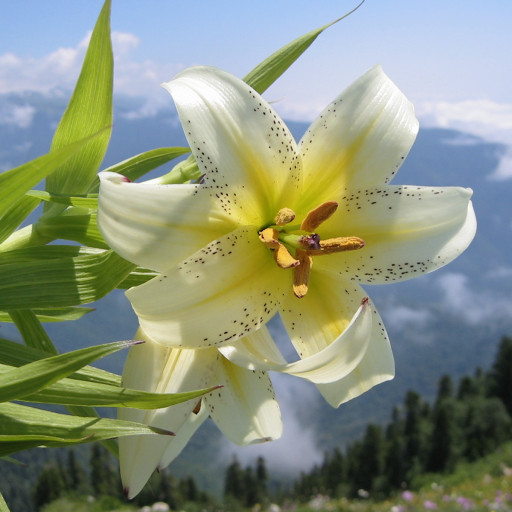
Plant Overview
Known as the "Queen of Lilies," the Lilium auratum is a breathtaking Japanese native that has captivated gardeners for centuries. Often called the Goldband Lily, it is famous for having some of the largest and most fragrant flowers in the entire plant kingdom. In Victorian times, its arrival in Europe caused a botanical sensation, and it remains a symbol of elegance and untamed mountain beauty.
🔍 How to Identify
- 👑 The "Goldband" Petals: Each massive, bowl-shaped white flower features a striking central stripe of vivid gold or lemon yellow running down each of its six petals.
- 🍷 Crimson Freckles: The inner surface of the petals is heavily "dusted" with raised, deep red or purple spots (papillae), giving the bloom a textured, exotic appearance.
- 📏 Stature and Scale: This is a giant among lilies; a single stem can reach up to 6 feet in height, supporting dozens of flowers that can each span nearly 10 inches across.
🏡 In Your Garden
- ⛰️ The Mountain Connection: Naturally growing on wooded slopes, this lily prefers "cool feet and a warm head." It thrives when its roots are shaded by other low-growing plants while its flowers bask in the sun.
- 🥣 Soil Sensitivity: Unlike many garden hybrids, the Goldband Lily is a "calcifuge," meaning it absolutely hates lime or alkaline soil. It requires acidic, humus-rich soil that drains perfectly; otherwise, the heavy bulbs are prone to rot during the winter.
- 🏗️ Heavy Lifting: Because the flower heads are so massive and heavy with nectar, the stems almost always require discreet staking to prevent them from snapping under their own weight after a summer rain.
⚠️ Safety & Toxicity
- 🐱 Fatal for Felines: Like all true lilies (Lilium genus), this plant is deadly toxic to cats. Even a small amount of pollen licked off their fur or water from a vase can cause swift, irreversible kidney failure.
- 🤢 Human/Canine Sensitivity: While less dangerous to humans and dogs, ingesting the bulbs or leaves can cause significant stomach upset, vomiting, and lethargy. It is best kept away from curious toddlers and pets.
✨ Fun Fact
In its native Japan, the Goldband Lily is known as Yama-yuri (Mountain Lily). While we prize it for its beauty today, the starchy bulbs were traditionally harvested from the wild, boiled, and eaten as a vegetable—a practice that continues in some specialized Japanese culinary traditions!

Detailed Care Instructions
| Lighting | Full Sun |
To grow Lilium Auratum, also known as the Goldband Lily or the Trumpet Lily, you can follow these steps:
- Climate: Ensure that you live in a suitable climate for Lilium Auratum. They prefer temperate regions with cool winters and mild summers.
- Location: Select a planting location that receives full sun to partial shade. The area should have well-draining soil that is slightly acidic.
- Soil preparation: Prepare the soil by adding organic matter like compost or well-rotted manure. This will improve drainage and fertility. The pH level should range between 6.0 and 6.5.
- Planting: Plant the Lilium Auratum bulbs in the fall, approximately 6-8 inches deep and 12-18 inches apart. Make sure the pointed end of the bulb is facing up.
- Watering: Water the bulbs immediately after planting to help them establish roots. Once they are established, water regularly and keep the soil evenly moist but not waterlogged. Be careful not to overwater as this can cause bulb rot.
- Fertilizer: Apply a slow-release fertilizer specifically formulated for bulbs in early spring and then again after the lilies have finished blooming. Follow the package instructions for recommended amounts.
- Mulching: Apply a layer of organic mulch like straw or wood chips around the plants to help conserve moisture and suppress weeds. Mulching also helps keep the soil cooler in the summer.
- Support: Lilium Auratum can grow quite tall, so it's a good idea to provide support like stakes or a trellis to prevent the plants from falling over.
- Pruning: After the flowers have faded, remove the spent blooms. However, allow the foliage to die back naturally as this helps to replenish the bulb for the next season.
- Pests and Diseases: Monitor for common lily pests such as aphids, lily beetles, and slugs. Treat infestations immediately to prevent any damage. Also, be on the lookout for diseases like botrytis blight and fungal infections. Provide good air circulation and avoid overhead watering to minimize the risk of disease.
- Division: Lilies benefit from division every few years to maintain vigor. In early spring or late fall, dig up the bulbs, carefully separate the offsets from the main bulb, and replant them in new locations.
By following these steps, you should be able to successfully grow Lilium Auratum and enjoy its beautiful golden blooms.

Place in a window with dappled sun or a spot in the middle of a room. Or directly in a window facing west or east.

To properly water this particular species of plant, it is recommended that you first ensure that the soil is moist to the touch before watering. This can be achieved by sticking your finger about an inch or two into the soil to feel for any dryness. Once you have confirmed that the soil is dry, you can proceed to slowly and evenly drench the soil with water until it is completely saturated. It is important to avoid getting water on the leaves or flowers as this can cause damage or disease to the plant. Additionally, it is recommended that you allow the soil to dry out slightly before watering again, as overwatering can also be harmful to the plant's health.
- Start fertilizing the Lilium Auratum plant in early spring, once new growth begins to appear.
- Choose a slow-release balanced fertilizer with equal amounts of nitrogen (N), phosphorus (P), and potassium (K). Look for a formulation such as 10-10-10 or 14-14-14.
- Spread the fertilizer granules evenly around the base of the plant, taking care not to let them touch the stem or foliage.
- Use a garden fork or a hand rake to gently work the granules into the top inch of soil.
- Water the plant thoroughly after applying the fertilizer to help it dissolve and reach the plant's roots.
- Repeat fertilization every six to eight weeks throughout the growing season to ensure continued nutrient supply.
- During the fall and winter months, refrain from fertilizing the Lilium Auratum plant, as it enters a period of dormancy.
- Monitor the plant for any signs of nutrient deficiency, such as yellowing leaves or stunted growth. If necessary, adjust the fertilizer application accordingly.
- Follow the manufacturer's instructions on the fertilizer packaging for specific dosages and safety precautions.
- Remember to always observe proper fertilization practices, as over-fertilization can harm the plant and surrounding environment.
Lilium Auratum prefers well-draining soil that is rich in organic matter. The soil should also be slightly acidic with a pH range between 5.5 and 6.5, as alkaline soils can stunt the growth of this plant. It is essential to avoid heavy clay soils that retain water, as this can cause root rot. If the existing soil is too heavy, adding perlite or sand to the potting mix can help improve drainage. Additionally, the plant requires regular fertilization, either with a balanced complete fertilizer or one tailored for flowering bulbs to support its growth and blooming.
Lilium auratum, a species of lily, can be propagated through various methods, including bulb division, scaling, and seed sowing. Here is a step-by-step guide on how to propagate Lilium auratum:
- Bulb Division:
- Start by preparing the lily bulbs during the dormant season, usually in late summer or early autumn.
- Gently dig up the parent plant, being careful not to damage the bulbs.
- Separate the bulbs by removing any scales or offsets attached to the main bulb. Each division should have its own set of roots.
- Inspect the bulbs for any signs of disease or damage and discard any unhealthy ones.
- Dust the separated bulbs with a fungicide to prevent infection.
- Replant the bulbs immediately, making sure to provide adequate spacing and well-draining soil.
- Start by preparing the lily bulbs during the dormant season, usually in late summer or early autumn.
- Scaling:
- Choose a healthy Lilium auratum bulb and carefully remove scales from the basal plate, preferably during the dormant period.
- Disinfect the scales with a fungicide to minimize the risk of fungal infections.
- Fill a sterile propagation tray or pots with a well-draining medium, such as a mixture of perlite, sand, and peat moss.
- Place the scales horizontally onto the surface of the medium, making sure to space them out to allow for proper air circulation.
- Cover the tray or pots with a clear plastic bag or use a propagator to maintain high humidity levels.
- Keep the trays in a warm and bright location but away from direct sunlight.
- After a few weeks, small bulblets will begin to form at the base of the scales.
- Once the bulblets reach a suitable size, gently separate them from the scales and transfer them into individual pots for further growth.
- Choose a healthy Lilium auratum bulb and carefully remove scales from the basal plate, preferably during the dormant period.
- Seed Sowing:
- Collect mature seeds from Lilium auratum flowers during the growing season, usually in late summer or early autumn.
- Remove the seeds from the seed capsules and soak them in water for 24 hours to soften the hard seed coat.
- Prepare a shallow tray or pots filled with a well-draining, sterile seed-starting mix.
- Sow the seeds onto the surface of the mix, ensuring they have enough space between them.
- Lightly press the seeds into the surface of the mix but do not cover them completely, as they require light for germination.
- Mist the tray or pots with water to moisten the soil, then cover them with a plastic bag to create a humid environment.
- Place the tray or pots in a warm location with indirect light.
- Check regularly for signs of germination, which typically takes 2-6 weeks.
- Once the seedlings reach a suitable size, carefully transplant them into individual pots or nursery beds, ensuring not to damage their delicate roots.
Remember to provide the propagated Lilium auratum plants with suitable growing conditions, including bright but indirect sunlight, regular watering, and well-draining soil. With proper care, they will develop into healthy and blooming plants.
- Collect mature seeds from Lilium auratum flowers during the growing season, usually in late summer or early autumn.
Common pests of the golden-rayed lily include Spider mites, aphids, thrips, larvae. Make a habit of checking your golden-rayed lily frequently for pests so that any infestations can be caught and managed early.








