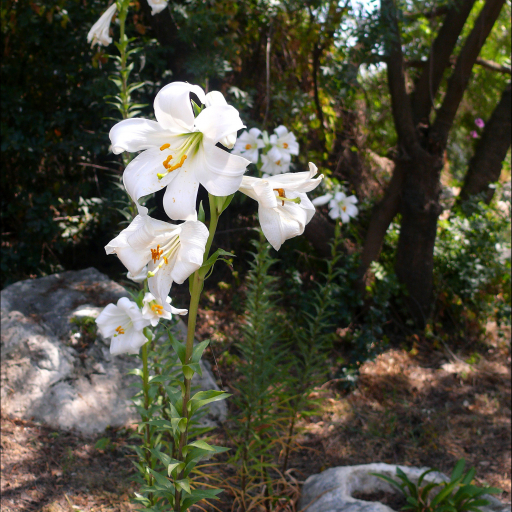
Plant Overview
The Madonna Lily is a timeless symbol of purity, often depicted in Renaissance paintings clutched by saints or the Virgin Mary. This elegant Mediterranean native is one of the oldest cultivated flowers in history, celebrated for thousands of years for its pristine white petals and a fragrance so potent it can perfume an entire garden after sunset.
🔍 How to Identify
- 🌸 The Bloom: Features large, trumpet-shaped flowers of a luminous, pure white. Unlike many modern hybrids, these blossoms are held horizontally and lack any spots or stripes.
- 🍯 The Fragrance: Produces an intensely sweet, heavy scent that is particularly strong during warm summer evenings to attract pollinators.
- 🌿 The Foliage: Unique among lilies, it grows a "basal rosette" of leaves in late summer or autumn that stays green through the winter. In spring, a tall, sturdy stem rises from this rosette, lined with smaller, lance-shaped leaves.
🏡 In Your Garden
- 🏔️ Soil Preference: While most lilies prefer acidic soil, the Madonna Lily is a "calcicole," meaning it thrives in alkaline or lime-rich soil. It requires exceptional drainage; heavy, waterlogged clay will quickly cause the bulb to rot.
- ☀️ Shallow Planting: This plant breaks the rules of lily care. While most lilies are planted deep, Lilium candidum bulbs should be tucked just 1 inch (2.5 cm) below the soil surface. This allows the sun to warm the bulb and mimics its natural Mediterranean habitat.
⚠️ Safety & Toxicity
- 🐱 Fatal for Felines: EXTREME DANGER. Like all members of the Lilium genus, this plant is highly toxic to cats. Ingesting even a small amount of leaf, petal, or even licking pollen off their fur can cause rapid, fatal kidney failure.
- 👶 Human Sensitivity: The plant is generally considered toxic if ingested by humans, potentially causing stomach upset, vomiting, and lethargy. The heavy pollen can also be a significant irritant for those with seasonal allergies or asthma.
✨ Fun Fact
🏛️ Ancient Roots: This lily is a living fossil of garden history. Archaeologists discovered depictions of Lilium candidum in Minoan frescoes on the island of Crete dating back to roughly 1500 BCE, proving humans have been mesmerized by this flower for over 3,500 years.

Detailed Care Instructions
| Lighting | Full Sun |
To grow Lilium Candidum plant (also known as Madonna Lily), you can follow these steps:
- Choose the right location: Madonna Lilies prefer a location with full sun to partial shade. Ensure the soil drains well and is rich in organic matter.
- Prepare the soil: Before planting, amend the soil with compost or well-rotted manure to enhance fertility and drainage. Mix it well with the existing soil.
- Planting: Plant the bulbs in autumn or early spring. Dig a hole about 6-8 inches deep and place the bulb with the pointed end facing upwards. Space each bulb at least 12 inches apart to allow air circulation.
- Watering: Keep the soil moderately moist, especially during the growing season. Avoid overwatering, as it can lead to root rot. Water the plant deeply once or twice a week, ensuring the water reaches the roots.
- Fertilizing: Lilium Candidum benefits from a balanced fertilizer applied in early spring. Use a slow-release granular fertilizer or a water-soluble fertilizer, following the package instructions. Avoid excessive use of nitrogen, as it can promote leaf growth rather than flower production.
- Mulching: Apply a layer of organic mulch around the base of the plant to retain moisture, suppress weed growth, and keep the soil cool.
- Supports: As the Madonna Lily grows, it may require staking to support the tall stems. Install stakes or trellises early in the growing season to prevent damage.
- Pruning: Deadhead the faded flowers to encourage the plant to focus its energy on new growth and flowering. Cut the stem just below the spent flower. After flowering, allow the foliage to die back naturally before removing it.
- Winter care: In areas with cold winters, apply a layer of mulch or straw around the base of the plant to provide insulation. This protects the bulbs from freezing temperatures.
- Pests and diseases: Madonna Lilies are generally resistant to pests and diseases. However, keep an eye out for aphids, snails, and lily beetles. Treat any infestations promptly with organic insecticides or by handpicking.
By following these guidelines, you can successfully grow Lilium Candidum and enjoy the beautiful flowers it produces.

Place in a window with dappled sun or a spot in the middle of a room. Or directly in a window facing west or east.

To water this plant, you should wait until the top layer of soil is dry to the touch. When watering, make sure to thoroughly saturate the soil until water begins to drain out of the bottom of the container or onto the ground. Avoid over-watering, as this can lead to root rot and other issues. It is also important to provide adequate drainage for the plant to prevent water buildup. When watering, try to avoid getting water on the leaves or flowers, as this can cause damage or promote fungal growth. Keep the soil evenly moist but not waterlogged, and adjust watering frequency as needed depending on environmental conditions and the growth stage of the plant.
To fertilize this plant, you should apply a balanced fertilizer with equal proportions of nitrogen, phosphorus, and potassium. The best time to fertilize is during the growing season, which is typically in the spring to early summer. Apply the fertilizer in a ring around the base of the plant, making sure to keep it away from the stem. Water the plant thoroughly after fertilizing to help the nutrients penetrate the soil. Be careful not to over-fertilize, as this can burn the roots and harm the plant.
The soil to use with this plant should be well-draining and rich in organic matter. It should have a slightly acidic to neutral pH level of around 6.0-7.0. It should also be moist, but not waterlogged, as the plant does not tolerate standing water. The soil should be loosened and amended with compost or other organic matter before planting to improve its texture and fertility. It is important to ensure that the soil is free of weeds and plant debris before planting to prevent the spread of diseases.
One way to propagate this plant is by dividing the bulbs. To do this, wait until the plant has finished flowering and the leaves have turned yellow. Dig up the bulbs and carefully separate the smaller ones from the parent bulb. Each new bulb should have a portion of the stem attached. Plant the new bulbs in a well-draining soil mix, leaving the tops of the bulbs just below the surface. Water thoroughly and keep the soil consistently moist until new growth appears. Another method of propagation is through scaling. This involves taking small pieces of the scale at the base of the plant and planting them in soil or a nutrient-rich propagation medium. The scales include a small portion of the basal plate and should be planted just below the surface of the soil. Keep the soil moist but not waterlogged, and wait for new growth to emerge.
Common pests of the madonna lily include Spider mites, aphids, thrips, larvae. Make a habit of checking your madonna lily frequently for pests so that any infestations can be caught and managed early.








