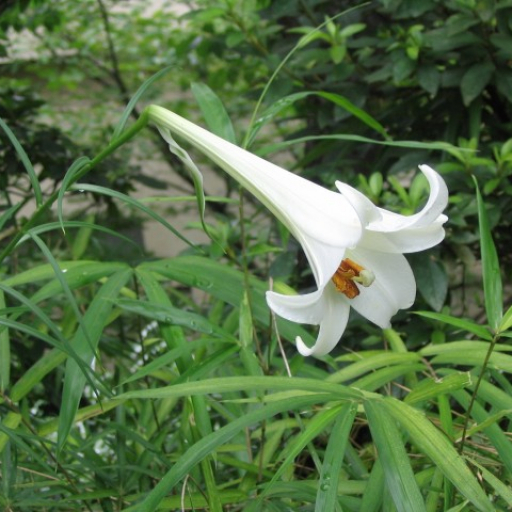
Plant Overview
Native to the sun-drenched mountains and coastal cliffs of Taiwan, Lilium formosanum is often called the "Formosa Lily" or the "Wonder Lily." It is a towering, elegant species that brings a touch of architectural drama to any landscape. Unlike many other lilies that take years to mature, this species is famous for its rapid growth and its ability to fill the air with a heavy, sweet perfume during the late summer months.
🔍 How to Identify
- 🎺 The Bloom: Large, nodding, trumpet-shaped flowers that are pure white on the inside, often featuring distinct maroon or purplish-wine stripes on the outer petals.
- 🌿 The Foliage: Exceptionally narrow, dark green, grass-like leaves that spiral densely up the stem, giving the plant a refined, textured look even before it blooms.
- 📏 The Stature: A surprisingly slender but strong stem that can reach heights of 4 to 7 feet, topped with one to several large, fragrant blossoms.
🏡 In Your Garden
- 🌱 The "Wonder" Growth: This lily is unique because it can grow from a tiny seed to a flowering adult in just a single year. This makes it a favorite for gardeners who want quick results without waiting years for traditional bulbs to mature.
- ☀️ Sun and Drainage: While it loves basking in the sun, its "feet" (the bulb and roots) prefer to stay cool and moist. Planting it among low-growing perennials helps shade the soil while the flowers reach for the light.
- 🌬️ Wind Protection: Because of its extreme height and slender stem, it can act like a sail in high winds. Staking is often necessary to prevent these "ivory towers" from leaning or snapping during summer storms.
⚠️ Safety & Toxicity
- 🐱 Critical Warning for Cats: Like all true lilies (Lilium genus), this plant is deadly toxic to cats. Even a small amount of pollen licked off their fur or water from a vase can cause fatal kidney failure.
- 👶 Humans & Dogs: While not as dangerous to humans or dogs as it is to cats, ingesting the plant can still cause stomach upset, vomiting, or lethargy. It is best kept out of reach of curious toddlers.
✨ Fun Fact
The Formosa Lily is a champion of reproduction; a single seed pod can contain up to 1,000 papery, wind-dispersed seeds. This "reproductive enthusiasm" has earned it a reputation as a bit of a wanderer, often popping up in unexpected corners of the garden where the wind dropped its cargo.

Detailed Care Instructions
To grow Lilium Formosanum plants, also known as Formosa lily or Taiwan lily, follow these steps:
- Choose a suitable location: Formosa lilies prefer sunny to partially shaded areas. Select a spot in your garden that receives at least 6 hours of sunlight per day.
- Prepare the soil: Formosa lilies thrive in well-draining soil. Add organic matter such as compost or well-rotted manure to the soil to improve its fertility and drainage. The soil pH should be slightly acidic to neutral.
- Planting: Dig a hole that is twice the depth and width of the bulb. Place the bulb in the hole with its roots facing downwards and cover it with soil. Space multiple bulbs at least 6 inches apart to allow proper growth.
- Watering: After planting, water the bulbs thoroughly to settle the soil and remove any air pockets. Ensure that the soil is evenly moist, but not waterlogged. During the growing season, water regularly to keep the soil consistently moist.
- Mulching: Apply a layer of organic mulch, such as wood chips or straw, around the base of the plants. This will help retain moisture, suppress weed growth, and provide insulation during extreme temperatures.
- Fertilizing: Apply a balanced fertilizer, such as a 10-10-10 or 14-14-14 formula, in the spring when new growth appears. Follow the instructions on the fertilizer packaging for application rates. Avoid over-fertilizing, as it can lead to leggy growth or reduced flowering.
- Staking: As Formosa lilies grow tall, they may require support to prevent them from falling over during heavy rain or winds. Insert stakes or a plant support ring around the plants to provide support.
- Protect from pests and diseases: Formosa lilies are generally resistant to common pests and diseases. However, you may still encounter issues like aphids or lily beetles. Monitor your plants regularly, and if necessary, use organic pest control methods or consult a local garden center for advice.
- Propagation: Formosa lilies can be propagated by dividing mature clumps in the early spring or fall. Lift the bulbs carefully, separate the smaller bulbs from the main clump, and replant them in a suitable location.
- Winter care: In colder climates, mulch the planting area heavily in the fall to protect the bulbs from frost. Remove the mulch in the spring as the weather warms up.
By following these steps, you should be able to successfully grow Lilium Formosanum plants and enjoy their beautiful blooms.

Place in a bright room that is sun drenched almost all day. Or directly in a south-facing window.

To properly water your Lilium Formosanum plant, you should first check the soil to ensure that the top layer is dry before watering. Overwatering can lead to root rot, so it is important to not water the plant too frequently. When you do water, make sure to thoroughly saturate the soil and allow any excess water to drain out of the bottom of the pot. It is recommended to use room temperature water to prevent shocking the plant's roots. Avoid getting water on the leaves or flowers as this can lead to disease or damage. The plant should be watered regularly, but the frequency may vary based on the temperature and humidity levels in your environment.
To fertilize this plant, use a balanced fertilizer with equal amounts of nitrogen, phosphorus, and potassium. Apply the fertilizer at a rate of 1 tablespoon per gallon of water every two weeks during the growing season. Avoid applying fertilizer directly to the leaves or stems as this can burn the plant. Water the plant thoroughly before and after fertilizing. Additionally, if the soil is lacking in nutrients, add compost or organic matter to the soil to improve fertility.
The best type of soil to use with the Lilium Formosanum plant is one that is well-draining and rich in organic matter. It should be slightly acidic, with a pH level of around 6.0 to 6.5. A soil mixture that consists of peat moss, perlite, and vermiculite provides good aeration, moisture retention, and nutrient supply for the growth of this plant. The soil should be well-cultivated before planting, ensuring that it is loose and easy for the plant's roots to penetrate. Additionally, it is important to avoid heavy soils, such as clay, which can cause excessive moisture retention and hinder the growth of the plant.
One method to propagate this plant is through bulb division. Gently dig up the parent plant and carefully separate any smaller bulbs that have formed around the base of the larger bulb. Each smaller bulb should have its own root system and a portion of the stem attached. Plant these smaller bulbs in well-draining soil at the appropriate depth for the species.
Another method is through scaling, which involves removing scales from the parent bulb and propagating new plants from these scales. To do this, select healthy scales from the bulb, making sure they have no signs of disease or damage. Sterilize a sharp knife and slice each scale from the bulb, making sure to include a small piece of basal plate at the bottom of the scale. Dust the scales with fungicide to help prevent disease, and then plant each scale into a sterile potting mix, burying them so that only the basal plate is covered. Keep the soil moist and warm until plantlets emerge from the scales and develop roots, and then carefully transplant them into larger containers or into the garden.








