Plant Overview
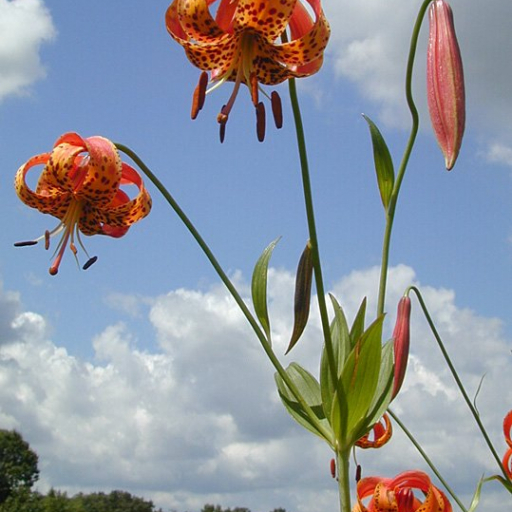
Often called the "Jewel of the Prairie," the Michigan Lily is a breathtaking wildflower native to the tallgrass prairies and wet meadows of North America. Its dramatic, nodding blooms look like flickering orange lanterns suspended in the air. While it resembles a garden ornamental, this hardy native is a vital part of its ecosystem, providing nectar for swallowtails and hummingbirds.
🔍 How to Identify
- 🌸 The Bloom: Large, nodding flowers with petals that curve sharply backward (reflexed), showing off a golden-orange hue peppered with dark brownish-purple spots.
- 🍃 Leaf Whorls: Unlike many garden lilies, its leaves grow in "whorls," meaning they circle the stem in tidy tiers like the spokes of a wheel.
- 📏 Growth Habit: A tall, stately plant that can reach up to five feet, often topped with a "candelabra" of one to ten dangling blossoms.
🏡 In Your Garden
- 💧 Moisture Logic: This lily naturally grows in fens and wet meadows, meaning it dislikes "dry feet." It thrives in soil that stays consistently moist but has enough organic matter to prevent it from becoming stagnant.
- ⏳ Slow & Steady: It is a patient grower that invests heavily in its bulb system. If you are planting from seed, don't be discouraged—it can take several years before the plant is mature enough to produce its first magnificent flower.
- 🦋 The Pollinator Pivot: Because the flowers hang downward, they are specifically designed for large butterflies (like the Tiger Swallowtail) that can flap their wings while clinging to the petals to feed.
⚠️ Safety & Toxicity
- 🐱 Feline Warning: Highly toxic to cats. Like all true lilies (Lilium genus), every part of this plant—including the pollen and the water in a vase—can cause fatal kidney failure in felines.
- 🐕 Dogs & Humans: Generally considered non-toxic to dogs and humans, though the bulbs can cause mild digestive upset if ingested in significant quantities.
- 🖐️ Skin Contact: Safe to touch; it does not cause the "contact dermatitis" associated with plants like poison ivy.
✨ Fun Fact
The Michigan Lily is often mistaken for its cousin, the Turk’s Cap Lily. To tell them apart, look at the very center of the flower where the petals meet: the Turk’s Cap has a distinct green "star" at the base, while the Michigan Lily's center is typically yellow or orange.

Detailed Care Instructions
To successfully grow Lilium michiganense plants, follow these steps:
- Location: Choose a site that receives full to partial sunlight for at least 6 hours a day. Make sure the soil is well-drained and rich in organic matter.
- Planting time: Plant the bulbs in the spring or fall. Fall planting is preferable as the bulbs will have time to establish roots before winter.
- Soil preparation: Dig a hole about 6-8 inches deep and remove any rocks, weeds, or debris. Mix some compost or well-rotted manure into the soil to improve its fertility and drainage.
- Planting the bulbs: Place the bulbs in the prepared hole, with the pointed end facing upwards. Space the bulbs about 6-8 inches apart to allow room for growth. Cover the bulbs with soil and gently firm it down. Water the area thoroughly.
- Watering: Keep the soil evenly moist but not excessively wet. Regular watering is important, especially during dry spells. Avoid standing water, as it can cause bulb rot.
- Mulching: Apply a layer of organic mulch, such as wood chips or straw, around the plants. This helps retain moisture, suppress weeds, and regulate soil temperature.
- Fertilization: Fertilize the plants in early spring with a balanced slow-release fertilizer or a bulb-specific fertilizer. Follow the package instructions for application rates.
- Support: Stake tall lilies to prevent them from toppling over in windy conditions. Use bamboo stakes or other supports, and tie the stems gently to avoid damaging them.
- Pruning: After blooming, allow the foliage to die back naturally. This helps the plant store energy for the following year. Once the leaves have turned brown and withered, you can trim them back to the ground.
- Pest and disease control: Monitor the plants for common lily pests like aphids, lily beetles, or slugs. In case of infestation, consider using organic pest control methods or consult a local garden center for advice.
- Winter care: In colder regions, protect the bulbs during winter by applying a layer of mulch or straw to insulate them. This prevents freezing and thawing cycles that can damage the bulbs.
By following these steps and providing adequate care, you can successfully grow Lilium michiganense plants in your garden.

Place in a bright room that is sun drenched almost all day. Or directly in a south-facing window.

To water this plant, wait until the soil has dried out slightly before thoroughly saturating it with water. Be careful not to overwater, as this can lead to root rot. Make sure to water regularly during the growing season and reduce watering during the dormant period. Avoid getting water on the leaves and flowers, as this can cause damage or disease. It is recommended to use a well-draining soil mix and a container with drainage holes.
- Choose a balanced fertilizer, such as a 10-10-10 NPK (nitrogen-phosphorus-potassium) fertilizer.
- Apply the fertilizer in the spring, just as new shoots begin to emerge.
- Water the plant thoroughly before applying fertilizer to ensure the soil is moist.
- Sprinkle the fertilizer around the base of the plant, keeping it away from the stem or leaves.
- Gently work the fertilizer into the soil with a hoe or cultivator.
- Water the plant after fertilizing to help the nutrients soak into the soil.
- Repeat fertilizing every 4 to 6 weeks during the growing season to promote healthy growth and vibrant blooms.
Lilium Michiganense plant requires soil that is rich in nutrients and well-draining. It prefers soil that is slightly acidic to neutral with a pH range of 6.0 to 7.0. The soil should be moist but not waterlogged to prevent root rot. It is recommended to mix organic matter such as compost or well-rotted manure into the soil before planting to improve its texture and fertility. The plant also benefits from a layer of mulch around its base to help retain moisture and suppress weed growth. When choosing soil for this plant, it is important to avoid heavy clay soils and sandy soils that are prone to drying out too quickly.
To propagate this particular plant, identify the parent plant that you want to propagate from and select a healthy bulb that is at least two years old. Bury it in a well-draining potting mix, with the pointed end of the bulb facing upwards.
Keep the soil moist but not waterlogged and place the pot in a location with bright, indirect light. Make sure the temperature is between 60-70°F (15-21°C).
After a few weeks, you should see new shoots emerging from the soil. As the plant grows, keep it in a well-lit location and continue to water it regularly.
When the plant has grown to a suitable size, you can either keep it in a container or transplant it into a larger pot or directly into the garden. If transplanting outdoors, make sure to choose a location with partial shade and well-draining soil.
Be patient as it can take a few years for the plant to mature and produce its distinct, bell-shaped flowers.








