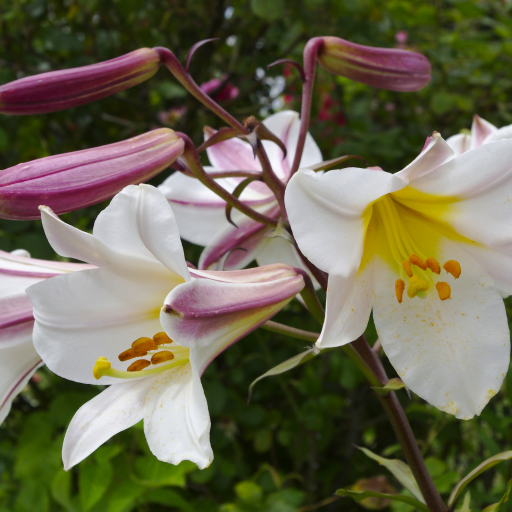
Plant Overview
Known as the "Regal Lily" or "King’s Lily," this plant is the undisputed crown jewel of the summer garden. Discovered in the rugged, wind-swept mountains of Sichuan, China, its arrival in the West is a legendary tale of botanical adventure and survival. Its intoxicating, spicy perfume and massive, porcelain-white trumpets make it a favorite for those wanting a touch of classic elegance and a scent that fills the entire neighborhood at dusk.
🔍 How to Identify
- 🎺 The Bloom: Massive, outward-facing trumpet flowers that are snowy white on the inside with a glowing yellow throat.
- 🎨 The Reverse: The exterior of the petals features striking streaks of deep purple or brownish-pink, distinguishing it from pure white lilies.
- 🌿 The Foliage: Numerous narrow, lance-shaped leaves that densely spiral up the tall, sturdy stems like a green staircase.
- 🧡 The Anthers: Prominent golden-orange pollen sacs that hang heavily from the center, adding a bright pop of contrast to the white petals.
🏡 In Your Garden
- 🦶 Cool Feet, Warm Head: These lilies thrive when their roots are shaded by other low-growing plants or mulch while their heavy flower heads bask in full sunlight.
- 🏗️ Architectural Height: Reaching up to five feet tall, they rarely need staking despite their size, though in very windy areas, a bit of support helps keep the "crown" upright.
- 🏺 Drainage is Key: They are surprisingly hardy but will rot quickly in soggy soil. Plant them in a spot where water never pools, ideally in a slightly gritty or sandy mix.
⚠️ Safety & Toxicity
- 🐱 CRITICAL WARNING: This plant is deadly to cats. Every part of the lily—including the pollen and the water in a vase—can cause rapid, fatal kidney failure in felines.
- 👶 Human Safety: While not as dangerous to humans or dogs, ingesting any part of the plant can cause nausea, vomiting, or mouth irritation.
- 🧤 Pollen Stains: The heavy orange pollen can permanently stain clothing and skin; many gardeners choose to snip the anthers off when using them as cut flowers.
✨ Fun Fact
The plant’s discoverer, Ernest Henry Wilson, nearly died to bring this flower to the world. During a 1910 expedition in China, his caravan was hit by a landslide; he survived with a shattered leg that resulted in a permanent "Lily Limp," but he successfully brought back the bulbs that started the global Regale craze.

Detailed Care Instructions
To grow Lilium Regale (also known as the Royal Lily), follow these steps:
- Choosing the right location: Lilium Regale prefers a sunny or partly shaded spot in your garden. It should have well-drained soil, as lilies don't like soggy conditions.
- Soil preparation: Before planting, loosen the soil and remove any weeds or debris. You can add organic matter like compost or well-rotted manure to improve soil fertility.
- Planting time: The best time to plant Lilium Regale bulbs is in autumn, allowing them to establish roots before winter. If planting in spring, make sure to choose pre-chilled bulbs.
- Planting depth: Dig a hole that is roughly three times the depth of the bulb. Place the bulb in the hole with the flat side down and the pointed end facing up.
- Spacing: Leave about 8-12 inches (20-30 cm) between each bulb to allow for growth and airflow.
- Watering: After planting, water the bulbs thoroughly, ensuring the water reaches deep into the soil. This will help settle the soil around the bulbs and promote root growth.
- Mulching: Apply a layer of organic mulch around the base of the plants, which will help retain moisture and suppress weeds.
- Fertilizing: Lilium Regale plants benefit from regular fertilization during the growing season. Use a balanced, slow-release fertilizer according to the package instructions, or apply a liquid fertilizer every few weeks.
- Staking: As the tall stems of Lilium Regale grow, they may require support. Consider using stakes or a plant support system to prevent them from bending or breaking under their weight.
- Pruning: Deadhead spent flowers to encourage more blooms and remove yellowing or damaged leaves to maintain a neat appearance.
- Pests and diseases: Keep an eye out for common lily pests like aphids, lily leaf beetles, and slugs. Use organic pest control methods or chemical options if necessary. Ensure good air circulation to prevent fungal diseases.
- Overwintering: In colder climates, mulch the area around the bulbs in late autumn to provide some insulation and protect them from frost.
By following these steps and providing appropriate care, you can successfully grow Lilium Regale in your garden and enjoy the beauty and fragrance of its elegant white trumpet-shaped flowers.

Place in a bright room that is sun drenched almost all day. Or directly in a south-facing window.

To water this plant, you should first ensure that the water you are using is at room temperature. You should then fill up a watering can with water and gently pour it onto the soil around the plant, being careful not to get any water on the leaves.
It is important not to overwater this plant, as excess water can cause the roots to rot. To check if the soil needs watering, you can insert your finger into the soil up to your second knuckle. If the soil feels dry, it is time to water the plant.
During periods of growth, you may need to water the plant more frequently. However, in colder months when the plant is dormant, you can reduce watering to once a week.
It is also important to provide adequate drainage for this plant. If the soil is not able to drain properly, it can lead to issues with mold and root rot. Ensure that there are drainage holes at the bottom of your pot or container, and consider adding a layer of gravel or rocks at the bottom to improve drainage.
To fertilize this plant, use a balanced, water-soluble fertilizer with an NPK ratio of 10-10-10. Fertilize once every two weeks during the growing season, diluting the fertilizer to half strength. Avoid fertilizing during the plant's dormant period. Apply the fertilizer to damp soil, being careful not to get any on the leaves or stem. Water the plant thoroughly after fertilizing.
It is recommended to use a type of soil that is well-draining and rich in nutrients for this particular plant species. The soil should also have a pH level that is slightly acidic. Choose a soil that has a good balance of organic matter and minerals, with a texture that allows for water to flow through easily but also retains moisture. Avoid using soils that are too heavy or clay-like, as these can trap water and lead to root rot. Adding additional compost or aged manure can help improve the soil's nutrient content and structure.
- Choose a mature and healthy Lilium Regale plant to propagate.
- Take a sharp, sterilized knife and make a clean cut on the stem just below a node.
- Remove any leaves or flowers from the stem.
- Fill a pot with moist, well-draining soil. You can also use vermiculite or perlite instead of soil.
- Dip the cut end of the stem into rooting hormone powder, shaking off excess powder.
- Create a small hole in the soil with your finger or the end of a pencil and place the stem cutting into the hole.
- Firm the soil around the stem to ensure it remains upright.
- Cover the pot with a plastic bag or plastic wrap to increase humidity and place it in a bright, warm spot out of direct sunlight.
- Check the soil regularly and water it when it starts to dry out.
- After 2-3 weeks, gently tug on the stem to check if roots have formed. If it resists, it means roots have formed and you can remove the plastic cover.
- Continue caring for the Lilium Regale plant cutting until it has matured enough to be transplanted into a larger pot or to a garden bed.
Common pests of the royal lily include Spider mites, aphids, thrips, larvae. Make a habit of checking your royal lily frequently for pests so that any infestations can be caught and managed early.








