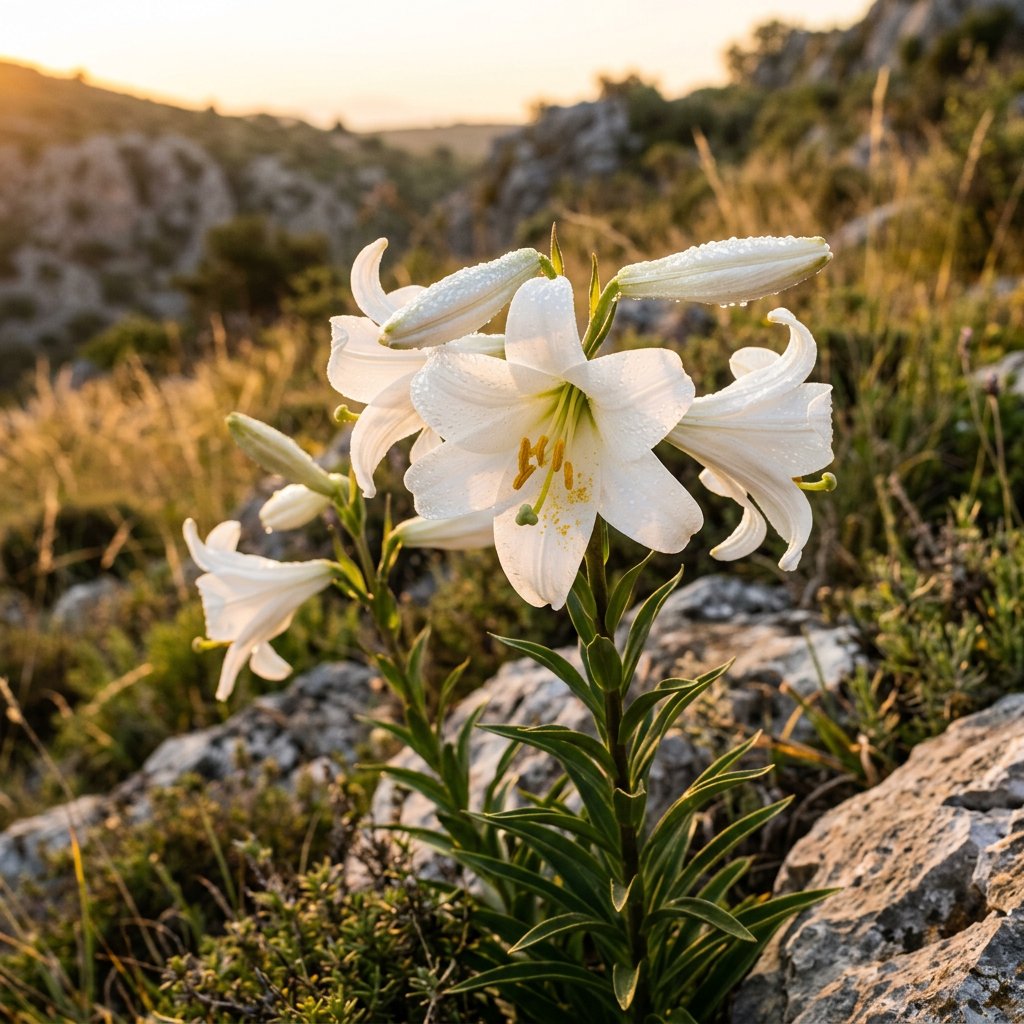
Plant Overview
Often called the "Queen of the Summer Garden," Lilium species have been revered for millennia, appearing in everything from ancient Minoan frescoes to royal crests. These elegant perennials are famous for their large, fragrant, trumpet-shaped blooms that command attention in any landscape. Whether they are the spotted "Tiger Lily" or the pristine "Easter Lily," they symbolize purity, rebirth, and refined beauty across many cultures.
🔍 How to Identify
- 🌸 Showy Blooms: The flowers are composed of six segments (three petals and three sepals that look identical), often shaped like trumpets, bowls, or bells with recurved edges.
- 🍃 Stately Foliage: Their narrow, lance-shaped leaves are usually arranged in a spiral around the central stem or in neat circular "whorls."
- 📍 Prominent Stamens: Look for the six long, protruding filaments topped with heavy, pollen-laden anthers that often sway prominently in the breeze.
🏡 In Your Garden
- 💧 Bulb Health: Lilies grow from fleshy bulbs that lack a protective outer "skin," making them prone to drying out or rotting. They require exceptionally well-draining soil; they simply cannot tolerate "wet feet."
- ☀️ The Cooling Trick: A classic rule for lilies is "heads in the sun, feet in the shade." They love bright light for their flowers but prefer their root zones to stay cool, which is easily achieved by planting low-growing perennials or mulch around their base.
- 📏 Supportive Growth: Many varieties, especially Oriental hybrids, can reach heights of 4 to 6 feet. Because the blooms are so heavy, they often require discrete staking to prevent the stems from snapping during summer storms.
⚠️ Safety & Toxicity
- 🐱 Critical Warning: Every part of the Lilium genus is extremely toxic to cats. Ingesting a single leaf or even licking a small amount of pollen off their fur can cause rapid, fatal kidney failure.
- 👶 General Caution: While not as deadly to humans or dogs, ingesting the plant can still cause mouth irritation, stomach upset, and vomiting. The pollen can also cause permanent stains on clothing and furniture.
✨ Fun Fact
👑 A Royal Identity Crisis: The famous French "Fleur-de-lis" symbol is widely associated with the lily (the name literally translates to "flower of the lily"), but many botanists and historians believe the symbol was actually modeled after the Wild Iris!

Detailed Care Instructions
To grow a Lilium plant, also known as a lily, you can follow these steps:
- Choose the right location: Lilium plants prefer full sun to partial shade. Find an area with well-draining soil that is slightly acidic (pH 5.5 to 6.5).
- Prepare the soil: Before planting, amend the soil with organic matter such as compost or well-rotted manure to improve drainage and fertility. Remove any weeds or debris.
- Plant the bulbs: Dig holes about 6 to 8 inches deep and spaced around 8 to 12 inches apart. Place each bulb with the pointed end facing upwards. Cover the bulbs with soil, firm the soil gently, and water thoroughly.
- Watering: Lilium plants prefer consistently moist soil but not waterlogged. Water thoroughly when the top inch of soil feels dry, providing around 1 inch of water per week during the growing season.
- Mulching: Apply a layer of mulch, such as wood chips or straw, around the plants to help retain moisture and suppress weeds.
- Feeding: Lilium plants benefit from fertilization. Apply a balanced fertilizer in early spring when new growth appears, following the package instructions. Additionally, apply a high-phosphorus fertilizer before blooming to enhance flower production.
- Stake if needed: Some taller lily cultivars may require staking to support their stems. Place stakes near the plants and tie the stems loosely using garden twine.
- Protect from pests: Monitor for common pests like aphids, lily beetles, or slugs. Use organic pest control methods or consult a local garden center for suitable treatments if necessary.
- Remove spent flowers: After the blooming period, remove the faded flowers to prevent the plants from expending energy on seed production. Allow the foliage to die back naturally.
- Winter care: In colder regions, apply a layer of mulch or straw in late fall to protect the bulbs during winter. In regions with mild winters, lilies may not need much additional care.
By following these steps and providing proper care, you can successfully grow Lilium plants and enjoy their beautiful blooms.

Place in a bright room that is sun drenched almost all day. Or directly in a south-facing window.

1. Watering Schedule: Lilium plants require regular watering to thrive, especially during their growing season. It is best to water them twice a week during the warmer months and once a week during the cooler months.
2. Watering Technique: When watering Lilium plants, it is essential to water the soil directly and avoid watering the leaves. Wet leaves can attract fungal diseases, which can ruin the plant completely. So, using a watering can or a drip irrigation system that targets the soil is the best option.
3. Watering Amount: It is crucial not to overwater the Lilium plant. Overwatering can lead to soil saturation and root rot, ultimately killing the plant. On the other hand, underwatering can cause the soil to dry out and eventually lead to death as well. So, it is best to water the plant with patience, allowing the soil to absorb the right amount of water gradually.
4. Soil Drainage: The type of soil in which Lilium plants grow can significantly impact their water needs. Lilium plants prefer well-draining soil that allows excess water to drain out quickly. If the soil retains too much moisture, it can lead to various diseases and root rot.
5. Water Quality: Lilium plants prefer clean and fresh water free of minerals and chemicals. Avoid using tap water unless it is left to stand for 24 hours to reduce chlorine content. Alternatively, collecting rainwater or using distilled water is an excellent option.
In summary, Lilium plants should be watered according to their watering schedule, with appropriate watering techniques, in the correct amount, and with suitable soil drainage and water quality.
- Begin fertilizing Lilium plant in early spring, once new growth starts to appear.
- Choose a complete, balanced fertilizer that is specifically formulated for flowering plants or bulbs.
- Dilute the fertilizer according to the package instructions. It is important not to over-fertilize, as it can damage the plant.
- Apply the diluted fertilizer to the soil around the Lilium plant, avoiding direct contact with the leaves or flowers.
- Water the plant thoroughly after fertilizing to ensure that the nutrients are absorbed by the roots.
- Repeat the fertilization process every 4-6 weeks throughout the growing season, but reduce or stop fertilizing as the plant begins to enter its dormant period.
- It is advisable to discontinue fertilizing about 6-8 weeks before the first expected frost.
- Remember to follow the specific instructions and recommendations provided by the fertilizer manufacturer.
- Regularly monitor the plant's health and adjust the fertilization schedule if necessary, based on visible signs of nutrient deficiencies or excesses.
- Always take precautionary measures when handling fertilizers and follow the recommended safety guidelines.
The preferred type of soil for a Lilium plant is a well-draining soil that is rich in organic matter. The soil should have an ideal pH level between 6.0 and 6.5. It should be free of heavy clay or soils that are too sandy.
The soil needs to retain moisture well, while also allowing excess water to drain away. A soil mix consisting of peat moss, perlite, and vermiculite is ideal for growing Lilium plants. The peat moss provides organic matter and helps the soil retain moisture, while the perlite and vermiculite help with drainage.
It is also recommended to add some slow-release fertilizer into the soil mix to provide nutrients for the plant's growth. This should be done at the time of planting and then again after the plant has developed several leaves.
When planting the Lilium bulb, it should be placed in a hole that is two to three times deeper than the size of the bulb. The soil should be gently packed around the bulb to remove any air pockets.
To propagate the Lilium plant, take a healthy and mature bulb and carefully remove the outer scales. Ensure that the scales have small bulblets or buds attached. These scales can be gently divided, making sure each division has a healthy bud or bulblet. These divisions can then be placed in a well-draining soil mix, burying the scales about 2-3 inches deep. Keep the soil slightly moist and place the container in a warm location with indirect sunlight. After a few weeks, roots should start to form, and small shoots will emerge from the soil. Once the new shoots have developed a few leaves, they can be transplanted to individual containers or outdoors in prepared garden beds. It is important to keep the newly propagated plants well-watered during their initial growth stages. Over time, these young plants will mature and produce beautiful flowers.
Common pests of the lily include Spider mites, aphids, thrips, larvae. Make a habit of checking your lily frequently for pests so that any infestations can be caught and managed early.







