Plant Overview
Often found clinging to the edges of salt marshes or perched on rocky sea cliffs, Golden Samphire is a hardy coastal treasure. While it shares a name with the better-known Marsh Samphire, this plant stands out with its vibrant, sun-drenched blooms that look like tiny bursts of sunshine against the grey sea. It is a master of survival, evolved to thrive in harsh, salty environments where most other greenery would wither.
🔍 How to Identify
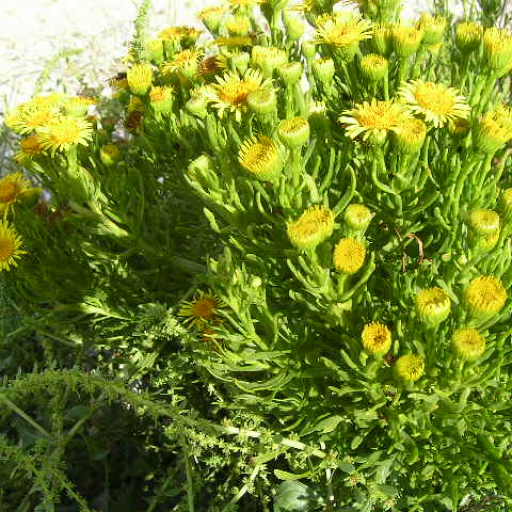
- 🌿 Succulent Leaves: The leaves are bright green, fleshy, and narrow. They feel slightly rubbery to the touch— a clever adaptation used to store water in salty air.
- 🌼 Golden Blooms: It features classic daisy-like flower heads that are a brilliant, solid yellow. Unlike some daisies, even the "petals" (ray florets) and the center are the same golden hue.
- 🌱 Bushy Habit: It grows as a perennial sub-shrub, forming dense, woody-based mounds that stay relatively low to the ground to avoid high coastal winds.
🏡 In Your Garden
- 🏖️ Coastal Champion: This is the perfect choice for seaside gardens. It is highly resistant to salt spray and can handle the intense "sandblasting" effect of coastal winds that would kill more delicate ornamentals.
- ☀️ Sun & Drainage: To mimic its natural habitat, plant it in the sunniest spot possible. It requires very gritty, well-draining soil; if the roots sit in stagnant water during winter, the plant may not survive.
- 🦋 Pollinator Magnet: Despite the salty environment, its late-summer flowers provide a vital nectar source for bees and butterflies when other coastal wildflowers have begun to fade.
⚠️ Safety & Toxicity
- 🥗 Status: Edible. The young, tender leaves can be eaten raw in salads or pickled in vinegar, offering a spicy, aromatic, and salty flavor.
- 🐾 General Safety: It is considered non-toxic to humans and pets. However, if you are foraging in the wild, avoid plants growing near industrial runoff or heavily polluted coastal waters, as they can accumulate minerals from their environment.
✨ Fun Fact
In the 18th and 19th centuries, Golden Samphire was a popular "street food" ingredient in London. Foragers would gather it from the cliffs of the Isle of Sheppey and sell it in the city markets as a spicy garnish for meat dishes.

Detailed Care Instructions
To grow Limbarda Crithmoides (also known as golden samphire or rock samphire), follow these steps:
- Climate: Limbarda Crithmoides is a coastal plant that prefers a maritime climate. It grows well in salt marshes, rocky coastal areas, and cliffs. Make sure you have a suitable growing environment or simulate the conditions as closely as possible.
- Soil: It requires well-draining soil that is rich in organic matter. If your soil is heavy, add compost or sand to improve drainage.
- Watering: Limbarda Crithmoides requires regular watering, especially during dry periods. Ensure the soil remains consistently moist but not waterlogged. However, it can tolerate some drought once established.
- Sunlight: This plant thrives in full sun to partial shade. Locate it in a spot that receives at least six hours of direct sunlight daily.
- Propagation: Limbarda Crithmoides is typically propagated from seeds, which can be sown directly in the garden or started indoors and transplanted later. Sow the seeds in early spring or fall, ensuring they are covered lightly with soil.
- Germination: The seeds usually germinate within 2-3 weeks. Keep the soil evenly moist throughout the germination period.
- Transplanting: If you started the seeds indoors, transplant the seedlings once they have developed a few true leaves. Space the plants about 12-18 inches apart to provide enough room for growth.
- Maintenance: Remove any weeds around the plants to prevent competition. Regularly water and monitor the soil moisture levels. Mulching can help retain moisture and suppress weed growth.
- Pruning: Prune any dead or damaged foliage to maintain the health and aesthetic appeal of the plant.
- Harvesting: Limbarda Crithmoides can be harvested for culinary use. The tender stems and leaves can be used in salads, soups, or as a garnish. Harvest the plant when it reaches a suitable size, taking care not to overharvest and allow it to regenerate.
By following these steps, you can successfully grow Limbarda Crithmoides in your garden or in pots, providing a beautiful addition to your landscape.

Place in a bright room that is sun drenched almost all day. Or directly in a south-facing window.

To water this plant, it is important to consider the specific needs of its growing conditions. This plant prefers to grow in well-draining soil with moderate moisture levels.
When watering, it is important to avoid overwatering and to allow the soil to dry out slightly between watering sessions. One way to do this is to check the moisture level of the soil by sticking a finger about an inch into the soil. If it feels dry, it's time to water.
When watering, aim to water the soil directly around the plant's roots, rather than onto the foliage. This will help to prevent standing water on the leaves, which can lead to fungal disease.
It is also important to note that this plant is drought-tolerant and can handle periods of dryness. However, prolonged periods of dryness can cause stress and affect the plant's growth and overall health.
Overall, consistent but moderate watering is key to keeping this plant healthy and thriving.
To fertilize this plant, apply a balanced fertilizer during the growing season. Follow the manufacturer's instructions for application rates and frequency. Avoid over-fertilization, which can lead to burning and damage to the plant. Apply the fertilizer evenly around the base of the plant and water thoroughly after application. Monitor the plant's growth and adjust fertilization as necessary.
Limbarda Crithmoides plant prefers a well-draining soil that is rich in organic matter. The soil should be slightly acidic to neutral in pH, with a range between 5.5 and 7.5. It is important to avoid soil that is too heavy or compacted, as this can impede root growth and drainage. A sandy loam or loamy soil with a good balance of sand, silt, and clay particles is ideal. It is recommended to amend the soil with compost or other organic matter to improve its structure and fertility. Additionally, the plant benefits from regular fertilization with a balanced, slow-release fertilizer that provides essential nutrients for healthy growth and flowering.
- Materials: A healthy and mature Limbarda Crithmoides plant, a pair of sharp scissors or pruning shears, a small pot or container filled with clean and damp soil, rooting hormone (optional), and a clear plastic bag.
- Harvesting: Choose a healthy stem of the Limbarda Crithmoides plant that has no signs of damage or disease. Cut the stem just below a node or where the leaves are growing. Make sure the cutting is at least 4-6 inches long.
- Preparation: Remove the lower leaves from the cutting and leave only two or three leaves at the top. Cut the remaining leaves in half to reduce moisture loss and stress on the cutting. If using rooting hormone, dip the cut end of the stem into the powder.
- Planting: Insert the cutting into the soil, making sure that the bottom nodes are covered. Gently press the soil around the cutting to ensure good contact. Water the pot or container thoroughly, and cover it with a plastic bag to retain moisture.
- Care: Keep the pot or container in a bright location but out of direct sunlight. Check the soil moisture regularly and water as needed to keep it moist but not soggy. After a few weeks, new growth should appear, indicating that the cutting has successfully rooted.
- Transplanting: Once the roots have grown enough, transplant the new plant to a larger pot or a permanent outdoor location. Gradually acclimate the plant to the new environment by exposing it to increasing amounts of sunlight over several days.








