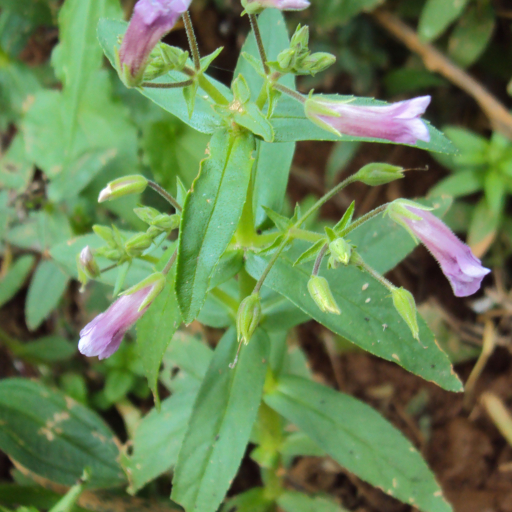
Plant Overview
Often referred to as the "Rice Paddy Herb" or Rau Ôm, this aromatic beauty is a bridge between two worlds. While it is a celebrated culinary staple in Southeast Asian kitchens—giving traditional soups their signature citrusy punch—it is equally beloved by aquarists for its vibrant transition from green to deep burgundy under the right lighting.
🔍 How to Identify
- 🌿 The Foliage: The leaves are narrow, lance-shaped, and usually grow in whorls of three around a succulent stem. When grown underwater, they appear delicate and feathery; above water, they become thicker and more robust.
- 🍋 The Scent Test: The most defining feature is the scent. If you gently crush a leaf, it releases a complex aroma that sits somewhere between zesty lemon and warm cumin.
- 🌸 The Bloom: In its emersed (above water) state, it produces charming, small, trumpet-shaped flowers that range from pale lavender to deep pink.
🏡 In Your Garden & Aquarium
- 💧 The Amphibious Life: This plant is a true shapeshifter. In a garden, it requires "wet feet"—constantly soggy soil or even a shallow pond edge. In an aquarium, it needs high light and CO2 to develop its famous reddish-purple hues on the leaf undersides.
- ✂️ Growth Habits: It is a fast grower that reproduces via side shoots. Because it has a relatively delicate root system, it prefers a nutrient-rich substrate rather than plain gravel, allowing it to anchor securely while it reaches for the light.
⚠️ Safety & Toxicity
- 🍽️ Status: Perfectly safe and edible.
- 🐱 Pet & Human Safety: It is non-toxic to cats, dogs, and humans. In fact, it is a common ingredient in Vietnamese Canh Chua (sour soup). In an aquarium, it provides a safe, dense thicket for fry and shy shrimp to hide in.
✨ Fun Fact
In Vietnam, Limnophila aromatica isn't just a garnish; it is considered a medicinal herb used traditionally as a cooling diuretic and to help soothe fevers, making it a "pharmacy in a pond."

Detailed Care Instructions
To grow Limnophila aromatica, follow these steps:
- Planting: Select a suitable aquarium or pond with a minimum capacity of 10 gallons (for an aquarium) or larger for a pond. Ensure that the tank has good lighting conditions, preferably full spectrum lighting or 6500K fluorescent bulbs.
- Substrate: Use nutrient-rich substrate, such as clay or natural sand, to provide essential nutrients for the plant's growth. Ensure proper water circulation to prevent the accumulation of anaerobic pockets.
- Water conditions: Limnophila aromatica prefers slightly acidic to neutral water conditions with a pH range of 6.5-7.5. Maintain the water temperature between 72-82°F (22-28°C).
- Lighting: Provide 10-12 hours of moderate to high intensity lighting each day. Consider using an adjustable light timer to maintain a consistent lighting schedule.
- CO2 fertilization: Limnophila aromatica is a demanding plant that benefits from supplemental CO2 fertilization. Add a CO2 system to your tank to ensure optimal growth conditions.
- Nutrient supplementation: Add a comprehensive liquid fertilizer or root tabs to provide essential nutrients such as nitrogen, phosphorus, and potassium. Follow the instructions on the fertilizer packaging for proper dosage.
- Pruning: Regularly trim the plant to promote bushier growth and prevent it from becoming too leggy. Remove any dead or decaying leaves to maintain a clean and healthy appearance.
- Propagation: Limnophila aromatica can be easily propagated by taking cuttings from healthy stems and replanting them. Remove the lower leaves from the stem and bury it in the substrate, ensuring that the remaining leaves are above the waterline.
- Water changes: Perform regular water changes of 20-30% every week to maintain water quality and avoid the accumulation of waste products.
- Monitor and optimize: Keep an eye on the plant's growth and adjust the lighting, CO2, and nutrient supplementation as needed. Regularly test the water parameters to ensure they remain within the suitable range for the plant's requirements.
By following these steps, you can successfully cultivate Limnophila aromatica and enjoy its beautiful and aromatic presence in your aquarium or pond.

Place in a bright room that is sun drenched almost all day. Or directly in a south-facing window.

To water this particular plant, it is important to follow a few key steps. Begin by selecting a watering can with a fine spout, as this will allow for precise and gentle watering. Take care not to drench the soil, as this can cause root rot and other issues. Instead, water the plant deeply enough to moisten the soil, but do not allow it to become waterlogged. Wait until the soil dries out slightly before watering again. Additionally, be sure to check the plant's drainage system regularly, as waterlogged soil can be a common problem. Overall, consistent and careful watering is key to the health and vitality of this plant.
To fertilize this plant, you should use a balanced liquid fertilizer. Add the fertilizer to the water in your aquarium or pond according to the instructions on the bottle. It's important not to over-fertilize, as this can cause excess algae growth. It's recommended to fertilize every two weeks or as needed based on the plant's growth and condition. Make sure to change out the water in your aquarium or pond regularly to prevent buildup of fertilizers and other harmful substances.
Limnophila Aromatica is a popular aquatic plant that requires a nutrient-rich substrate to thrive. Ideally, the best soil to use with this plant should be a mixture of nutrient-rich substrate and sand, with no added fertilizers or chemicals.
The soil should have a pH level between 6.5 to 7.5, which is neutral to slightly acidic, and a good water-retention capacity to ensure the roots of the plant get enough water. The substrate should also be well-drained, to prevent waterlogging and a buildup of harmful bacteria.
It is recommended to plant Limnophila Aromatica in a fine-grained substrate, which allows the roots to spread more efficiently. Additionally, a layer of sand or gravel on top of the soil can help prevent the substrate from becoming too compacted, while also improving overall plant growth.
Overall, choosing the right soil for Limnophila Aromatica is crucial for the plant's growth and survival, and it is recommended to research the specific needs of this plant before planting it to ensure it thrives in its new environment.
To propagate this plant, you will need a healthy parent plant with multiple stems. Take a sharp, clean pair of scissors or pruning shears and make a clean cut just below a node, a point where a leaf grows from the stem.
Remove any leaves on the lower part of the stem. Fill a small container with clean water and place the stem in the water, making sure the bottom of the stem is submerged.
Place the container in a bright, indirect light and change the water every few days. In about 1-2 weeks, roots will begin to form from the bottom of the stem.
Once the roots are about an inch long, gently remove the stem from the water and plant it in a pot filled with fresh soil. Water the soil and place the pot in a bright spot, out of direct sunlight.
Keep the soil moist and provide humidity by misting the leaves occasionally. Within a few weeks, the new plant should begin to grow and thrive.








