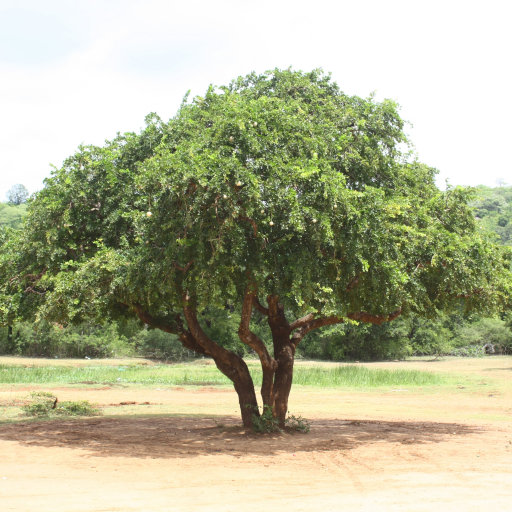
Plant Overview
Often called the "Wood Apple" or "Elephant Apple," this slow-growing tropical tree is a staple in South Asian folklore and traditional medicine. Its fruit looks like a miniature, rough-textured cannonball with a shell so hard you might need a hammer to open it. Inside, however, lies a tangy, aromatic pulp that has been a favorite of both humans and wild elephants for centuries.
🔍 How to Identify
- 🛡️ The Fruit: A globose, greyish-white woody berry about the size of a tennis ball. The rind is thick, rough, and stony, protecting the dark brown, mealy pulp inside.
- 🍃 Foliage: The leaves are small, dark green, and pinnate (feather-shaped). When crushed, they often release a mild, citrus-like fragrance.
- ⚔️ Armored Stems: The tree features sharp, straight spines along its branches, which serve as a natural defense against climbing herbivores.
🏡 In Your Garden
- ☀️ Sun & Resilience: This is a hardy, drought-tolerant survivor that thrives in hot, arid climates. It prefers well-draining soil and struggles in waterlogged ground or frosty temperatures.
- 🐢 Slow & Steady: It is a slow-growing species that requires patience. Because it develops a deep, sensitive taproot, it hates being transplanted; it is best to plant it in its "forever home" while it is still a young sapling.
⚠️ Safety & Toxicity
- ✅ Edible Fruit: The inner pulp is safe and highly valued for its cooling properties and high vitamin C content. It has a unique sour-sweet flavor often compared to a mix of raisins and tamarind.
- 🌵 Physical Hazards: The primary danger comes from the sharp thorns. Wear thick gloves when pruning or harvesting to avoid painful punctures.
- 🐾 Pet Safety: While the pulp isn't known to be toxic to pets, the rock-hard shell of a fallen fruit can be a choking hazard or cause dental damage if a dog tries to chew through it.
✨ Fun Fact
🐘 In many regions, this tree is called the "Elephant Apple" because wild elephants are known to swallow the fruit whole. The seeds pass through their digestive tract unharmed and are eventually "planted" in nutrient-rich dung, helping the tree spread across the savannah.

Detailed Care Instructions
To grow Limonia acidissima, also known as wood apple or elephant apple, follow these steps:
- Obtain seeds or seedlings: You can acquire seeds or seedlings from a local nursery, tropical fruit tree supplier, or even from the fruit itself. Make sure to choose healthy and viable seeds/seedlings.
- Choose the planting location: Limonia acidissima thrives in warm tropical climates. Select a spot that receives full sun and has well-draining soil. The plant can tolerate a range of soil types, but prefers slightly acidic to neutral soil.
- Prepare the soil: If the soil is heavy clay or has poor drainage, amend it by adding compost or well-rotted organic matter to improve its quality and drainage capacity.
- Germinate the seeds (if using seeds): Soak the seeds in water for 24-48 hours to soften the hard outer shell. Plant the seeds in pots or directly in the ground at a depth of about 1 inch. Keep the soil moist and warm (around 77°F/25°C) to encourage germination, which typically takes about 2-4 weeks.
- Transplant seedlings (optional): If you started with seedlings, carefully transplant them into larger pots or the chosen planting location after they develop a few sets of leaves. Be gentle to avoid damaging the young roots.
- Watering: Keep the soil consistently moist but not waterlogged, especially during the hot summer months. Young plants need more frequent watering compared to established ones.
- Fertilization: Apply a balanced slow-release fertilizer during the growing season to provide necessary nutrients to the plant. Follow the manufacturer's instructions for application rates.
- Pruning: Limonia acidissima tends to grow tall, and regular pruning can help maintain a more manageable size and shape. Prune any dead or damaged branches, and trim to promote branching and encourage dense growth.
- Protect from frost: If you live in an area prone to frost, cover young plants or provide frost protection during cold winter months to prevent damage.
- Harvesting: Depending on the specific variety and growing conditions, the fruit can take approximately 4-7 years to mature. Once mature, the fruit will change color from green to yellowish-brown. Harvest the fruit when it is fully ripe but before it falls from the tree. The fruit's hard shell can be cracked open to reveal the flesh and pulp inside, which can be consumed or used for various culinary purposes.
Remember, growing Limonia acidissima requires patience, as it may take several years before it starts producing fruit.

Place in a bright room that is sun drenched almost all day. Or directly in a south-facing window.

To water this particular plant, one should ensure that they have a proper drainage system in place to prevent waterlogging. The frequency of watering should be based on the moisture level of the soil and the environmental conditions. One can check the moisture status by feeling the soil and watering only when it is dry to the touch. It is important to water the plant at the base and avoid wetting the leaves as this can cause fungal diseases. Overwatering should be avoided as it can lead to root rot and other problems. The plant may also benefit from occasional misting to increase humidity levels.
To fertilize this plant, use a balanced, all-purpose fertilizer with equal amounts of nitrogen, phosphorus, and potassium. Apply the fertilizer during the growing season once every two weeks. Use a half-strength solution to avoid overfeeding the plant. Water the plant thoroughly before and after fertilizing to prevent fertilizer burn. Additionally, supplement the soil with organic matter, such as compost or well-rotted manure, to improve soil fertility and nutrient availability.
Limonia Acidissima plant prefers a well-draining soil that is rich in organic matter. The ideal soil pH level for this plant is slightly acidic with a pH range of 5.5 to 6.5. It is recommended to use a potting mix that contains peat moss, perlite, and compost to improve drainage and nutrient absorption. Additionally, adding fine mulch or shredded bark to the soil can also help retain moisture and provide necessary nutrients to the plant. Avoid using heavy clay soils or soils that have a high salt content, as it can be harmful to the plant's growth and development.
To propagate this plant, one can take semi-hardwood cuttings from healthy and mature plants in autumn. The cuttings should be about 15-20 cm long and should have 3-4 leaves. Remove the lower leaves and dip the cut end in rooting hormone powder. Plant the cuttings in moist soil and cover them with plastic to create a humid environment. Keep the soil moist and provide indirect sunlight. Once new growth appears, remove the plastic cover and gradually expose the plant to more sunlight.








