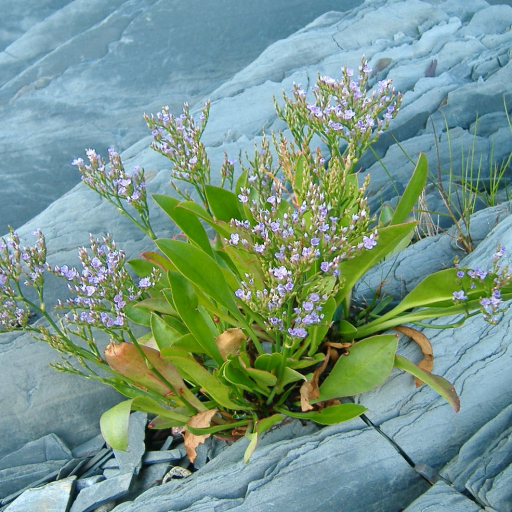
Plant Overview
Known as Carolina Sea Lavender or Marsh Rosemary, this resilient perennial is a master of the shoreline. Despite its names, it isn't related to the culinary lavender or rosemary; it earned these titles because of its misty purple blooms and its ability to thrive in salty coastal air. In the wild, it creates a stunning "purple haze" over salt marshes, dancing gracefully in the ocean breeze.
🔍 How to Identify
- 🍃 The Leaves: Look for a low-growing cluster (basal rosette) of thick, leathery, spoon-shaped leaves that stay close to the ground.
- ☁️ The Bloom Cloud: Delicate, wiry stems rise from the center and branch out multiple times to create an airy, mist-like canopy of color.
- 🌸 The Flowers: Tiny, five-petaled flowers appear in shades of lavender, blue, or pale purple. Even after the petals fall, the papery, whitish "cups" (calyxes) remain, keeping the plant looking colorful.
🏡 In Your Garden
- 🌊 Salt Specialist: This plant is an "extremophile" that can handle salt spray and brackish water that would kill most other garden plants. It is the perfect choice for seaside landscapes or gardens near roads that receive winter salting.
- 🌱 The Taproot Rule: It develops a deep, sturdy taproot to anchor itself in sandy or muddy soils. Because of this, it hates being transplanted; once you tuck it into the ground, it prefers to stay there for life.
- 🦋 Late Summer Buffet: It blooms when many other flowers are starting to fade, providing a vital nectar source for migrating butterflies and native bees.
⚠️ Safety & Toxicity
- ✅ Safe Status: Limonium carolinianum is generally considered non-toxic to humans, dogs, and cats.
- 🛡️ Wild Caution: While the plant itself isn't poisonous, wild specimens growing in marshes act as natural filters. They can sometimes absorb pollutants or heavy metals from coastal runoff, so it is best not to forage or consume wild plants.
✨ Fun Fact
The flowers are considered "everlasting." Because the papery calyx holds its vibrant color even after the plant has dried out, Carolina Sea Lavender has been a favorite in dried floral arrangements and Victorian-era "immortelle" bouquets for centuries.

Detailed Care Instructions
To grow Limonium carolinianum, also known as Carolina Sea Lavender, follow these steps:
- Choose the right location: Carolina Sea Lavender requires full sun to partial shade to thrive. Find a location in your garden that receives at least 6 hours of direct sunlight each day. Ensure the soil is well-draining and not too compacted.
- Prepare the soil: Carolina Sea Lavender prefers well-drained soil with a slightly acidic to neutral pH (around 6.0 to 7.0). If your soil is heavy clay or compacted, add some organic matter like compost or well-rotted manure to improve drainage and fertility.
- Planting: Prepare the planting hole by digging it slightly larger than the root ball of the plant. Place the Limonium carolinianum plant in the hole, ensuring it is at the same depth as it was in the nursery container. Backfill the hole with soil, gently firming it around the base of the plant.
- Watering: Carolina Sea Lavender prefers moist but not waterlogged soil. Water the plant regularly, especially during dry spells. However, ensure the soil is well-draining to prevent waterlogging, which can lead to root rot.
- Mulching: Apply a layer of organic mulch, such as wood chips or straw, around the base of the plant. This helps retain moisture, suppresses weed growth, and keeps the soil temperature more consistent.
- Fertilizing: Limonium carolinianum generally doesn't require much fertilization. However, you can apply a slow-release, balanced fertilizer in early spring to promote healthy growth. Follow the package instructions for the recommended amount.
- Pruning: Carolina Sea Lavender plants benefit from regular pruning to encourage bushier growth and improve flowering. Cut back the spent flower stalks to the base of the plant after they have finished blooming. Additionally, prune any dead or damaged foliage to maintain the plant's appearance and health.
- Winter care: Carolina Sea Lavender is generally hardy and can withstand colder temperatures. However, if you live in an area with extremely cold winters, you may consider applying a layer of mulch around the base of the plant to provide some additional protection.
By following these steps, you should be able to successfully grow and maintain Limonium carolinianum in your garden.

Place in a bright room that is sun drenched almost all day. Or directly in a south-facing window.

To water this plant, you should first check the soil to see if it is dry to the touch. If the soil is dry, it is time to water the plant. Using a watering can or a hose with a gentle spray, water around the base of the plant, avoiding wetting the leaves. Allow the water to soak into the soil until it reaches the roots. It is important not to overwater this plant as it prefers to have slightly dry soil in between waterings. Be sure to water only when necessary and adjust your watering schedule according to the weather and the humidity levels in your environment.
To fertilize this plant, mix a balanced, granular fertilizer with water according to package instructions. Apply the solution to the soil around the base of the plant, taking care not to get any on the leaves or stem. Repeat this every 4-6 weeks during the growing season. Avoid fertilizing the plant during winter or times of low growth.
Limonium carolinianum requires well-draining soil with a pH level of 6.5 to 7.5 for optimal growth. It prefers soil that is sandy or loamy in texture, with good drainage and aeration properties. The soil should retain some moisture, but not be overly wet or waterlogged, as this can lead to root rot and other diseases. Additionally, the plant requires full sun to partial shade and moderate watering, as it is drought tolerant but can be damaged by excessive moisture. A balanced fertilizer may also be applied during the growing season to promote healthy growth and flowering.
Limonium Carolinianum plant can be easily propagated through the process of seed germination. The first step in propagating this plant is to collect the seeds from the matured plants. Once the seeds have been collected, they should be allowed to dry for a few days to remove excess moisture.
After the seeds have dried, they can be sown in a well-draining soil mix. The best time to sow the seeds is in early spring or late fall, as these are the optimal growing conditions for Limonium Carolinianum plants.
The seeds should be sown at a depth of about 1/8 inch (3mm) and should be spaced about 2 inches (5cm) apart. After sowing, the soil should be gently watered and allowed to drain.
The seeds will germinate in about 10-14 days, depending on the temperature and humidity levels. Once the seedlings have grown to about 2-3 inches (5-7cm) in height, they can be transplanted into individual pots or directly into the garden soil.
It is important to provide the newly propagated plants with regular watering and fertilization until they have become established. Once established, Limonium Carolinianum plants require minimal care and maintenance, making them a great addition to any garden or landscape.








