Plant Overview
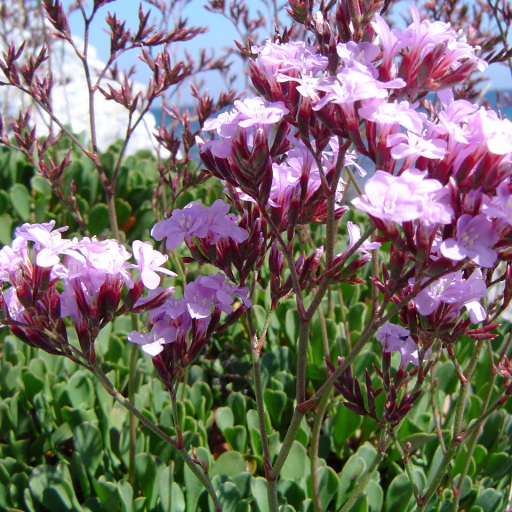
Commonly known as the Rock Sea-lavender, Limonium emarginatum is a resilient beauty that thrives where other plants perish. Often found clinging to the rugged limestone cliffs of the Strait of Gibraltar and Mediterranean coastlines, this plant is a master of survival. Its name "emarginatum" refers to the subtle, elegant notch at the tip of its leaves, distinguishing it from its many cousins in the Statice family.
🔍 How to Identify
- 🍃 The "Notched" Leaf: The foliage is leathery, spoon-shaped, and features a distinct indentation or "notch" at the very tip, which gives the species its scientific name.
- 🌸 Everlasting Blooms: It produces clusters of tiny, papery flowers, usually in shades of lavender, violet, or white. These flowers retain their color even after drying, making them a favorite for floral arrangements.
- 🪵 Woody Base: Unlike many delicate garden annuals, this species develops a woody base (caudex) over time, allowing it to withstand the battering of salt spray and high winds.
🏡 In Your Garden
- 🌊 Salt Specialist: This plant is a "halophyte," meaning it is remarkably tolerant of salt. If you live near the ocean where salty air browns other leaves, this is your champion.
- 🏜️ Drainage is Key: In a garden setting, it hates "wet feet." Because it naturally grows in rocky crevices, it requires exceptionally gritty, fast-draining soil. It is a perfect candidate for rock gardens or xeriscaping.
- ☀️ Sun Seeker: It demands full sun to produce its signature vibrant blooms. In shade, the plant will become leggy and lose its compact, cushion-like shape.
⚠️ Safety & Toxicity
- ✅ Generally Safe: Limonium emarginatum is not considered high-risk or famously toxic to humans or common household pets.
- 🧤 Skin Sensitivity: While not poisonous, the papery bracts and woody stems can be sharp or scratchy. Some individuals with sensitive skin might experience mild irritation when handling the dried flower stalks for long periods.
✨ Fun Fact
To survive the salty Mediterranean air, this plant has specialized "salt glands" on its leaves. It actually "sweats" out excess salt, which can sometimes be seen as tiny white crystals on the leaf surface, allowing it to drink seawater that would kill most other plants!

Detailed Care Instructions








