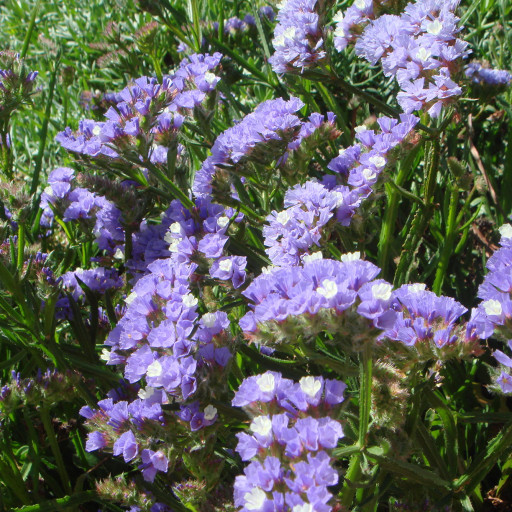
Plant Overview
Commonly known as Statice, Sea Lavender, or the "Wavyleaf Sea Lavender," this Mediterranean native is a florist’s best friend. It is famous for its unique "everlasting" quality, where the flowers maintain their vivid purple, blue, yellow, or white hues long after being cut and dried. In the language of flowers, Statice symbolizes "remembrance," making it a poignant addition to both celebration bouquets and memorial gardens.
🔍 How to Identify
- 🧻 Papery Bracts: The most striking feature is the texture; the colorful parts of the flower feel like delicate crepe paper or dried tissue, even when the plant is actively growing.
- 🕊️ Winged Stems: Unlike smooth-stemmed flowers, Limonium sinuatum has distinct "wings" or ridges running vertically down its stalks, giving it a rugged, architectural appearance.
- 🥬 Basal Rosette: Before the tall flower spikes emerge, the plant forms a low-growing cluster of lobed, wavy-edged leaves that sit flush against the soil.
🏡 In Your Garden
- 🏜️ The Taproot Rule: Statice develops a deep taproot to hunt for water, which makes it incredibly drought-tolerant once established. However, this means it absolutely hates being moved; transplanting often leads to "sulking" or plant failure, so choose its spot wisely.
- 🏖️ Salt & Sand Lover: Because it originated on Mediterranean coastlines, it thrives in sandy, well-draining soil and can even handle salt spray, making it a champion for seaside gardens or difficult "hellstrip" plantings.
⚠️ Safety & Toxicity
- 🐾 Pet Friendly: Statice is generally classified as non-toxic to cats, dogs, and horses, making it a "worry-free" choice for household arrangements and backyard landscapes.
- 🌾 Skin Sensitivity: While not poisonous, the dried stems can become quite brittle and sharp. Use gardening gloves when harvesting to avoid tiny scratches or skin irritation from the "papery" bits.
✨ Fun Fact
Statice is often called the "Everlasting Flower" because the colorful part we see isn't actually the petal—it’s the calyx. Because the calyx is so sturdy and low in moisture, it doesn't wilt like a normal flower, allowing it to keep its shape and color for years in a vase without a single drop of water.

Detailed Care Instructions
| Color | Purple, Apricot, Yellow, Pink, And Blue |
| Soil Ph | 6.1-7.8 |
| Humidity | Dry |
| Lighting | Full Sun |
| Toxicity | Non-Toxic |
| Soil Type | Sandy |
| Bloom Time | Summer |
| Difficulty | Easy |
| Plant Type | Perennial |
| Hibernation | Cold Period |
| Mature Size | Up To 12-18 In. Tall And 9-12 In. Wide |
| Native Area | Southern Spain, North Africa, Canary Islands, Israel And In Turkey |
| Temperature | Min 18°C |
| Sun Exposure | Part Sun, Sun |
| Hardiness Zones | 8-10 |
To grow Limonium Sinuatum (Statice) plant, follow these steps:
- Choose the right location: Limonium Sinuatum prefers full sun, so choose a spot in your garden that receives at least six hours of direct sunlight per day.
- Prepare the soil: The plant thrives in well-draining soil. Add organic matter such as compost or well-rotted manure to improve the soil's fertility and drainage.
- Sow the seeds: Start by sowing the seeds indoors in a seed tray or small pots, approximately 6-8 weeks before the last frost date. Since the seeds are tiny, sprinkle them lightly on the surface of the soil and press gently to ensure good soil contact.
- Germination: Keep the soil consistently moist but not waterlogged. Seeds usually germinate within 14-21 days. Once the seedlings have developed 2-3 sets of true leaves, you can transplant them outdoors.
- Transplanting: When the danger of frost has passed, and the seedlings are about 2-3 inches tall, carefully transplant them into your garden. Space the plants about 12-18 inches apart as they will grow into large, bushy plants.
- Watering: Keep the soil evenly moist but not saturated. Water deeply when the top inch of soil feels dry, but avoid overwatering as this can lead to root rot.
- Fertilization: Apply a balanced, slow-release fertilizer or a dilute liquid fertilizer every 4-6 weeks during the growing season to provide adequate nutrients for the plant.
- Pruning: Once the plant reaches a height of about 12 inches, pinch back the growing tips to encourage bushier growth and more flower production. This will also prevent the plant from becoming leggy.
- Deadheading: Remove faded flowers regularly to encourage continuous blooming and to prevent the plant from wasting energy on seed production.
- Pests and diseases: Limonium Sinuatum is generally resistant to pests and diseases. However, keep an eye out for aphids, snails, or slugs, and take appropriate measures, such as handpicking or using organic pest control methods.
- Harvesting: Limonium Sinuatum produces beautiful, long-lasting flowers in various colors. Harvest the flowers when approximately one-third of the florets have opened. Cut the stems just above a leaf node and immediately place them in a bucket of water to prevent wilting.
By following these steps, you can successfully grow Limonium Sinuatum plants and enjoy their lovely blooms in your garden or use them in dried flower arrangements.

Place in a bright room that is sun drenched almost all day. Or directly in a south-facing window.

Limonium Sinuatum should be watered regularly, but not too frequently to avoid waterlogging the soil. The watering schedule should be adjusted according to the weather and soil conditions. It is best to water the plant deeply and thoroughly, allowing the water to soak into the soil and reach the roots. The soil should be allowed to dry out slightly before the next watering, as overwatering can lead to root rot and other issues. To avoid getting water on the leaves, it is recommended to water at the base of the plant. Additionally, it is important to use a well-draining soil mix and a pot with drainage holes to ensure proper drainage.
To properly fertilize this plant, it is important to use a balanced fertilizer with equal amounts of nitrogen, phosphorus, and potassium. The ideal ratio is 10-10-10. Fertilize once a month during the growing season, which is typically spring and summer.
Before the first application of fertilizer, ensure that the soil is moist. Apply the fertilizer evenly around the plant and water thoroughly afterward to ensure the nutrients are absorbed by the roots. Avoid over-fertilization, as this can lead to plant burn and damage.
In addition to the balanced fertilizer, the plant may benefit from the addition of organic matter to the soil, such as compost or well-rotted manure. This can improve soil structure and provide additional nutrients and micronutrients.
If the plant appears to be struggling or showing signs of nutrient deficiency, adjust the fertilizer application accordingly. Always follow the instructions on the fertilizer packaging and avoid applying too much fertilizer at once.
Limonium Sinuatum plant prefers well-drained, slightly alkaline soil with a pH between 7.0 to 8.0. The soil should be nutrient-rich and enriched with organic matter. The plant prefers sandy soil but can also grow in loamy soil. It is recommended to add compost or well-rotted manure to the soil before planting. The soil should be moist but not waterlogged, as the plant does not tolerate waterlogging. It is advisable to plant Limonium Sinuatum plant in full sun, as it needs at least six hours of direct sunlight daily to thrive. In addition, you can use perlite or vermiculite to improve drainage in the soil.
To propagate this plant, take stem cuttings of about 3-4 inches in length from a healthy parent plant. Make sure the cutting has at least two nodes and remove any lower leaves. Dip the cut end of the stem in rooting hormone powder and plant it in a well-draining rooting medium like perlite or sand. Water the cutting and place it in a bright, sheltered spot but avoid direct sunlight. Keep the soil moist and mist the cutting regularly to prevent it from drying out. After a few weeks, the cutting should develop roots and new leaf growth. Once established, transplant the new plant to a pot or garden bed.








