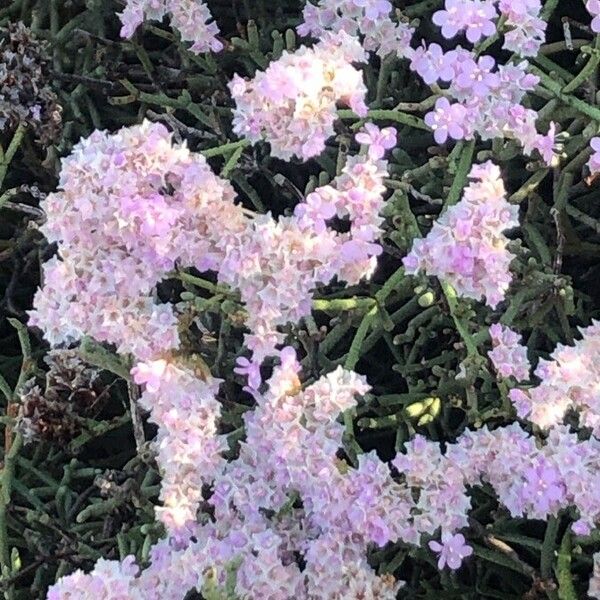
Plant Overview
Known as a rugged coastal survivor, Limonium tuberculatum is a specialized member of the Sea Lavender family. Often found clinging to salt-sprayed Mediterranean cliffs or sandy dunes, it is prized by gardeners for its "everlasting" flowers that retain their vibrant color long after being cut and dried. Its specific name, tuberculatum, refers to the unique, tiny bumps that decorate its foliage, giving it a tactile, almost prehistoric feel.
🔍 How to Identify
- 🌿 Textured Foliage: The leaves are typically arranged in a dense rosette at the base; they are thick, leathery, and covered in small, pimple-like bumps (tubercles).
- 🌸 Cloud-like Blooms: It produces branching, airy clusters of tiny, funnel-shaped flowers. While the true flower is small and white, it is surrounded by papery, colorful bracts that look like delicate purple or pink petals.
- Branching Stiff Stems: The flower stalks are wiry and tough, often turning reddish or woody as they mature to support the weight of the dense floral "clouds."
🏡 In Your Garden
- 🧂 Salt Specialist: This plant is an "extremophile" that thrives in coastal gardens. It actually prefers salt-laden air and can handle sandy, poor-quality soils where most other perennials would wither.
- 💧 The Drainage Rule: Because it is adapted to rocky cliffs, the number one killer of Limonium tuberculatum is "wet feet." It requires extremely sharp drainage and is highly susceptible to root rot if left in heavy, clay-rich, or overwatered soil.
- ✂️ Low Maintenance: Once established, it is exceptionally drought-tolerant. It requires very little feeding; in fact, too much fertilizer can lead to lush leaves but very few of those iconic papery flowers.
⚠️ Safety & Toxicity
- 🟢 General Safety: Limonium tuberculatum is considered non-toxic to humans and is generally safe to handle without gloves, though the dried stems can be quite scratchy.
- 🐾 Pets & Livestock: While not listed as a major toxic threat to cats or dogs, it contains high levels of tannins. If consumed in large quantities by curious pets, it may cause mild stomach upset or irritation.
✨ Fun Fact
Limonium species have evolved specialized "salt glands" on their leaves. These glands allow the plant to actually "sweat" out excess salt taken up from the sea spray, which then crystallizes on the surface of the leaves, sparkling like tiny diamonds in the sun.

Detailed Care Instructions
To grow Limonium Tuberculatum plants, follow these steps:
- Obtain seeds or cuttings: You can purchase Limonium Tuberculatum seeds or cuttings from a local nursery or online store. Alternatively, you can collect seeds from mature plants if available.
- Choose the right location: Limonium Tuberculatum prefers full sun to partial shade. Select a spot in your garden that receives at least 6 hours of sunlight a day.
- Prepare the soil: The plant thrives in well-drained soil. Make sure the soil is loose, fertile, and has good drainage. If the soil is heavy or clay-like, add organic matter such as compost or peat moss to improve its structure.
- Sow the seeds or plant the cuttings: For seeds, sprinkle them directly onto the soil surface and lightly press them in. If using cuttings, dip the ends in a rooting hormone and plant them about an inch deep in the soil. Space the seeds or cuttings about 12-18 inches apart.
- Watering: Keep the soil slightly moist but not waterlogged. Water the plants regularly during dry spells, especially during the early stages of growth. Once established, the plant can tolerate mild drought conditions.
- Fertilization: Apply a balanced, slow-release fertilizer once or twice during the growing season to encourage healthy growth. Avoid over-fertilization, as it can cause excessive leaf development at the expense of flower production.
- Mulching: Apply a layer of organic mulch around the base of the plants to conserve moisture, suppress weeds, and regulate soil temperature.
- Pruning: Regularly remove spent flowers and prune back any dead or damaged foliage to promote new growth and continuous blooming.
- Pests and diseases: Limonium Tuberculatum is relatively pest and disease resistant. However, keep an eye out for common garden pests such as aphids or spider mites. If necessary, use organic pest control methods or insecticidal soaps to control infestations.
- Winter care: In colder climates, Limonium Tuberculatum may not survive the winter. If you live in an area with frost or freezing temperatures, consider growing it as an annual or move potted plants indoors.
By following these steps, you should be able to successfully grow Limonium Tuberculatum plants and enjoy their beautiful flowers throughout the growing season.

Place in a bright room that is sun drenched almost all day. Or directly in a south-facing window.

Limonium Tuberculatum is a plant that requires moderate watering. The soil should be allowed to dry out partially between waterings to prevent overwatering and root rot. When watering, it is important to thoroughly saturate the soil around the plant’s roots. However, care should be taken to ensure that water does not collect around the base of the plant. Overwatering can result in wilting, yellowing, or dropping leaves. Watering should be done in the morning or early afternoon to allow time for the plant to dry out before nightfall, as damp conditions can encourage fungal growth. It is generally recommended to water once or twice a week, depending on the soil conditions and the ambient humidity levels.
To fertilize this plant, use a balanced fertilizer with equal parts nitrogen, phosphorus, and potassium. Apply the fertilizer once every month during the growing season, starting in early spring. Make sure to water the plant thoroughly before and after fertilizing to prevent root burn. Use a diluted solution according to the package instructions and apply it to the soil around the plant's base, avoiding the leaves and stems. Avoid over-fertilization as it can cause the roots to burn and damage the plant.
Limonium Tuberculatum is a plant that requires well-draining soil to grow properly. The soil should be nutrient-rich and have a pH level between 6.0 and 7.5. A mixture of sandy loam and peat moss would be suitable for this plant. It is also important to ensure that the soil is moist but not waterlogged, as this can cause root rot. Adding perlite or vermiculite to the soil mixture can improve drainage and prevent excess water retention. It is recommended to fertilize the soil with a balanced fertilized once a month during the growing season to provide essential nutrients to the plant.
To propagate this plant, you need to first prepare well-draining soil, preferably a mix of sand and peat. Take stem cuttings from the parent plant with at least two nodes and remove the lower leaves. Dip the cuttings in rooting hormone and plant them in the prepared soil mix. Water the cuttings well and place them in a bright location that receives indirect sunlight. Mist the cuttings regularly to keep the humidity up and prevent them from drying out. After a few weeks, the cuttings should start developing roots and new growth. Once they have established roots, transplant them into individual pots with regular potting soil.








