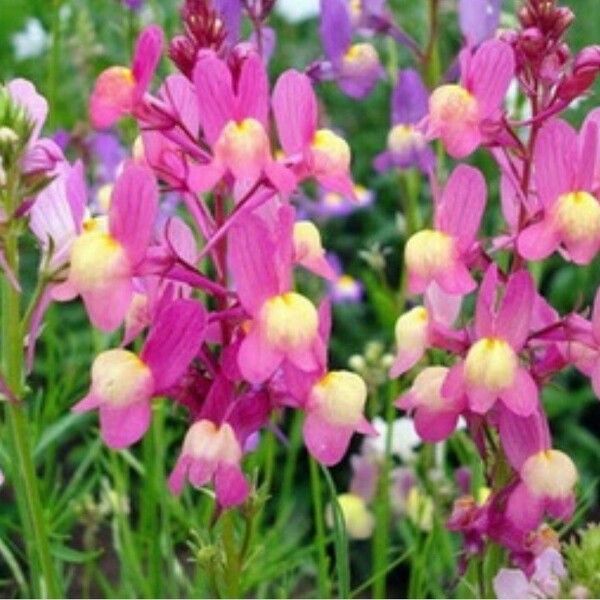
Plant Overview
Known as Ricardo's Toadflax, this incredibly rare wildflower is a hidden jewel found exclusively in the Beja region of southern Portugal. Often mistaken for a tiny wild snapdragon, it holds a prestigious yet precarious spot on the IUCN Red List as a critically endangered species. Seeing one in the wild is a true "bucket list" moment for botanists, as it thrives only in very specific, traditional agricultural landscapes.
🔍 How to Identify
- 🎨 The Blooms: Features classic "snapdragon" shaped flowers with a striking color contrast—usually a mix of deep violet or purple with a bright yellow "lip" or throat.
- 🌿 The Foliage: The leaves are narrow, linear, and slightly grayish-green, arranged in whorls at the base and alternating further up the stem.
- 📏 Growth Habit: A slender, upright annual that usually stays quite low to the ground, rarely exceeding 30-40 centimeters in height.
🌾 Habitat & Ecology
- 🚜 Agricultural Ally: This plant is a specialist of "Barros"—heavy clay soils found in traditional cereal fields. It actually benefits from light, traditional plowing which helps its seeds germinate.
- 🌍 An Exclusive Resident: Unlike many weeds that travel the globe, Linaria ricardoi is endemic only to a tiny pocket of the Iberian Peninsula, making it a high-priority species for European conservation.
⚠️ Safety & Toxicity
- 🛡️ Low Risk: There are no recorded cases of high toxicity for Linaria ricardoi, largely because it is too rare for most people or livestock to encounter in large quantities.
- 🐾 Pet Note: Most toadflax species contain iridoid glycosides, which have a bitter taste that naturally discourages pets and livestock from munching on them.
✨ Fun Fact
- 🌍 The "Living Fossil" of Farming: Because it relies on traditional fallow-field cycles, this plant is considered a living link to ancient Roman and Mediterranean farming techniques that are quickly disappearing in the age of industrial agriculture.

Detailed Care Instructions








