Plant Overview
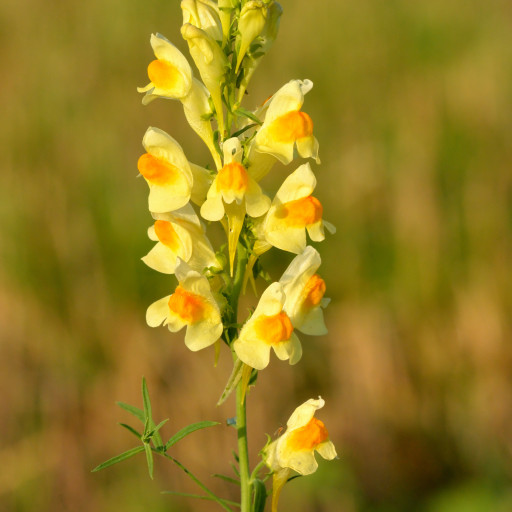
Known affectionately as "Butter-and-eggs" due to its distinct two-tone yellow and orange blooms, Linaria vulgaris is a charming but rebellious wild relative of the garden Snapdragon. Originally native to Europe and Asia, this hardy perennial has traveled the world, often popping up in meadows and roadsides where its bright spikes provide a splash of sunshine. While it looks like a delicate wildflower, it is a fierce survivor that thrives in the toughest conditions.
🔍 How to Identify
- 🌼 The Blooms: The flowers are shaped like little "mouths" with a long, pointed nectar spur at the back. They feature a pale buttery-yellow body with a bright "egg-yolk" orange fuzzy throat.
- 🌿 The Foliage: The leaves are narrow, slender, and a soft grayish-green. They are arranged spirally around the stem and closely resemble the leaves of the flax plant.
- 📏 Growth Habit: It grows in upright, leafy stalks that typically reach 1 to 2 feet in height, often forming dense, colorful colonies.
🏡 In Your Garden
- ☀️ The Sun Seeker: This plant is a "pioneer species," meaning it is often the first to grow in poor or disturbed soil. It loves full sun and is incredibly drought-tolerant once established.
- 🌱 Spreading Spirit: While beautiful, it is a vigorous spreader. It uses creeping underground rhizomes to expand, which can make it difficult to remove once it settles into a garden bed.
- 🐝 Bumblebee Favorite: The flower is designed specifically for large bees. Only heavy insects like bumblebees have the strength to push down the lower "lip" of the flower to reach the nectar hidden inside.
⚠️ Safety & Toxicity
- 🐾 Mildly Toxic: The plant contains iridoid glycosides, which can be toxic to livestock and pets if ingested in significant amounts.
- 👅 Bitter Defense: Fortunately, the plant has an incredibly bitter taste. Most cats, dogs, and horses will take one sniff or a tiny nibble and move on to something more delicious.
✨ Fun Fact
In ancient folklore, Toadflax was used as a protective charm. It was believed that walking around a person three times while carrying the flowers could break a magic spell or "hex" placed upon them!

Detailed Care Instructions
| Toxicity | Poisonous |
To grow Linaria Vulgaris, also known as Butter and Eggs or Toadflax, follow these steps:
- Choose a suitable planting location: Linaria Vulgaris prefers full sun, but it can also tolerate partial shade. Ensure the soil is well-draining and fertile.
- Prepare the soil: Loosen the soil using a garden fork or tiller. Remove any weeds, rocks, or debris. Amend the soil with organic matter such as compost or well-rotted manure to improve its fertility and drainage.
- Sow the seeds: Plant the seeds directly in the soil in spring after the last frost date or in late summer to early fall. Scatter the seeds lightly on the prepared soil or plant them in rows, roughly 1/8 to 1/4 inch deep.
- Watering: Water the seeds gently, keeping the soil moist but not waterlogged. Ensure the soil stays consistently moist until the seeds germinate, which typically takes around 10-14 days.
- Thinning: Once the seedlings emerge and are a few inches tall, thin them out, leaving about 6-12 inches of space between each plant. This will provide enough room for the plants to grow and spread.
- Mulching: Apply a layer of organic mulch around the plants to help retain moisture, suppress weed growth, and regulate soil temperature.
- Maintenance: Linaria Vulgaris requires minimal maintenance. Water the plants regularly, especially during dry spells. Provide support or stakes if needed, as some varieties can grow tall and may require additional support to prevent them from bending or collapsing.
- Deadheading: To prolong blooming and prevent self-seeding, remove faded flowers by pinching or cutting them off.
- Pests and diseases: Linaria Vulgaris is generally resistant to pests and diseases. However, occasional issues with aphids, slugs, or snails may occur. Monitor your plants regularly and take appropriate measures if necessary, such as using organic pest control methods or removing pests manually.
- Propagation: Linaria Vulgaris can also be propagated by division or by taking stem cuttings. Wait until the plant is well-established before attempting these methods.
By following these steps, you should be able to successfully grow Linaria Vulgaris in your garden.

Place in a bright room that is sun drenched almost all day. Or directly in a south-facing window.

The plant in question requires regular watering to maintain its growth and health. This can be accomplished by carefully soaking the soil around the plant regularly. It is important to avoid overwatering, as this can lead to root rot and other issues. The best way to determine when to water is to check the soil moisture level regularly, either by using a moisture meter or by feeling the soil with your fingertips. Watering should be adjusted as needed based on factors such as weather conditions, the plant's age and size, and the type of soil in which it is planted. Additionally, providing the plant with adequate drainage is essential to prevent water buildup around the roots. If the plant shows signs of stress or wilt, watering should be increased until the plant recovers.
To fertilize this plant, you should use a balanced fertilizer with a ratio of 10-10-10. Apply the fertilizer in early spring before new growth appears and then again in mid-summer. Follow the instructions on the fertilizer package for application rates. Water the plant well before and after fertilizing to ensure the fertilizer reaches the roots. Avoid fertilizing in the fall as it can stimulate new growth that may not have time to harden off before cold weather arrives. If the plant is showing signs of stress, reduce the amount or frequency of fertilizer applications.
Linaria Vulgaris is a plant that belongs to the genus Linaria. It is a popular flowering plant that requires well-drained soil. The ideal soil for this plant is slightly acidic with a pH between 5.5 to 6.5. The soil should be rich in nutrients and organic matter. A sandy loam soil that is relatively dry and gritty will be ideal for this plant. The soil should also have good water retention capacity as the plant does not tolerate drought. Therefore, it is recommended to water the plant in moderation, preferably in the morning. Furthermore, the plant prefers full sun to partial shade, and it is essential to provide the right amount of sunlight for optimal growth. In summary, the soil for Linaria Vulgaris should be well-drained, slightly acidic, nutrient-rich, with good water retention capacity, and sandy loam will be the best.
The process of propagating this plant involves taking cuttings from a healthy parent plant and encouraging them to form roots and establish as their own individual plant. To do this, select a healthy stem from the parent plant and use a sharp, clean pair of pruning shears to make a clean cut just below a node (where the leaves join the stem).
Remove any lower leaves from the cutting, leaving only a few leaves at the top. Dip the cut end of the cutting into rooting hormone powder to encourage root growth, then insert it into a pot filled with moist, well-draining soil. Water the cutting and place a plastic bag over the pot to help retain moisture.
After a few weeks, check for signs of new growth and gently tug on the cutting to see if it has rooted. Once the cutting has established roots and is growing on its own, it can be transplanted into a larger pot or into the garden. Water regularly and provide adequate sunlight for the young plant to thrive.








