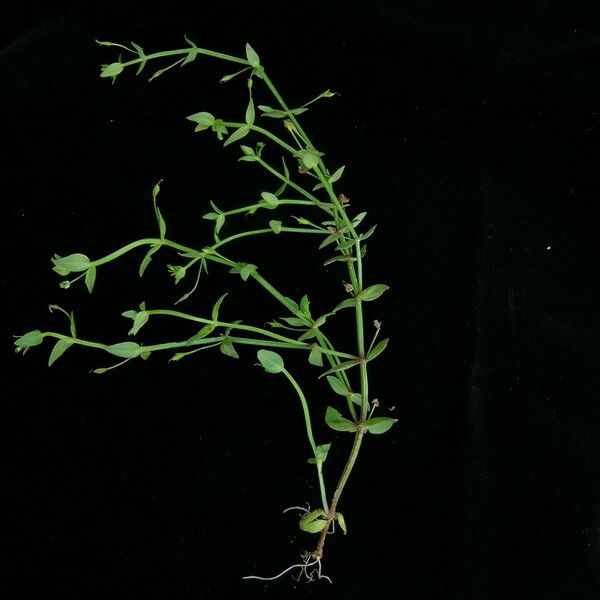
Plant Overview
Known affectionately as the Smallflower False Pimpernel, this delicate marsh-dweller is often found hugging the muddy edges of ponds and riverbanks. While it might look like a fragile wildflower, it is a resilient pioneer species that thrives where many other plants would literally drown. In the world of aquascaping, it has become a "hidden gem" for hobbyists looking to create lush, emerald-green carpets in high-humidity terrariums or underwater landscapes.
🔍 How to Identify
- 🌸 The Tiny Bloom: The flowers are minuscule and trumpet-shaped, typically white with faint streaks of purple or blue in the throat. They appear solitary in the leaf axils.
- 🍃 Sessile Leaves: Its leaves are small, oval-shaped, and "sessile"—meaning they grow directly from the stem without a stalk. They sit opposite each other in neat, symmetrical pairs.
- 🌱 Growth Habit: It typically stays low to the ground, rarely exceeding 6 inches in height. It has a creeping or slightly upright stem that can form dense, mat-like colonies in muddy soil.
🏡 In Your Garden
- 💧 The "Wet Feet" Rule: Unlike most garden plants that fear root rot, Lindernia parviflora thrives in saturated conditions. It is an excellent choice for the "marginal zone" of a garden pond or the soggy areas near a leaky outdoor faucet.
- ☀️ Light vs. Legginess: If kept in a shaded spot, the plant will "stretch" toward the light, losing its compact carpet look. To keep it dense and lush, provide as much bright, indirect light as possible.
- ✂️ Aquatic Transition: If you are moving this plant into an aquarium, do so slowly. It is naturally "amphibious," but it needs a period of adjustment to transition from air-breathing leaves to its fully submerged form.
⚠️ Safety & Toxicity
- ✅ Status: Generally considered safe and non-toxic.
- 🐾 Details: There are no recorded toxic effects for cats, dogs, or horses. It is also safe for fish and shrimp in aquatic setups, making it a "worry-free" addition to a nature-focused home.
✨ Fun Fact
- 🧬 The Great Reclassification: For a long time, this plant was part of the Snapdragon family (Scrophulariaceae). However, DNA testing revealed it was unique enough to have its very own family, the Linderniaceae, named after the 18th-century French physician and botanist Franz Balthazar von Lindern!

Detailed Care Instructions
To grow Lindernia Parviflora, also known as False Pimpernel or Baby's Tears, follow these steps:
- Choose the right growing conditions: Lindernia Parviflora prefers a warm and humid climate. It can tolerate both full sun and partial shade, but it thrives well in bright, indirect light.
- Soil requirements: Plant the Lindernia Parviflora in a well-draining soil mix. A mix of regular potting soil, perlite, and peat moss is suitable.
- Planting: Place the plant in a pot or directly in the ground, depending on your preference. Make sure the container or the planting area has good drainage.
- Watering: Lindernia Parviflora likes to be kept moist, so water it regularly. However, avoid overwatering, as it can lead to root rot. It is a good idea to check the top inch of soil before watering and water when it feels slightly dry.
- Fertilizing: Apply a balanced liquid fertilizer or a slow-release granular fertilizer every 4-6 weeks during the growing season to promote healthy growth.
- Propagation: Lindernia Parviflora can be propagated through stem cuttings. Take 3-4 inches long cuttings from healthy plants with a few leaves and place them in a container filled with water. Once the roots have formed, transfer the cuttings to pots or planting beds.
- Pruning: Regular pruning helps maintain the compact and bushy form of Lindernia Parviflora. Pinch back the tips of the stems every few weeks to encourage branching and bushier growth.
- Pests and diseases: While Lindernia Parviflora is generally pest and disease resistant, it can occasionally get attacked by aphids, mealybugs, or spider mites. Monitor your plant regularly, and if you notice any signs of infestation, treat it with an appropriate organic insecticide or insecticidal soap.
By following these steps, you can successfully grow Lindernia Parviflora and enjoy its lush, green appearance in your garden or indoor spaces.
Lindernia Parviflora is a small plant that requires proper watering to thrive. Here's a detailed guide on watering this plant:
- Soil type: Lindernia Parviflora prefers moist, well-draining soil. Choose a lightweight potting mix that retains moisture but does not become waterlogged.
- Watering frequency: Water the plant when the top inch of soil feels dry to the touch. Typically, this translates to watering every 4-5 days during warmer months and less frequently during colder months.
- Watering method: Use a watering can with a narrow spout or a small watering bottle to deliver water directly to the soil. Avoid wetting the foliage excessively, as this plant prefers to absorb moisture from the roots.
- Water quantity: Aim to water the plant thoroughly until water begins to drain out from the bottom of the pot. This ensures that the entire root system receives adequate moisture.
- Water quality: Use room temperature water, as extreme temperatures can shock the plant. Additionally, it is advisable to use filtered or distilled water, especially if your tap water is high in salts or chemicals.
- Seasonal adjustments: During summer or warmer months, when the plant is actively growing, you may need to water more frequently. Conversely, reduce watering during the dormant period in winter.
- Humidity: Lindernia Parviflora prefers moderate humidity levels. If your indoor environment is particularly dry, consider placing a tray of water near the plant to increase humidity or mist the foliage occasionally.
- Drainage: Ensure that the pot has adequate drainage holes to prevent water from sitting in the bottom, which can lead to root rot. If the plant is kept in a saucer or tray, empty any excess water after watering to avoid stagnant conditions.
- Observation: Pay attention to how the plant responds to watering. If the leaves wilt or turn yellow, it might be a sign of overwatering or underwatering. Adjust your watering routine accordingly based on the plant's needs.
- Weather conditions: Environmental factors such as temperature, humidity, and sunlight can impact the watering requirements of Lindernia Parviflora. Monitor the conditions and adjust watering accordingly to maintain optimal health.
Remember, every plant has unique watering needs, so it is essential to observe and learn what works best for your Lindernia Parviflora over time.
- Begin by preparing a well-draining soil mixture suitable for Lindernia Parviflora. Use a combination of organic matter, such as compost, and a commercial potting mix.
- Choose a pot or planting area with good drainage to prevent waterlogging, as excessive moisture can harm the plant.
- Start by fertilizing the Lindernia Parviflora plant at the beginning of the growing season, typically in spring. Use a balanced, water-soluble fertilizer with equal amounts of nitrogen, phosphorus, and potassium.
- Dilute the fertilizer according to the manufacturer's instructions, usually 1-2 teaspoons per gallon of water.
- Apply the fertilizer solution to the soil around the base of the plant, avoiding direct contact with the foliage.
- Repeat the fertilization process every 4-6 weeks during the growing season to provide a consistent nutrient supply.
- Monitor the plant's response to the fertilizer and adjust the frequency or strength of applications accordingly. Be cautious not to over-fertilize as it may lead to nutrient burn or other issues.
- During the dormant season or periods of slow growth, reduce or suspend fertilization to allow the plant to rest.
- Additionally, consider supplementing the soil with organic matter or slow-release fertilizers to provide a steady nutrient release over an extended period.
- Regularly monitor the plant for any signs of nutrient deficiencies, such as yellowing leaves or stunted growth. Adjust the fertilizer regimen based on the specific needs and conditions of your Lindernia Parviflora plant.
Lindernia Parviflora is a small herbaceous plant that requires specific soil conditions to thrive and grow healthily. When selecting soil for Lindernia Parviflora, it is important to consider its natural habitat, growth requirements, and preferred moisture levels.
Ideally, the soil chosen for Lindernia Parviflora should be well-draining to prevent waterlogging, as these plants prefer moist but not waterlogged conditions. The soil should have good aeration to ensure the roots receive sufficient oxygen. As Lindernia Parviflora typically grows in wetland areas or near water bodies, a soil mix with a high organic content, such as peat moss or compost, is beneficial.
The pH level of the soil should be slightly acidic to neutral, ranging between 6.0 and 7.0. It is recommended to test the pH of the soil and adjust if necessary using additives like sulfur or lime.
Additionally, Lindernia Parviflora prefers nutrient-rich soil to support its growth and flowering. Use a balanced, slow-release fertilizer or organic matter to provide essential nutrients. Incorporating well-decomposed organic matter into the soil can improve its fertility and moisture-retaining capacity.
Overall, when selecting soil for Lindernia Parviflora, focus on providing a well-draining, organically-rich, slightly acidic to neutral soil environment to ensure the plant's optimal growth and vitality.
To propagate Lindernia Parviflora, you can follow these steps:
- Select a healthy parent plant: Choose a mature and healthy Lindernia Parviflora plant from which to take cuttings.
- Prepare a propagation medium: Use a well-draining soil mixture or a mix of peat moss and perlite to create a suitable propagation medium. Ensure it is moist but not excessively wet.
- Take stem cuttings: Using clean gardening shears, take stem cuttings from the parent plant. Choose stems that are about 4-6 inches long and have several leaves on them.
- Remove lower leaves: Remove the leaves from the lower half of each cutting. This will provide a clean stem to insert into the propagation medium.
- Dip cuttings in rooting hormone (optional): Although not necessary, you can dip the cut ends of the stems in a powdered rooting hormone to enhance rooting.
- Insert cuttings into the propagation medium: Make small holes in the propagation medium using a pencil or a similar tool. Insert the cuttings into the holes, making sure they are firmly set.
- Mist the cuttings: Lightly mist the cuttings with water to maintain humidity and prevent drying out. Alternatively, you can cover the cuttings with a propagator or a transparent plastic bag to create a mini-greenhouse effect.
- Place in a suitable environment: Lindernia Parviflora cuttings prefer warm and bright conditions, but avoid direct sunlight. Place the cuttings in an area with indirect light, with temperatures between 70-80°F (21-27°C).
- Maintain moisture: Keep the propagation medium consistently moist, but avoid overwatering. Ensure good drainage to prevent waterlogging, which can lead to rotting.
- Monitor and care for the cuttings: Regularly check the cuttings for signs of growth and roots. It may take several weeks for roots to develop. Keep an eye out for any signs of disease or pests and address them promptly if observed.
- Transplanting: Once the cuttings have established a well-developed root system, carefully transplant them into individual pots filled with a suitable potting mix. Continue to provide proper care by watering, providing adequate light, and avoiding extreme temperatures.
By following these steps, you should be able to successfully propagate Lindernia Parviflora and create new plants for your garden or indoor space.








