Plant Overview
Known as "Juanilama" or "Bushy Lippia," this aromatic shrub is a staple in Latin American home gardens. Often called the "living pharmacy," it is cherished for its intense, soothing fragrance that can range from bright lemon to sweet licorice depending on the specific variety. It’s a resilient, sun-loving plant that bridges the gap between a medicinal herb and a beautiful ornamental hedge.
🔍 How to Identify
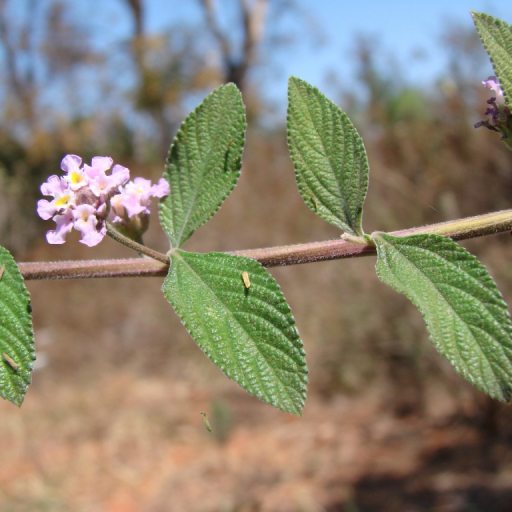
- 🍃 The Leaves: Look for oval-shaped, slightly hairy leaves with serrated (toothed) edges. When you rub them between your fingers, they release a powerful, refreshing citrus or minty scent.
- 🌸 The Flowers: It produces tiny, delicate trumpet-shaped flowers that bloom in tight clusters. They are usually white, light purple, or pink with a tiny yellow "eye" in the center.
- 🌿 The Growth Habit: This is a multi-stemmed, woody shrub that can reach up to 5 feet tall. Its branches are often long and arching, giving it a soft, "bushy" appearance.
🏡 In Your Garden
- ☀️ Sun Chaser: To get the best scent and the most flowers, plant it in a spot that receives full sun. The heat helps the plant concentrate its essential oils, making it much more fragrant.
- ✂️ Pruning Strategy: Because it grows rapidly and can become "leggy" or sparse at the bottom, don't be afraid to prune it back hard after a flowering cycle. This encourages a denser, more attractive shape.
- 🦋 Pollinator Magnet: While humans love the leaves, butterflies and bees are obsessed with the nectar-rich flowers. It’s an excellent choice for a "sensory garden" or a wildlife-friendly backyard.
⚠️ Safety & Toxicity
- 🍵 Human Use: Generally considered safe and widely used in traditional teas for digestion and sleep. However, as with any medicinal herb, it should be used in moderation and avoided during pregnancy unless a doctor is consulted.
- 🐾 Pet Safety: While not listed as highly toxic, the high concentration of essential oils in the leaves can cause stomach upset or skin irritation in cats and dogs if consumed in large quantities.
- 🧤 Skin Sensitivity: Some gardeners find the slightly fuzzy leaves can cause mild itching on sensitive skin during heavy pruning.
✨ Fun Fact
Lippia alba is a "chemical chameleon." Scientists have discovered that different plants can look identical but have completely different chemical makeups (called chemotypes). One plant might smell like a lemon, while its neighbor smells exactly like oregano or mint!

Detailed Care Instructions
| Humidity | Normal |
| Lighting | Full Sun |
| Difficulty | Easy |
| Hibernation | Cold Period |
| Hardiness Zones | 8B - 11 |
To successfully grow Lippia alba, also known as "Bushy Matgrass" or "Mexican Oregano," follow these steps:
- Climate and Sunlight:
- Ensure you live in a suitable climate for Lippia alba. It grows well in USDA hardiness zones 8 to 11.
- Provide the plant with full sun to partial shade. It needs at least 6 hours of direct sunlight daily.
- Ensure you live in a suitable climate for Lippia alba. It grows well in USDA hardiness zones 8 to 11.
- Soil Requirements:
- Lippia alba prefers well-draining soil. Prepare a potting mix by combining equal parts of garden soil, compost, and sand.
- Maintain a slightly acidic to neutral pH level, ideally between 6.5 and 7.5.
- Lippia alba prefers well-draining soil. Prepare a potting mix by combining equal parts of garden soil, compost, and sand.
- Planting and Watering:
- Start from seeds or purchase young Lippia alba plants from a local nursery.
- Plant the seeds or seedlings in the prepared potting mix, leaving enough space for them to grow.
- Water the plant deeply right after planting, then water when the top inch of soil feels dry. Mulching can help retain moisture.
- Start from seeds or purchase young Lippia alba plants from a local nursery.
- Fertilization:
- Apply a balanced, slow-release fertilizer once every three months during the growing season (spring and summer).
- Alternatively, you can use a liquid fertilizer diluted to half strength every two weeks during the growing season.
- Apply a balanced, slow-release fertilizer once every three months during the growing season (spring and summer).
- Pruning and Maintenance:
- Prune Lippia alba regularly to maintain its compact form and encourage bushier growth.
- Trim back any dead or damaged stems.
- Pinch back the stems occasionally to promote branching and prevent legginess.
- Prune Lippia alba regularly to maintain its compact form and encourage bushier growth.
- Pest and Disease Control:
- Keep an eye out for common pests like aphids, whiteflies, or spider mites. Use organic insecticides or neem oil to control infestations.
- Ensure good air circulation around the plant to prevent fungal diseases like powdery mildew. Water the plant at the base to avoid wetting the leaves.
- Keep an eye out for common pests like aphids, whiteflies, or spider mites. Use organic insecticides or neem oil to control infestations.
- Harvesting:
- Lippia alba is primarily grown for culinary and medicinal purposes.
- Harvest the leaves as needed once the plant reaches a sufficient size (around 6-8 inches tall).
- Trim the stems just above a leaf or bud to encourage regrowth.
Remember to research specific growing conditions and considerations for Lippia alba in your region, as climate and care requirements may vary slightly.
- Lippia alba is primarily grown for culinary and medicinal purposes.

Place in a bright room that is sun drenched almost all day. Or directly in a south-facing window.

To water this plant, it is important to wait until the top inch of soil in the pot is dry before watering. When watering, pour water into the pot slowly and avoid getting water on the leaves. Ensure that the pot has good drainage to prevent water from sitting in the soil and causing root rot. It is also important to avoid over-watering, as this can harm the plant. During the colder months, reduce the amount of watering as the plant requires less water during this time.
To fertilize the Lippia Alba plant, you should use a balanced fertilizer with equal amounts of nitrogen, phosphorous, and potassium. Apply the fertilizer every four to six weeks during the growing season, which is typically from spring to fall. Be careful not to over-fertilize, as this can lead to leaf burn and other problems. Water the plant well before and after fertilizing to ensure the nutrients are properly absorbed.
Lippia Alba plant prefers well-draining soil that is fertile and rich in organic matter. The ideal soil for this plant should be slightly acidic to neutral with a pH range between 6.0-7.0. It is recommended to use a mixture of loamy soil, sand, and perlite, as this combination will provide good drainage, aeration, and moisture retention. Avoid heavy clay soils that can become waterlogged and cause root rot. It is also important to maintain a consistent soil moisture level, as both drought and waterlogged conditions can stress the plant and affect its growth. Adding a slow-release fertilizer to the soil annually will help to provide the necessary nutrients for the plant's growth and health.
To propagate this plant, identify a healthy mother plant and take a stem cutting that is about 4-6 inches long. Remove the lower leaves of the cutting, leaving only the top two sets of leaves. Dip the cut end of the stem in rooting hormone powder and plant it in a pot filled with a mixture of peat moss and perlite. Water the cutting well and place it in a warm and humid location with indirect light. Keep the soil moist but not waterlogged. After a few weeks, roots should start to form, and new growth should emerge from the top of the cutting. Once the roots are well-established, the cutting can be transplanted into a larger pot or directly into the garden.








