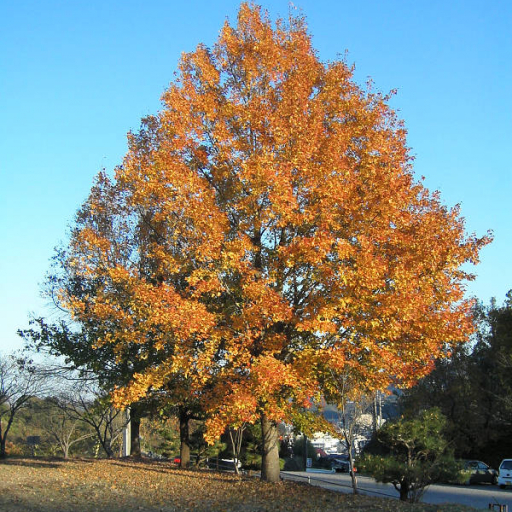
Plant Overview
Often called the Formosan Sweetgum, this East Asian native is a master of seasonal transformation. It spends the summer as a lush, green canopy provider before erupting into a fiery spectacle of gold, orange, and deep crimson as autumn arrives. While it resembles a maple at first glance, its unique "gumball" fruits and fragrant resin give away its true identity as a member of the Altingiaceae family.
🔍 How to Identify
- 🍁 The Three-Point Leaf: Unlike the American Sweetgum (which usually has five lobes), the Formosan variety typically features three-lobed, star-shaped leaves with finely serrated edges.
- 🪵 Corky Bark: As the tree matures, the bark transitions from smooth and grey to a deeply furrowed, craggy texture, occasionally developing "wings" or corky ridges on the branches.
- 🔮 Spiky Seed Pods: It produces distinctive, spherical fruit clusters covered in woody spikes. These "gumballs" hang from long stalks and persist on the tree long after the leaves have fallen.
🏡 In Your Garden
- 💧 Thirsty Roots: This tree is a lover of moisture. It thrives in deep, fertile soil and is an excellent choice for areas of the garden that stay naturally damp, though it requires good drainage to avoid root rot.
- ☀️ The Sun Requirement: To achieve those iconic "stained glass" leaf colors in the fall, the tree needs plenty of direct sunlight. In heavy shade, the foliage often turns a dull yellow rather than vibrant red.
- 🏗️ Plan for the Future: Due to its significant height and a strong, deep taproot, the Formosan Sweetgum resents being moved. Choose its "forever home" carefully, ensuring it is far from underground pipes or narrow walkways.
⚠️ Safety & Toxicity
- ✅ Safe for All: The Formosan Sweetgum is generally non-toxic to humans, dogs, and cats. It is a frequent choice for public parks because of its high safety profile.
- 👟 Physical Hazard: The only real "danger" is the fallen seed pods. These spiky "gumballs" can be painful to step on with bare feet and can create a slippery surface on patios or driveways if not raked up.
✨ Fun Fact
The genus name Liquidambar is derived from the Latin "liquidus" and Arabic "ambar," meaning "liquid amber." This refers to the fragrant, golden-colored resin that bleeds from the bark when the tree is cut—a substance historically used in traditional medicines and perfumes!

Detailed Care Instructions
To grow a Liquidambar Formosana plant, follow these steps:
- Choose a suitable location: Liquidambar Formosana plants prefer full sun to partial shade. Select a location in your garden that receives at least 6-8 hours of direct sunlight per day. The soil should be well-draining and rich in organic matter.
- Prepare the soil: Before planting, prepare the soil by loosening it and mixing in compost or well-rotted manure to improve its fertility and drainage.
- Planting: Dig a hole that is slightly larger than the root ball of the Liquidambar Formosana plant. Place the plant in the hole, making sure the top of the root ball is level with or slightly above the soil surface. Backfill the hole, gently firming the soil around the roots.
- Watering: Water the plant thoroughly immediately after planting to settle the soil and promote root establishment. Afterward, water the plant regularly, keeping the soil moist but not waterlogged. During hot and dry periods, make sure to water deeply to reach the plant's root system.
- Mulching: Apply a layer of organic mulch such as bark chips or straw around the base of the plant, extending beyond the drip line. Mulching helps conserve moisture, suppress weeds, and provide insulation to protect the root system during extreme temperatures.
- Pruning: Liquidambar Formosana plants generally require minimal pruning. However, you can trim any dead, damaged, or crossing branches as needed. Prune them during late winter or early spring before new growth begins.
- Fertilizing: Apply a balanced slow-release fertilizer in early spring to provide necessary nutrients. Follow the manufacturer's instructions for dosage and application.
- Protection: Protect the plant from extreme temperatures, especially during its first few years of growth. Cover it with a frost cloth or provide temporary shelter if there is a risk of freezing temperatures or scorching sun.
- Maintenance: Regularly monitor the plant for signs of pests or diseases. Treat any issues promptly to prevent them from spreading.
By following these steps and providing appropriate care, your Liquidambar Formosana plant should grow and thrive.

Place in a window with dappled sun or a spot in the middle of a room. Or directly in a window facing west or east.

To water this plant, you should first take note of its watering needs. The frequency and amount of water required may vary depending on factors such as the plant's age, size, and environmental conditions surrounding it. A good rule of thumb is to check the soil regularly by sticking your finger into the top inch of soil - if it feels dry, it's likely time to water.
When watering, it's important to make sure the water is evenly distributed around the roots. Avoid watering just at the base of the plant, as this can lead to shallow rooting and poor growth. Instead, you might consider using a drip irrigation system or gently watering the soil around the plant with a hose or watering can.
Finally, be sure not to overwater the plant. Waterlogged soil can cause root rot and other health issues. If in doubt, it's better to err on the side of underwatering than overwatering!
For Liquidambar Formosana plants, apply a slow-release, balanced fertilizer to the soil once every spring. Make sure to water thoroughly after fertilizing to ensure the nutrients reach the roots. Avoid over-fertilizing, as this can cause damage to the plant. As the plant grows larger, increase the amount of fertilizer accordingly. If planting in a pot, use a liquid fertilizer every two weeks during the growing season.
The ideal soil for this plant is a well-draining soil that is nutrient-rich and slightly acidic. It should have a pH level between 6.0 and 6.5. A mixture of organic matter such as compost and leaf mold is recommended to provide the necessary nutrients and improve soil drainage. It is important to avoid using heavy clay soils or soil with poor drainage, as this can lead to root rot and other issues. Additionally, the plant prefers slightly moist soil, so it may be necessary to water regularly during dry periods.
To propagate this plant, you will need to take stem cuttings from a healthy and mature plant. Choose a stem that is at least 3 inches long and has several leaves. Use a sharp and sterile pruning shears to make a clean cut at a 45-degree angle.
Remove the lower leaves from the stem, leaving only a few at the top. Dip the cut end of the stem into a rooting hormone powder to encourage root growth. Plant the stem cutting into a pot filled with well-draining soil mix, making sure that the bottom leaves do not touch the soil.
Place the pot in an area that receives bright, indirect light and maintain a consistent level of moisture in the soil. Cover the pot with a plastic bag or dome to create a humid environment for the cutting. Check the soil regularly and water as needed to keep it moist.
After a few weeks, the stem cutting should develop roots and new growth. Once it has established a strong root system, you can transplant it to a larger pot or outside into the ground. Remember to acclimate the plant to its new environment gradually to avoid shock or stress.
Common pests of the formosan sweet-gum include Scale insect, thrips, larvae. Make a habit of checking your formosan sweet-gum frequently for pests so that any infestations can be caught and managed early.








