Plant Overview
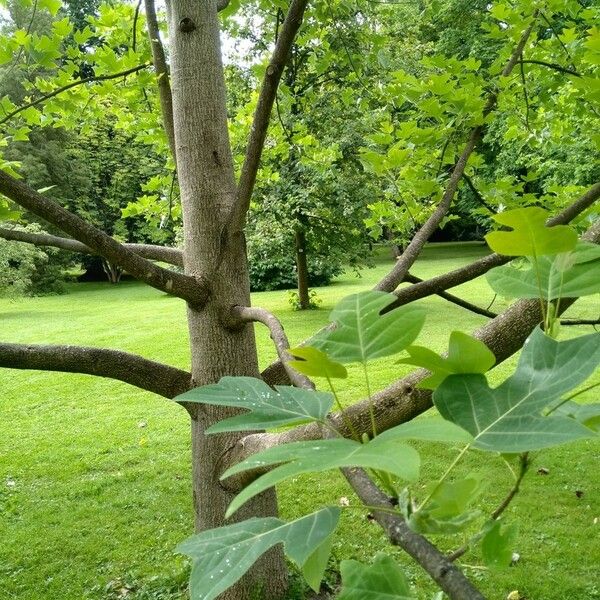
The Liriodendron chinensis, commonly known as the Chinese Tulip Tree, is a majestic deciduous giant that looks like it stepped right out of a prehistoric forest. Often called the "T-shirt Tree" because of its strangely shaped leaves, it is a more refined, slender cousin to the common American Tulip Poplar. In its native mountain forests of China and Vietnam, it is celebrated for its architectural beauty and its status as a "living fossil," representing a botanical lineage that has survived for millions of years.
🔍 How to Identify
- 🍃 The "T-Shirt" Leaf: The most unmistakable feature is the foliage; the leaves have four deep lobes with a flat or notched top, looking remarkably like the silhouette of a tiny green sweater or a t-shirt.
- 🌷 Subtle Tulip Blooms: In late spring or early summer, the tree produces cup-shaped flowers that are greenish-yellow on the outside with a flash of orange at the base, mimicking the look of a tulip.
- 🍦 Sleek Bark: Young trees possess smooth, silvery-grey bark that eventually develops shallow, interlacing furrows and a "corky" texture as the tree reaches maturity.
🏡 In Your Garden
- 🌳 The "Forever" Spot: Because this tree develops a deep, sensitive taproot early in life, it hates being moved. Gardeners should choose a permanent location with plenty of vertical space, as it can easily reach heights of 50 to 70 feet.
- 💧 Moisture Lover: This species is not a fan of "dry feet." It thrives in deep, rich, and slightly acidic soil that stays consistently moist; if the soil dries out too much during summer, the tree may shed its leaves prematurely as a survival tactic.
⚠️ Safety & Toxicity
- 🟢 Generally Safe: The Chinese Tulip Tree is considered non-toxic to humans and common household pets like cats and dogs.
- 🧤 Mild Sensitivity: While not poisonous, the sap can occasionally cause very mild skin irritation in sensitive individuals if handled during heavy pruning. It is always best to wear gloves when working with broken branches.
✨ Fun Fact
The Liriodendron genus is so ancient that it shared the earth with dinosaurs; fossil records show that these "Tulip Trees" once grew all across the Northern Hemisphere before the Ice Age pushed them into their current isolated pockets in China and North America.

Detailed Care Instructions
To grow a Liriodendron chinensis plant, also known as the Chinese Tulip Tree or Chinese Magnolia, you can follow these steps:
- Planting: Choose a well-draining location with full sun to partial shade. The soil should be loamy, fertile, and slightly acidic. Dig a planting hole that is wider and deeper than the root ball of the plant.
- Soil preparation: Mix some organic matter such as compost or aged manure into the planting hole. This will provide nutrients and improve soil structure.
- Planting the tree: Place the root ball of the Liriodendron chinensis plant into the planting hole. Make sure the root collar (where the tree meets the roots) is level with or slightly above the soil surface. Backfill the hole with soil, gently firming it around the roots. Avoid compacting the soil too much.
- Watering: Water the newly planted Liriodendron chinensis thoroughly to settle the soil and provide necessary moisture for growth. Maintain consistent soil moisture during the growing season, especially during dry periods.
- Mulching: Apply a layer of organic mulch (such as wood chips or shredded bark) around the base of the tree. This will help conserve moisture, suppress weeds, and regulate soil temperature.
- Pruning: Minimal pruning is typically required for Liriodendron chinensis. Remove any dead or damaged branches and shape the tree if desired. Prune during the dormant season to minimize stress on the plant.
- Fertilizing: Apply a balanced slow-release fertilizer in early spring to provide necessary nutrients for growth. Follow the manufacturer's instructions for dosage and application method.
- Protection: Protect the young tree from extreme weather conditions and frost. Consider staking the tree if necessary to provide support during windy periods.
- Pest and disease control: Monitor the tree regularly for signs of pests or diseases, such as leaf spots or aphids. If necessary, apply appropriate organic or chemical treatments as recommended by a local nursery or horticulturist.
- Regular maintenance: Provide regular maintenance by providing adequate water, removing weeds, and keeping the surrounding area clean. Monitor the tree's growth and health, and address any issues promptly.
With proper care and favorable growing conditions, the Liriodendron chinensis plant should thrive and grow into a beautiful tree.
The best way to water this particular plant is to first check the soil moisture level by inserting your finger about 2-3 inches into the soil. If the soil is dry at this depth, the plant needs to be watered. Pour water slowly and evenly onto the soil until the excess water drains out of the bottom of the pot or container. It is important not to overwater the plant because it can lead to root rot and other health problems. It is recommended that you water this plant once a week, but the frequency of watering might vary depending on the indoor or outdoor climate or the type of soil mix used. Finally, it is advisable to use room-temperature water for watering this plant because cold water can shock the roots.
To fertilize this plant, mix a slow-release granular fertilizer with water according to the manufacturer's instructions. Apply the fertilizer to the soil around the base of the plant, being careful not to get any on the leaves or branches. Repeat this process every four to six weeks during the growing season, which is typically spring and summer. Avoid fertilizing during the dormant season, which is typically fall and winter.
Liriodendron Chinensis plant prefers slightly acidic to neutral soil with a pH range between 5.0 and 7.0. The soil should be well-drained, loamy, and rich in organic matter to provide adequate nutrients and moisture retention. A good soil mix for Liriodendron Chinensis plant may contain a blend of garden soil, peat moss, perlite, and sand to create a well-draining, well-aerated soil. The plant also prefers a slightly moist soil to thrive, so regular watering is necessary to keep the soil moist but not waterlogged. Adding a layer of organic mulch around the base of the plant can help maintain consistent soil moisture and temperature. Avoid using heavy or compacted soils that can hinder root growth and cause waterlogged conditions in the root zone. Additionally, Liriodendron Chinensis plant prefers full sun to partially shaded areas.
To propagate this plant, there are a few steps to follow. First, choose a healthy parent plant and take cuttings from it, making sure to use clean and sharp pruning shears. Cuttings should be 6-8 inches long and should contain at least two nodes (where leaves or branches emerge from the stem).
Next, remove the lower leaves from the cutting, leaving only the top two or three pairs of leaves intact. Dip the bottom of the cutting in rooting hormone powder and gently tap off any excess.
Prepare the rooting medium by mixing equal parts perlite and peat moss or vermiculite. Put the cutting in the soil mixture and water it well. Cover the cutting and pot with a clear plastic bag, making sure that the bag does not touch the cutting. This will create a humid environment that will help the cutting to develop roots.
Place the pot in a warm, bright location, but out of direct sun. Check the cutting for signs of rooting after a few weeks by gently tugging on it. If it resists being pulled out of the soil, roots have likely formed.
Once the cutting has rooted, it can be carefully removed from the soil mixture and planted in a larger container or outside in a protected spot. Keep the new plant well-watered and protected from direct sun and extreme temperatures while it establishes itself.







