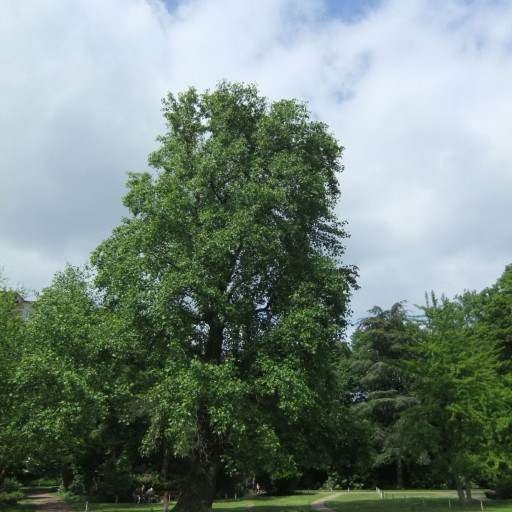
Plant Overview
Often called the "Sky-Scraper of the Forest," the Tulip Poplar is one of the tallest and most majestic hardwoods in North America. Despite its common name, it isn't actually a poplar at all—it is a member of the ancient Magnolia family. This "Canoe Wood" tree was a favorite of George Washington and Thomas Jefferson, who planted them at their famous estates for their stately, symmetrical beauty and neon-bright autumn leaves.
🔍 How to Identify
- 🍃 The "Tulip" Leaf: The foliage is unmistakable; each leaf has four distinct lobes with a broad, notched tip that looks exactly like the silhouette of a tulip flower or a cat’s face.
- 🌷 Hidden Blooms: In late spring, the tree produces cup-shaped flowers. They are yellowish-green with a vibrant orange band at the base, though they often hide high up in the canopy where they are hard to see from the ground.
- 🪵 Straight & Tall: Look for an exceptionally straight, massive trunk. On older trees, the bark develops deep, diamond-shaped furrows that look like textured armor.
🏡 In Your Garden
- 🌳 Space is Essential: This is not a tree for small suburban plots. It grows incredibly fast and can reach heights of 100 feet or more. Plant it well away from power lines or your home’s foundation to give its wide root system room to breathe.
- 💧 Thirsty Roots: Unlike some hardy oaks, the Tulip Poplar is "drought-sensitive." It prefers deep, rich, and moist soil. If it gets too dry in the summer, it may drop some of its leaves early as a defense mechanism.
- 🦋 Wildlife Magnet: It is a vital host plant for the spectacular Eastern Tiger Swallowtail butterfly. If you see large green caterpillars munching on the leaves, don't reach for the pesticide—you're hosting future garden royalty!
⚠️ Safety & Toxicity
- ✅ Generally Safe: The Tulip Poplar is considered non-toxic to humans, dogs, and cats. It is a very "friendly" tree for family backyards and parks.
- 💨 Soft Wood Warning: Because it grows so rapidly, its wood is relatively soft and brittle compared to an oak. During heavy ice storms or high winds, large branches can snap easily, so avoid parking cars directly under mature specimens.
✨ Fun Fact
The Tulip Poplar is a living fossil! Members of the Liriodendron genus have been found in fossil records dating back over 50 million years, meaning these trees were providing shade and nectar long before many other modern flowering plants even existed.

Detailed Care Instructions
| Soil Ph | Neutral To Acidic |
| Lighting | Full Sun |
| Soil Type | Rich, Moist But Well-Drained |
| Bloom Time | Spring |
| Plant Type | Deciduous Tree |
| Mature Size | 60–90 Ft. Tall, 30–50 Ft. Wide |
| Native Area | North America |
| Sun Exposure | Full Sun |
| Hardiness Zones | 5-9 |
To grow a Liriodendron Tulipifera, also known as a tulip tree or yellow poplar, you can follow these steps:
- Choose a suitable location: Tulip trees thrive in full sun or partial shade. They prefer well-draining soil and don't tolerate wet or waterlogged conditions. Ensure the location provides enough space for the tree to grow, as they can reach heights of 70 to 90 feet (21 to 27 meters).
- Choose the right time to plant: The best time to plant a tulip tree is in early spring or late fall when the tree is dormant.
- Prepare the soil: Tulip trees prefer slightly acidic to neutral soil with a pH range of 6.0 to 7.5. Amend the soil with organic matter, such as compost, to improve its fertility, drainage, and moisture retention.
- Dig a hole: Dig a hole that is two to three times wider than the root ball and slightly shallower than the depth of the root ball.
- Plant the tree: Gently remove the tree from its container and place it in the prepared hole. Ensure that the top of the root ball is level with or slightly above the soil surface. Backfill the hole with soil and tamp it down gently to remove air pockets.
- Water thoroughly: After planting, water the tree thoroughly to help settle the soil and establish proper root growth. Continue to water regularly, providing enough moisture to keep the soil consistently moist but not waterlogged, especially during the first year.
- Mulch: Apply a layer of organic mulch, such as wood chips or bark, around the base of the tree. This helps retain moisture, suppress weeds, and moderate soil temperature.
- Pruning: Generally, tulip trees require minimal pruning. However, if necessary, prune any dead, damaged, or diseased branches during the tree's dormant season.
- Fertilize: Apply a balanced slow-release fertilizer in early spring to provide essential nutrients for healthy growth. Follow the fertilizer manufacturer's instructions for application rates.
- Maintain proper care: Regularly monitor the tree for any signs of pests, diseases, or nutrient deficiencies. Water, fertilize, and provide any necessary care based on the specific needs of your tree to promote optimal growth.
Remember that growing a tulip tree from a sapling can take several years before it reaches maturity and develops its characteristic yellow flowers.

Place in a bright room that is sun drenched almost all day. Or directly in a south-facing window.

The best way to water this plant is to make sure the soil is moist but not waterlogged. It is important to achieve a balance between regular watering and not overwatering. Watering should be done deeply and infrequently to encourage healthy root growth. It is important to avoid getting water on the leaves or flowers as this can promote fungal growth. The frequency of watering will depend on the climate, soil type, and humidity levels in the environment. It is also recommended to mulch around the base of the plant to help retain moisture in the soil.
To properly fertilize this tree, use a balanced slow-release fertilizer in the early spring before new growth appears. Apply the fertilizer evenly around the base of the tree, taking care not to get any on the trunk or leaves. Water the tree thoroughly after applying the fertilizer to help it soak into the soil. Repeat this process each year to keep the tree healthy and thriving.
The ideal soil for this plant should be well-draining and slightly acidic. It should have a pH level between 5.5 and 6.5. The soil should also be rich in nutrients and organic matter, with a good balance of sand, silt, and clay. It is important to avoid using heavy clay soils or soils that are too sandy. A loamy soil works best for this plant. Additionally, the soil should be moist but not too wet. It is recommended to use a soil mix that contains composted bark, peat moss, and perlite or vermiculite to ensure proper drainage and aeration of the roots.
One way to propagate this plant is through a process called air layering. First, choose a healthy and mature branch on the plant. Make a small cut through the bark and apply rooting hormone to the exposed tissue. Then, wrap a damp sphagnum moss around the cut and cover it with plastic to retain moisture. Over time, roots will form within the moss. Once roots have grown, cut the branch below the rooted section and plant it in a pot or directly into the ground. Keep the soil moist and protected from direct sunlight until the plant establishes itself.
Common pests of the tulip poplar include Spider mites, thrips, larvae. Make a habit of checking your tulip poplar frequently for pests so that any infestations can be caught and managed early.








