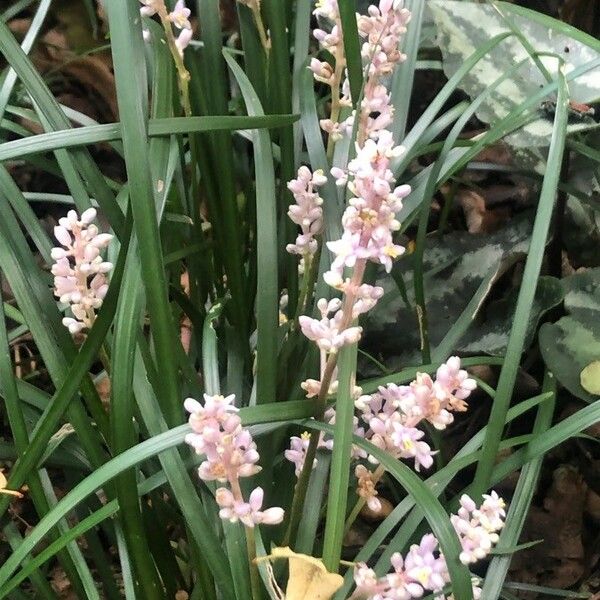
Plant Overview
Often called the Grass-leaved Lilyturf, this resilient evergreen is a favorite for those seeking a lush, "no-fuss" groundcover. While it looks like a thick clump of ornamental grass, it is actually a member of the asparagus family. Native to the forests of East Asia, it has earned a reputation as a "landscape problem solver" because it thrives in the deep shade where traditional lawn grass often fails.
🔍 How to Identify
- 🌿 The Foliage: Long, narrow, dark-green blades that arch gracefully toward the ground. Unlike its cousins, Graminifolia has particularly thin, grass-like leaves.
- 💜 The Flowers: In late summer, upright spikes emerge from the center of the foliage, covered in tiny, bell-shaped lavender or violet blossoms.
- 🌑 The Berries: After the flowers fade, they are replaced by clusters of small, shiny black berries that persist through the winter months.
🏡 In Your Garden
- 🌱 Root Strategy: This plant spreads via underground runners (rhizomes). This makes it excellent for preventing soil erosion on slopes, but it means you should give it space so it doesn't crowd out delicate neighbors.
- 🛡️ Hardiness Nuance: It is incredibly "tough-as-nails." Once established, it is remarkably drought-tolerant and can survive salt spray, making it a popular choice for coastal gardens or walkways where winter salt is used.
- ✂️ Spring Refresh: To keep it looking its best, many gardeners "mow" or shear the foliage back to the ground in early spring to make room for fresh, vibrant new growth.
⚠️ Safety & Toxicity
- 🐾 Mildly Toxic: While not considered deadly, the berries and leaves contain saponins which can cause stomach upset, drooling, or vomiting if ingested in large quantities.
- 👶 Child & Pet Safety: Keep an eye on curious toddlers or pets who might be attracted to the dark, bead-like berries. It is best used as a border plant rather than in areas where pets frequently graze.
✨ Fun Fact
Despite its common name "Lilyturf," it isn't a true lily or a true turf grass. In traditional Chinese medicine, the roots of related Liriope species are known as "Mai Men Dong" and have been used for centuries to create cooling herbal teas.

Detailed Care Instructions
To grow Liriope graminifolia plant, follow the below steps:
- Choose the right location: Liriope graminifolia plants prefer partial shade to full shade, although they can handle some sun. Ensure the area has well-draining soil.
- Prepare the soil: Liriope graminifolia plants are tolerant of various soil types but do best in fertile, loamy soil. Amend the soil with organic matter like compost or well-rotted manure to improve drainage and nutrient content.
- Planting: Dig a hole slightly larger than the plant's root ball and gently place the plant in the hole at the same level it was growing in the container. Backfill the hole with soil and firm it around the base of the plant.
- Watering: Water newly planted Liriope graminifolia regularly to help establish the roots. Once established, they are moderately drought-tolerant but will benefit from regular watering during dry periods.
- Mulching: Apply a layer of organic mulch around the base of the plant to help retain moisture, suppress weed growth, and maintain a more consistent soil temperature.
- Fertilization: Liriope graminifolia plants generally don't require much fertilization. However, you can apply a balanced slow-release fertilizer in early spring or use a liquid fertilizer monthly during the growing season for more vigorous growth.
- Maintenance: Liriope graminifolia is a low-maintenance plant. Remove any spent flowers or damaged foliage as needed. In colder regions, it may die back in winter, but new growth will emerge in spring. If desired, you can trim back the foliage in late winter or early spring to encourage fresh growth.
By following these steps, you should be able to successfully grow Liriope graminifolia plant.

Place in a bright room that is sun drenched almost all day. Or directly in a south-facing window.

When watering this plant, it is important to consider the soil moisture levels. It prefers moist, but well-draining soil. Before watering, check the top inch of soil for dryness. If it feels dry, water the plant thoroughly, allowing the soil to soak up the water until it drains out of the bottom of the pot or the soil around the plant is fully saturated.
It is important to avoid overwatering as this can lead to root rot and other problems. Similarly, avoid allowing the soil to completely dry out between waterings as this can lead to stress and damage to the plant.
When watering, be sure to avoid getting water on the leaves or flowers, as this can lead to fungal diseases. Instead, water at the base of the plant, being careful to avoid splashing the water onto the foliage.
In general, this plant prefers consistent moisture levels and will benefit from regular watering, particularly during hot, dry weather. However, be sure to adjust watering to accommodate seasonal changes in weather, such as increased rainfall or cooler temperatures.
To fertilize this plant, use a balanced fertilizer with equal amounts of nitrogen, phosphorous, and potassium. Apply the fertilizer once a month during the growing season, from spring to fall. Mix the fertilizer into the soil around the base of the plant, making sure to water it in thoroughly afterward. Avoid over-fertilizing, as this can lead to excessive foliage growth at the expense of flowers or seed production.
For Liriope Graminifolia plants, it is recommended to use a well-draining soil with a pH level between 5.0 and 7.5. The soil should be rich in organic matter and have good water retention capabilities. A mixture of peat moss, perlite, and sand can be used to create a suitable growing medium. The plant prefers moist soil but can be tolerant of periods of drought. Regular fertilization with a balanced fertilizer can help to promote healthy growth. Overall, it is important to choose a soil that will provide the necessary nutrients and drainage for the plant to thrive.
To propagate this plant, you will need to divide an established plant. Dig up the plant carefully and separate the clumps of rhizomes. Each clump should have its own roots and a few shoots. Plant each clump in a new location, making sure to water it well and keep it moist until it is established. You can also grow new plants from seeds, but this method is less reliable and takes longer. To do so, collect ripe seeds in the fall, dry them out, and then sow them in pots of seed-starting mix. Keep the soil moist and warm, and the seeds should germinate in a few weeks. Transplant the seedlings to a larger container or outdoor location when they are big enough to handle.








