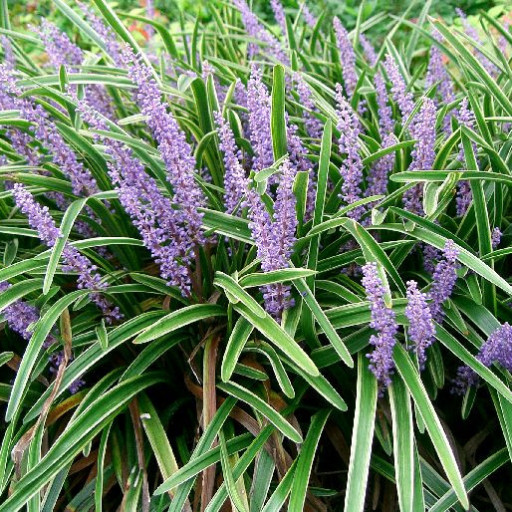
Plant Overview
Known as "Big Blue Lilyturf" or "Monkey Grass," Liriope muscari is the ultimate problem-solver for any garden. Though it looks like a lush ornamental grass, it actually belongs to the asparagus family and produces stunning lavender flower spikes that look remarkably like Grape Hyacinths. It’s a resilient, evergreen favorite that provides year-round structure even in the most difficult corners of the yard.
🔍 How to Identify
- 🍃 The Foliage: Features long, strap-like leaves that are deep green and glossy. They arch gracefully outward, forming dense, fountain-like clumps.
- 🪻 The Blooms: During late summer, stiff stalks emerge from the center, covered in tiny, bell-shaped violet or lavender flowers.
- 🔮 The Berries: After the flowers fade, the plant produces clusters of shiny, dark-purple-to-black berries that often persist through the winter.
🏡 In Your Garden
- 🌱 The Clumping Habit: Unlike its cousin Liriope spicata, which can be invasive, Liriope muscari stays in tidy clumps. This makes it the perfect choice for defining walkways or edges without fear of it taking over your entire lawn.
- ⛅ Versatile Resilience: This plant is famous for its "tough love" attitude. It thrives in deep shade where grass won't grow, but it’s equally happy in full sun. Once established, its fleshy roots store water, making it incredibly drought-tolerant and a great candidate for erosion control on slopes.
⚠️ Safety & Toxicity
- 🟢 General Status: Generally considered non-toxic and safe for a "pet-friendly" garden.
- 🐕 Mild Irritation: While not deadly, the dark berries can cause mild stomach upset if ingested by curious puppies or small children. It’s best to keep an eye on toddlers who might be tempted by the "forbidden grapes."
✨ Fun Fact
The genus is named after Liriope, a water nymph in Greek mythology and the mother of Narcissus. Much like the mythical figure, the plant is often found near water or in cool, damp woodlands in its native East Asian habitat.

Detailed Care Instructions
| Color | Lavender To White |
| Soil Ph | 6.0 To 7.0; Slightly Acid To Neutral |
| Humidity | Normal |
| Lighting | Part Sun |
| Soil Type | Average, Well-Drain Soil |
| Bloom Time | August To September |
| Difficulty | Medium |
| Plant Type | Grasslike Herbaceous Flowering Perennial |
| Mature Size | Nine To 18 Inches Tall, With A 12- To 24-Inch Spread |
| Native Area | East And Southeast Asia |
| Temperature | 5°C - 24°C |
| Sun Exposure | Full Sun To Part Shade |
| Hardiness Zones | 4 To 10 |
To grow Liriope Muscari (also known as Lilyturf), follow these steps:
- Choose a suitable location: Liriope Muscari grows well in partial shade to full sun. Ensure the soil is well-drained and not excessively wet.
- Prepare the soil: Loosen the soil in the planting area and remove any weeds or rocks. Mix in some compost or organic matter to improve soil fertility and drainage.
- Planting: Dig a hole that is slightly larger than the rootball of the Liriope Muscari plant. Place the plant in the hole, ensuring that the crown (where the roots meet the foliage) is level with the soil surface. Backfill the hole with soil and gently firm it around the plant.
- Watering: After planting, thoroughly water the Liriope Muscari to settle the soil and provide moisture to the roots. Subsequently, water regularly to keep the soil moist but not waterlogged.
- Mulching: Apply a layer of organic mulch, such as wood chips or straw, around the plants. Mulch helps retain moisture, suppresses weeds, and insulates the soil.
- Fertilizing: Liriope Muscari generally does not require much fertilizer. However, you can apply a balanced slow-release fertilizer in spring to promote healthy growth.
- Maintenance: Regularly remove any dead or decaying foliage to maintain a neat appearance. In late winter or early spring, before new growth emerges, you can trim back the old foliage to encourage fresh growth.
- Division: Liriope Muscari tends to multiply and form dense clumps over time. Every few years, you can divide the clumps to create new plants. Dig up the clump, separate it into smaller sections, and replant them in suitable locations.
Overall, Liriope Muscari is a relatively low-maintenance plant that grows well in a variety of conditions. With proper care and suitable growing conditions, it should thrive and create a beautiful groundcover or border in your garden.

Place in a window with dappled sun or a spot in the middle of a room. Or directly in a window facing west or east.

When watering this particular plant, it is important to avoid letting it become too dry or too wet. One should aim to strike a balance between keeping the soil moist but not waterlogged.
To achieve this, it is recommended to water deeply and less frequently rather than doing light watering sessions more often. The soil should be allowed to partially dry out between watering to ensure that roots receive the necessary oxygen.
It is important to ensure that the plant's roots have plenty of water without becoming excessively saturated and potentially causing root rot. An appropriate watering schedule for Liriope Muscari should allow for the soil to dry out between watering, followed by a thorough watering session, which soaks the soil to the plant's root zone.
During prolonged droughts or periods of hot, dry weather, it may be necessary to increase the frequency of watering sessions.
When watering this plant, one should avoid getting the leaves too wet. Water should be directed towards the base of the plant to avoid attracting pests or causing damage to the leaves.
Overall, a consistent and balanced watering schedule will help to promote healthy growth and prevent the plant from becoming stressed or diseased.
For best results, fertilize this plant in the spring using a balanced, slow-release fertilizer. Apply according to package instructions and water thoroughly after application. Avoid over-fertilizing as this can lead to leaf burn and other issues. It is also a good idea to mulch around the base of the plant to help conserve moisture and suppress weed growth.
The ideal soil for growing this plant is well-draining with a neutral to slightly acidic pH level. The soil should also be rich in organic matter, such as compost or leaf mold, to promote healthy root growth and nutrient absorption. It is important to avoid compacted soil and to ensure adequate soil moisture, as the plant does not tolerate drought well. Additionally, the plant prefers a soil that is not too heavy in clay content, as this can cause water to pool around the roots. Overall, a loose, nutrient-rich soil is essential for optimal growth and flowering of this plant.
To propagate this plant, you will need to first select a healthy parent plant with desirable traits. Then, using a sharp, clean pair of scissors or pruning shears, carefully cut a small section of the plant's stem or root system. This cutting should be about 3-4 inches long and should have several leaves or roots.
Next, prepare a container with a well-draining potting mix and moisten it slightly. Dip the end of your cutting in rooting hormone powder and then plant it in the prepared container, burying it about halfway into the soil.
Place the container in a warm, brightly lit area but out of direct sunlight. You can cover the container with a plastic bag or dome to create a humid environment. Mist the cutting occasionally to keep the soil moist but not waterlogged.
Within a few weeks, your cutting should start to develop new roots. Once the roots are well-established, you can transplant your new plant into a larger pot or directly into the ground outdoors.
Common pests of the big blue lilyturf include Scale insect, mealybugs, spider mites, thrips, snails. Make a habit of checking your big blue lilyturf frequently for pests so that any infestations can be caught and managed early.








