Plant Overview
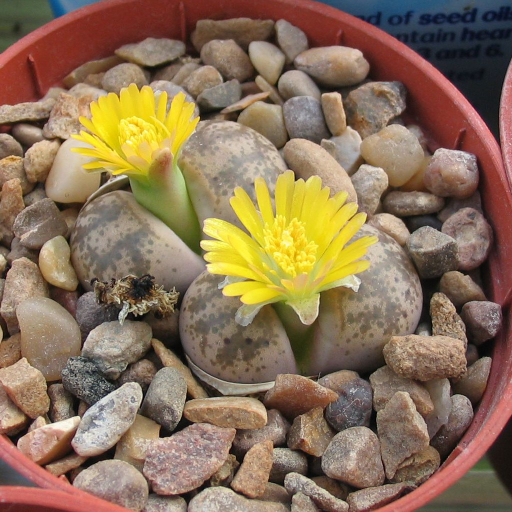
Known as one of the "Living Stones," Lithops coleorum is a master of disguise from the rocky landscapes of South Africa. These tiny succulents have evolved to look exactly like the pebbles surrounding them to avoid being eaten by thirsty animals in the wild. Named in honor of the legendary Lithops researchers Desmond and Naureen Cole, they are a prized jewel for collectors of weird and wonderful desert flora.
🔍 How to Identify
- 🪨 The Split: The plant body consists of two thick, succulent leaves fused together, divided by a shallow fissure where the flower eventually emerges.
- 🕸️ Top Patterns: The surface is typically a soft brownish-pink or creamy-grey, decorated with fine, dark, branching lines that look like a delicate, spider-web-like network.
- 🌼 Autumn Bloom: In the late growing season, a vibrant yellow, daisy-like flower emerges from the center, often appearing much larger than the plant itself.
🏡 In Your Garden
- 💧 The "No-Water" Rule: This plant follows a strict internal clock. When the outer leaves begin to shrivel and a new pair emerges from the center, stop watering completely! The new leaves are "drinking" the moisture from the old ones; adding water now can cause the plant to rot.
- 🏜️ Depth Matters: Because they possess a surprisingly long taproot for their small size, they prefer tall, narrow pots rather than shallow dishes. They require a mineral-heavy substrate—think 80% grit or pumice—to ensure their roots never sit in damp organic soil.
⚠️ Safety & Toxicity
- 🐾 Safe Status: Lithops coleorum is generally considered non-toxic to cats, dogs, and humans, making it a "pet-safe" choice for sunny windowsills.
- ⚠️ Physical Hazard: Because of their stone-like appearance and firm texture, they can be a choking hazard for curious toddlers or pets who might mistake them for actual pebbles.
✨ Fun Fact
Lithops are "window plants." The translucent patterns on their tops act like biological skylights, filtering harsh desert sun and directing it deep into the buried body of the plant so it can photosynthesize safely underground!

Detailed Care Instructions
Growing Lithops coleorum plants can be quite rewarding but requires specific care and attention. Here are some steps to help you grow them successfully:
- Choose the right time: Lithops coleorum plants are native to South Africa and prefer warm temperatures. Start the growth process during the warmer months, such as spring or summer, when temperatures range between 70-80°F (21-27°C).
- Light requirements: Lithops coleorum plants need bright, indirect sunlight. They appreciate at least 5-6 hours of sun exposure per day. Place them near a south or east-facing window, or use artificial grow lights to provide the necessary light.
- Soil selection: Lithops coleorum plants require well-draining soil to avoid excess moisture retention. Use a specialized cactus or succulent mix, or create your own by mixing equal parts of potting soil, sand, and perlite.
- Watering: These plants have a unique growth cycle. They go through a dormant period during summer and actively grow during the winter. Water Lithops coleorum plants sparingly, allowing the soil to dry out almost completely between waterings. Reduce watering during the dormant period.
- Fertilization: Fertilizing Lithops coleorum plants is not necessary, as they have adapted to nutrient-poor soil in their natural habitat. However, if you wish to fertilize, use a diluted, balanced fertilizer specifically designed for cacti or succulents, and apply it sparingly during the growing season.
- Propagation: Lithops coleorum plants reproduce through seeds. They produce small, daisy-like flowers that produce seed pods. Once the seed pods are fully ripe and dry, collect the seeds and sow them in a well-draining soil mixture. Keep the soil moist until the seeds germinate.
- Pot selection: Choose a container with drainage holes to ensure water doesn't accumulate around the roots. Start with a small pot, as Lithops coleorum plants prefer tight spaces.
- Maintenance: Lithops coleorum plants are relatively low-maintenance. However, keep an eye out for signs of overwatering, such as soft and mushy leaves. Remove any dead or decaying outer leaves gently to avoid damaging the plant.
Remember, Lithops coleorum plants are slow-growing, and it may take several years for them to reach maturity and produce flowers. Patience and proper care are key to growing these unique and beautiful plants successfully.
To properly water this specific succulent plant, it is important to first understand its water needs. Lithops Coleorum is a unique plant that has adapted to its native environment to survive long periods of drought. Therefore, it is important to mimic this natural environment by providing it with infrequent, but deep watering.
It is recommended to water this plant only when the soil is completely dry. This can be checked by inserting a finger into the soil up to the second knuckle or by using a moisture meter. When watering, it is important to do so slowly and evenly to allow the soil to properly absorb the water. It is also important to avoid getting water on the leaves of the plant, as this can cause damage and rot.
In addition, it is important to use well-draining soil and a pot with drainage holes to prevent water from sitting at the bottom of the pot, which can lead to root rot. It is also important to avoid overwatering, as this can be just as detrimental to the plant's health as underwatering.
Overall, it is important to pay close attention to the plant's water needs and adjust accordingly, as each individual plant may have different needs depending on its environment and growing conditions.
For the plant in question, it is recommended to feed it with a balanced fertilizer during its growing period, which spans from spring to fall. Fertilize once every 3-4 weeks during this period, and avoid fertilizing during the winter when the plant is dormant. Ensure that the soil is moist before fertilizing to prevent any root damage. Use a diluted solution of fertilizer to avoid over-fertilization and apply it directly to the soil around the plant. Follow the manufacturer's instructions for proper dilution and application.
Lithops Coleorum is a type of succulent that requires a specific type of soil to thrive. The ideal soil for this plant should be well-draining, with good aeration to prevent waterlogging. The soil should be sandy and gritty, with a pH between 6.0 and 7.5. The soil should also be low in organic matter and nutrients, as Lithops Coleorum is adapted to grow in nutrient-poor soils. It is recommended to mix the soil with coarse sand or gravel to improve drainage and reduce the risk of root rot. It is important to avoid using compost or topsoil in the soil mixture, as this can lead to excessive nutrient levels and poor drainage. Adequate inorganic substrate such as pumice and perlite are useful in successful cultivation of the plant. In addition, it is important to provide the plant with the correct amount of water for optimal growth.
To propagate this plant, you will need to carefully separate the offsets or young plants that have grown around the base of the parent plant. It is best to do this in the spring when the plant is actively growing. Gently remove the offsets from the parent plant and allow the cut area to dry out for a day or two.
Prepare a well-draining potting soil mix and plant the offsets in their own pots. Water them lightly and place them in a bright spot out of direct sunlight. Overwatering can lead to rot, so it is important to be careful with watering. Allow the soil to dry out slightly between waterings.
With proper care, the offsets should establish roots and begin to grow on their own. It may take some time for them to start flowering, as Lithops tend to flower only when they are mature and have reached a certain size.








