Plant Overview
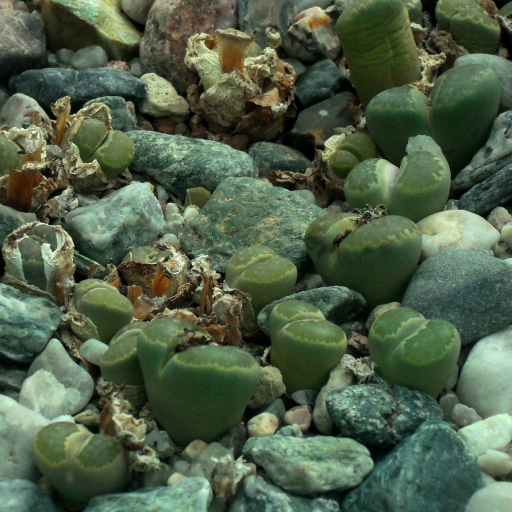
Known affectionately as "Living Stones," Lithops villetii are the ultimate masters of botanical disguise. Hailing from the parched landscapes of South Africa, these tiny succulents have evolved to look exactly like the surrounding pebbles to avoid being eaten by thirsty animals. They are the perfect curiosity for a sunny windowsill, offering a glimpse into one of nature's most clever survival strategies.
🔍 How to Identify
- 🪨 Body Shape: A pair of thick, fleshy leaves fused together, resembling a small, rounded stone with a tiny fissure or "cleft" across the top.
- 🖼️ The Windows: The top surface features translucent "windows" with subtle, marbled patterns in shades of gray-green, beige, or dusty brown, allowing sunlight to reach the inner tissues.
- 🌼 The Bloom: In late autumn, a surprisingly large, daisy-like yellow flower emerges directly from the central slit, often smelling faintly of spicy cloves.
🏡 In Your Garden
- 🏜️ The Art of Neglect: This plant thrives on a "less is more" philosophy. Because it is adapted to extreme drought, the most common cause of death is overwatering, which can cause the "stone" to literally burst.
- ⏳ Shedding Skin: Once a year, the plant will produce a new set of leaves from the center. During this time, the old outer leaves will shrivel up and transfer their moisture to the new pair. Do not pull these off; let the plant recycle its own water!
- ☀️ Sun Seeker: To keep its compact shape and vibrant patterns, it needs bright, direct light. If it starts to grow tall and "stretchy," it is signaling that it is desperate for more sunshine.
⚠️ Safety & Toxicity
- 🛡️ Non-Toxic Status: Lithops villetii is generally considered non-toxic to humans, cats, and dogs.
- 🚫 Choking Hazard: Because of their small size and "pebble-like" appearance, keep them out of reach of toddlers or curious pets who might mistake them for a toy or a snack.
✨ Fun Fact
The "windows" on top of the leaves act like biological fiber optics. Because the plant lives mostly buried in the sand to stay cool, it uses these translucent patches to funnel sunlight deep into its underground body for photosynthesis!

Detailed Care Instructions








