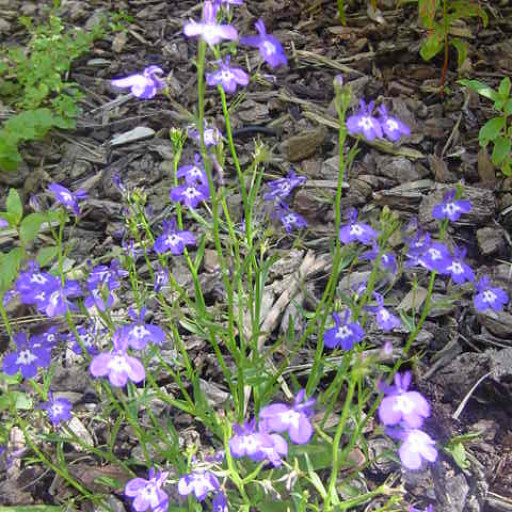
Plant Overview
Known as the "Edging Lobelia," Lobelia erinus is the secret behind those cascading rivers of electric blue seen in window boxes across the world. Originally from the Cape of Good Hope in South Africa, this delicate-looking powerhouse creates a dense carpet of color that seems almost too vibrant to be real. Whether it's spilling over a stone wall or tucked into a hanging basket, it is the quintessential filler plant for a fairy-tale garden aesthetic.
🔍 How to Identify
- 🌸 Petal Power: Features small, tubular flowers that flare into five petals arranged like a fan—two small lobes on top and three larger lobes on the bottom.
- 👁️ The Eye: Many varieties boast a tiny, contrasting white or yellow "eye" at the throat of the flower, which acts as a landing guide for pollinators.
- 🍃 Delicate Foliage: The leaves are small, narrow, and alternate; depending on the variety, they can range from a bright grass-green to a moody, bronze-tinted purple.
🏡 In Your Garden
- 🌤️ The Mid-Summer Slump: This plant is a "cool-season" star. It often takes a "siesta" and stops blooming during the sweltering heat of August. Don't panic—give it a light haircut (trimming back the stems), and it will flush with new flowers once the autumn breeze arrives.
- 🚿 Shallow Roots: Because its root system is fine and shallow, it has zero tolerance for "drought therapy." If the soil dries out completely, the plant may collapse. It prefers consistently moist, well-draining soil to keep its stems turgid and upright.
⚠️ Safety & Toxicity
- 🚫 Status: Mildly toxic if ingested.
- 🐾 Details: The plant contains a chemical called lobeline. While not usually fatal, eating the flowers or leaves can cause nausea, vomiting, and tremors in dogs, cats, and small children. It is best enjoyed visually rather than culinarily!
✨ Fun Fact
True blue is one of the rarest colors in the plant kingdom; while many "blue" flowers are actually lavender or purple, Lobelia erinus provides one of the purest, most intense blue pigments available to gardeners!

Detailed Care Instructions
| Color | Blue, Lilac-Pink, Purple, White, Cherry-Red |
| Soil Ph | Slightly Acidic To Neutral |
| Humidity | High |
| Lighting | Full Sun |
| Soil Type | Friable, Evenly Moist, And Well-Drained |
| Bloom Time | In The North, Lobelia Blooms All Summer And Into Fall, Until The First Frost |
| Difficulty | Medium |
| Plant Type | Tender Perennial |
| Mature Size | 6 To 9 Inches In Height, With A Slightly Greater Spread |
| Native Area | Southern Africa |
| Temperature | 5°C - 25°C |
| Sun Exposure | Full Sun To Partial Shade |
| Hardiness Zones | 10-11 |
To grow Lobelia erinus, follow these steps:
- Location: Choose a location that receives full sun to partial shade. Lobelia erinus prefers cooler temperatures, so avoid planting it in areas that get excessive heat.
- Soil: Prepare well-draining soil rich in organic matter. Lobelia erinus prefers slightly acidic soil with a pH of 5.5 to 6.2.
- Watering: Keep the soil consistently moist but not waterlogged. Regularly water the plant during dry periods, especially in the summer.
- Planting: Sow seeds indoors 8 to 10 weeks before the last frost date or directly sow them into the garden after the danger of frost has passed. Plant the seeds barely covered with soil, as they need light for germination. Space the seeds or seedlings 6 to 12 inches apart, depending on the variety.
- Maintenance: Fertilize the plant with a balanced liquid fertilizer every two weeks during the growing season. Remove spent flowers regularly to encourage continuous blooming and maintain the plant's appearance.
- Pests and diseases: Lobelia erinus is generally resistant to pests and diseases, but it can occasionally suffer from aphid infestations or fungal infections. Keep an eye out for any problems and take appropriate measures, such as using insecticidal soap or fungicides if needed.
- Overwintering: In areas where Lobelia erinus is not hardy (zones 9 and above), it is typically grown as an annual. However, you can try overwintering it by bringing indoor potted plants inside or providing protection outdoors. Protect the plant from freezing temperatures and water sparingly during the winter.
By following these steps, you can successfully grow Lobelia erinus and enjoy its beautiful flowers throughout the growing season.

Place in a bright room that is sun drenched almost all day. Or directly in a south-facing window.

Lobelia Erinus plant requires regular watering to thrive. It is recommended to water the plant deeply once a week, rather than shallow watering multiple times a week. The soil should be allowed to dry slightly between watering to prevent overwatering and root rot. When watering, it is important to pour water directly onto the soil, rather than on the leaves or flowers, to prevent damage and disease. Overhead watering should also be avoided. In hot and dry weather, the plant may require more frequent watering.
To fertilize this plant, use a water-soluble fertilizer and mix it with water according to the instructions on the package. Apply the fertilizer directly to the soil around the base of the plant using a watering can. Be sure to fertilize the plant every two weeks during the growing season, and reduce fertilization during the winter months. Avoid getting fertilizer on the foliage as it can cause damage to the plant.
Lobelia Erinus plant prefers a well-drained soil. A soil mix containing a combination of peat moss, perlite, and vermiculite is suitable for it. Regular garden soil may not be ideal as it tends to become compact and prevent healthy root growth. Adding compost or aged manure to the soil mix can enrich it with essential nutrients. Also, ensure that the soil pH is neutral to slightly acidic, ranging between 6.0 and 7.5. Overly alkaline soil can affect the plant's growth and flowering.
To propagate this particular plant, you will need to take stem cuttings and root them in moist soil. Make sure to select healthy, mature stems and cut them at a node. Remove any leaves from the bottom half of the stem and dip the cut end into rooting hormone powder. Place the stem cutting into moist soil and cover it with a plastic bag or clear plastic container to create a humid environment. Keep the soil moist and place the container in a warm, bright location. After a few weeks, the stem cutting should develop roots and can be transplanted to a larger pot or outdoors into the garden.
Common pests of the edging lobelia include Spider mites, larvae. Make a habit of checking your edging lobelia frequently for pests so that any infestations can be caught and managed early.








