Plant Overview
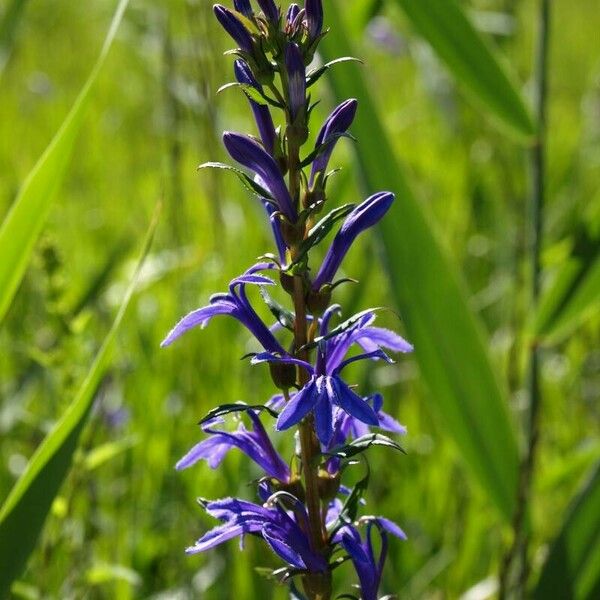
Known as the Marsh Lobelia or Narrow-leaf Lobelia, this striking perennial is a jewel of East Asian wetlands. Often found swaying in the moist meadows of Siberia, China, and Japan, it is celebrated for its intensely deep violet-blue flower spikes that look like tiny, perched birds. It is a "structural" plant that adds vertical drama and a cool-toned elegance to any water-adjacent landscape.
🔍 How to Identify
- 🪻 Vibrant Blooms: The flowers are a rich, electric blue or purple, featuring a distinct "two-lipped" shape typical of the Lobelia family, arranged in a dense vertical spike.
- 🍃 Sessile Leaves: Its name sessilifolia literally means "stalkless leaves." The narrow, lance-shaped leaves clasp directly onto the stem without a petiole.
- 📏 Stately Stature: It grows remarkably straight and upright, often reaching heights of 2 to 3 feet, with a smooth, hollow green stem that remains unbranched until the flower head.
🏡 In Your Garden
- 💧 The "Wet Feet" Rule: Unlike many garden plants that fear root rot, the Marsh Lobelia thrives in saturated soil. It is a perfect candidate for the edge of a pond, a rain garden, or a low-lying "boggy" spot in your yard where other plants might struggle.
- ☀️ Sun for Strength: While it can tolerate partial shade, giving it plenty of sunlight will ensure the stems stay strong and the flower color remains vivid. In too much shade, it may lean or "flop" in search of light.
- 🦋 Pollinator Magnet: Its deep-throated flowers are specifically designed to attract butterflies and long-tongued bees, making it a vital stop for local nectar-seekers.
⚠️ Safety & Toxicity
- 🚫 Status: Toxic if Ingested.
- 🐾 The Risk: Like most members of the Lobelia genus, this plant contains lobeline. If eaten by pets or humans, it can cause nausea, vomiting, tremors, and exhaustion. It is best placed in areas where curious dogs or toddlers won't be tempted to take a bite.
- 🧤 Skin Sensitivity: Some gardeners find the milky sap can cause mild skin irritation; wearing gloves during pruning is a wise precaution.
✨ Fun Fact
The term "Sessile" in its name doesn't just describe the leaves; it comes from the Latin sessilis, meaning "sitting." It’s a botanical way of saying the leaves are "sitting" directly on the branch without any "legs" (stems) to hold them up!

Detailed Care Instructions
To grow Lobelia sessilifolia, also known as blue cardinal flower, you can follow these steps:
- Choose a suitable location: Lobelia sessilifolia prefers a location that receives full or partial sunlight. Ensure that the soil is moist, well-draining, and rich in organic matter.
- Soil preparation: The soil should be prepared by removing any weeds, rocks, or debris. Loosen the soil by tilling or digging.
- Sowing seeds: Lobelia sessilifolia can be grown from seeds. Sow the seeds directly into the prepared soil after the last frost date in your area. Plant the seeds at a depth of about ¼ inch (6 mm) and water thoroughly.
- Watering and care: Lobelia sessilifolia requires consistent moisture, so make sure to water regularly, especially during dry periods. However, avoid overwatering as it can lead to root rot. Mulching around the plant can help retain soil moisture and suppress weed growth.
- Fertilization: Use a balanced, water-soluble fertilizer every two to three weeks during the active growing season to promote healthy growth. Follow the instructions on the fertilizer packaging for the correct dosage.
- Pruning: Lobelia sessilifolia benefits from occasional pruning to encourage branching and produce more flowers. Pinch back the growing tips to promote bushier growth. Deadheading spent flowers will also prolong the blooming period.
- Pests and diseases: Watch out for common pests such as aphids, slugs, and snails. Use organic pest control methods if necessary. Lobelia sessilifolia is generally not prone to many diseases if provided with proper growing conditions.
- Overwintering: Lobelia sessilifolia is a perennial plant in USDA hardiness zones 4 through 8. In colder zones, it may require protection during harsh winters. Mulch around the plant to insulate the roots and protect them from frost.
By following these steps, you can successfully grow Lobelia sessilifolia and enjoy its beautiful blue flowers in your garden.

Place in a bright room that is sun drenched almost all day. Or directly in a south-facing window.

Lobelia Sessilifolia is a flowering plant native to certain regions. To properly water this plant, it is important to consider a few factors. First, assess the environment in which the plant is situated. Determine whether it is grown indoors or outdoors, as this will influence the watering requirements.
If the plant is grown indoors, consider the temperature and humidity levels in the room. Generally, indoor Lobelia Sessilifolia plants prefer a consistent temperature between 60-75°F (15-24°C), with moderate humidity levels. Ensure the plant is not exposed to drafts or extreme temperature fluctuations.
When watering Lobelia Sessilifolia, it is crucial to maintain a consistent moisture level in the soil without overwatering. Before watering, check the top inch or two of the soil by inserting your finger. If it feels dry, it's time to water. However, if it is still slightly damp, it is sufficient to wait a day or two before watering.
To water the plant, use room temperature water. Fill a watering can or a container with a spout and slowly pour the water into the soil, allowing it to soak in. Avoid watering the foliage as it may lead to fungal diseases. It is better to water the base of the plant, giving the roots a chance to absorb the moisture.
After watering, ensure there is proper drainage in the pot or plant bed, as sitting in water for prolonged periods can cause root rot. Discard any excess water that accumulates in the saucer or drainage tray to prevent oversaturation.
In outdoor settings, the watering needs can vary based on climate, soil type, and rainfall. Monitor the soil moisture levels regularly and adjust watering accordingly. If the Lobelia Sessilifolia is planted in a garden, instead of a container, it may benefit from weekly deep watering to encourage root growth and establish resilience.
Ultimately, understanding the specific needs of Lobelia Sessilifolia and closely observing the moisture levels in the soil will help ensure the plant receives adequate hydration for healthy growth.
To effectively fertilize your Lobelia Sessilifolia plant, follow these instructions:
- Choose a balanced, water-soluble fertilizer formulated for flowering plants. Look for one with equal amounts of nitrogen (N), phosphorus (P), and potassium (K), as well as essential micronutrients.
- Dilute the fertilizer according to the manufacturer's instructions. Generally, a dilution ratio of 1 teaspoon per gallon of water is suitable for most flowering plants.
- Apply the diluted fertilizer to the soil around the base of the Lobelia Sessilifolia plant. Avoid pouring the solution directly onto the foliage, as this can cause leaf burn.
- Fertilize the plant once every 3-4 weeks during the growing season, which is typically spring and summer. Reduce or cease fertilization during fall and winter, as the plant enters a period of dormancy.
- Water the plant thoroughly after fertilizing to ensure the nutrients are absorbed into the soil.
- Observe the plant for any signs of overfertilization, such as leaf burn or discoloration. If this occurs, flush the soil with plain water to remove excess fertilizer.
- Keep in mind that individual plant needs may vary, so monitor the plant's growth and adjust the fertilization schedule or strength if necessary.
By following these fertilizing instructions, you can help promote healthy growth and vibrant blossoms of your Lobelia Sessilifolia plant.
Lobelia sessilifolia is a perennial plant that belongs to the Campanulaceae family. When it comes to selecting the appropriate soil for this plant, it is important to keep in mind its specific needs and preferences.
Ideally, the soil for Lobelia sessilifolia should be well-draining, as this plant is susceptible to root rot if the soil is overly moist. A loose, well-draining soil composition allows excess water to drain away quickly, preventing waterlogging and maintaining optimal soil moisture levels.
The soil should also be slightly acidic to neutral in pH, ideally ranging between 6.0 and 7.0. This pH range ensures that the plant can adequately absorb essential nutrients from the soil.
In terms of texture, a sandy loam soil is often recommended for Lobelia sessilifolia. Sandy soil offers good drainage, while the loamy components provide necessary nutrients for plant growth. This texture also helps to maintain proper soil moisture levels.
Additionally, the soil should be rich in organic matter. Adding compost or well-rotted manure to the planting area can increase nutrient content, enhance soil structure, and improve moisture retention.
It is important to note that Lobelia sessilifolia prefers fertile soil, so if the existing soil in your garden is poor, amending it with organic matter is highly beneficial. This will provide the necessary nutrients for healthy growth and abundant flowering.
Overall, the key factors when selecting soil for Lobelia sessilifolia include good drainage, slightly acidic to neutral pH, sandy loam texture, and an increased organic matter content. By providing these optimal soil conditions, you can ensure that your Lobelia sessilifolia plant thrives and remains healthy.
To propagate Lobelia Sessilifolia, follow these steps:
- Select a healthy and mature Lobelia Sessilifolia plant from which you want to take cuttings. Ensure the plant has no signs of diseases or pests.
- Prepare a clean and sharp pair of pruning shears or scissors. Sterilize them by wiping with a cloth dipped in rubbing alcohol or using a flame briefly.
- Identify suitable stem cuttings. Look for stems that are green and firm, preferably with a length of about 4-6 inches (10-15 cm). Choose sections that have several sets of leaves and avoid woody parts.
- Make a sharp and clean cut just below a node, which is a point on the stem where leaves or branches emerge. This is where new roots will form.
- Remove the lower sets of leaves from the cutting, leaving only the upper two or three sets intact. This reduces moisture loss and prevents the leaves from rotting when placed in a propagation medium.
- Dip the bottom end of the cutting into a rooting hormone powder or gel. This will enhance the chances of successful rooting.
- Prepare a suitable growing medium. A well-draining soilless mix or a mix of peat moss and perlite works well for Lobelia Sessilifolia. Fill a small container or tray with the medium.
- Make small holes in the growing medium using a pencil or similar tool. Space the holes about 2-3 inches (5-7.5 cm) apart.
- Insert the cuttings into the holes, ensuring the bottom node is in contact with the growing medium. Gently press the soil around the base of each cutting to hold it in place.
- Mist the cuttings with clean water to provide them with moisture. Alternatively, you can cover the entire tray or container with a clear plastic bag to create a humid environment.
- Place the cuttings in a bright but indirect light location. Avoid placing them in direct sunlight, as it can scorch the tender cuttings.
- Maintain a consistently moist growing medium, but avoid overwatering, as it can cause rot. Check the moisture level periodically and mist or water as needed.
- After a few weeks, gently tug on the cuttings to check for resistance. If you feel resistance, it indicates root growth. At this point, you can gradually acclimate the cuttings to lower humidity and increased light conditions.
- Once the cuttings have developed a well-established root system, usually in about 6-8 weeks, they can be transplanted into individual pots with a well-draining potting mix.
- Continue to care for the propagated Lobelia Sessilifolia, providing adequate light, water, and occasional fertilization as needed.
Following these propagation steps should help you successfully propagate Lobelia Sessilifolia and grow new plants.








