Plant Overview
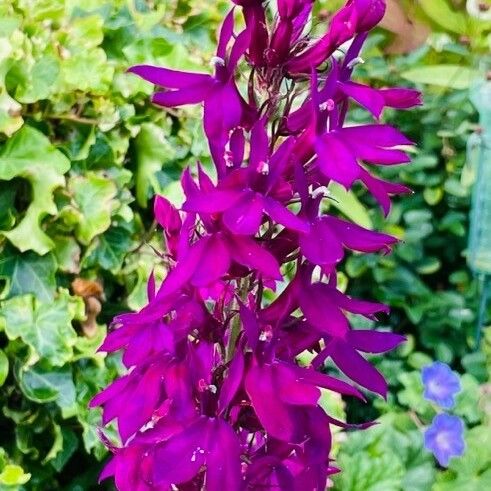
This hybrid is a garden showstopper, blending the fiery spirit of the wild Cardinal Flower with the cool resilience of the Great Blue Lobelia. Often called the "Hybrid Cardinal Flower," it is a horticultural masterpiece designed to bring "electric" purples, reds, and pinks to the dampest corners of your yard. It’s the perfect bridge between a wild meadow aesthetic and a manicured perennial border.
🔍 How to Identify
- 🌸 Floral Architecture: The flowers are distinctly "two-lipped," featuring a narrow upper lip and a broader, three-lobed lower lip that serves as a perfect landing pad for visiting insects.
- 🍃 Foliage Tints: Depending on the specific cultivar (like the famous 'Queen Victoria'), the lance-shaped leaves can range from a vibrant forest green to a dramatic, smoky chocolate-burgundy.
- 📏 Stately Stature: It grows in tidy, upright clumps, sending up tall, unbranched stems that can reach up to 3 feet in height, topped with a dense, colorful spike of blooms.
🏡 In Your Garden
- 💧 The "Wet Feet" Rule: Inheriting the DNA of wetland species, this plant is exceptionally thirsty. It thrives in heavy, boggy soil or near pond edges where most other perennials would suffer from root rot.
- 🦋 A Pollinator Magnet: Its tubular flowers are specifically shaped for the long beaks of hummingbirds and the tongues of swallowtail butterflies. If you plant it, they will come.
- ✂️ Short-lived Beauty: This plant puts so much energy into its spectacular bloom that it is often short-lived. To keep it in your garden for years, you should divide the clumps every two or three springs to rejuvenate the root system.
⚠️ Safety & Toxicity
- 🚫 Toxic Status: All members of the Lobelia genus contain an alkaloid known as lobeline. It is considered toxic to humans, dogs, cats, and horses if ingested in significant amounts.
- 🤢 Symptoms: Eating the plant can cause nausea, vomiting, and tremors. It’s best to keep this beauty toward the back of the border, away from curious pets or toddlers who explore with their mouths.
- 🧤 Sap Sensitivity: The milky sap can occasionally cause mild skin irritation for those with sensitive skin. Wearing gloves while pruning or dividing is recommended.
✨ Fun Fact
Despite its toxicity, historical herbalists nicknamed Lobelia "Indian Tobacco" because its leaves were once used in traditional medicine—though modern science warns that the line between a "remedy" and "poison" with this plant is dangerously thin!

Detailed Care Instructions
To grow Lobelia × Speciosa, also known as cardinal flower, follow these steps:
- Climate and location: Cardinal flowers prefer moist, fertile soil and thrive in USDA hardiness zones 2 to 9. Choose a location that receives full sun to partial shade.
- Soil preparation: Prepare the soil by adding organic matter, such as compost or well-rotted manure, to improve drainage and fertility. Cardinal flowers prefer slightly acidic to neutral soil.
- Planting: Start by purchasing cardinal flower plants from a nursery or online. Dig a hole in the prepared soil that is slightly larger than the root ball of the plant. Place the plant in the hole, making sure the crown of the root ball is level with the soil surface. Backfill the hole, gently firming the soil around the plant.
- Watering: Cardinal flowers need regular watering to keep the soil consistently moist. Avoid waterlogging the soil, as it can lead to root rot. Water deeply during dry spells or when rainfall is insufficient.
- Mulching: Apply a layer of organic mulch, such as straw or shredded bark, around the base of the plant to help retain moisture and suppress weed growth.
- Fertilization: Cardinal flowers do not require heavy fertilization. A balanced slow-release fertilizer can be applied in early spring to provide nutrients throughout the growing season.
- Pruning: In late fall or early winter, after the foliage has died back, cut the plant back close to the ground. This will help tidy the plant and encourage fresh growth in the following spring.
- Propagation: Cardinal flowers can be propagated by division. Dig up the clump in early spring or fall, carefully separate the individual plants, and replant them.
- Pests and diseases: Cardinal flowers are generally resistant to pests and diseases. However, they may occasionally face issues such as aphids, slugs, or mildews. Monitor the plants regularly and address any pest or disease problems promptly.
- Overwintering: Cardinal flowers are generally hardy, but in colder climates, it is a good idea to provide a layer of mulch around the base of the plant to protect it from winter frost.
Remember to check the specific care requirements for the particular variety of cardinal flower you are growing, as some cultivars may have slightly different needs.

Place in a bright room that is sun drenched almost all day. Or directly in a south-facing window.

1. Find the plant you wish to water.
2. Ensure that the soil around the plant feels dry to the touch.
3. Fill a watering can with room temperature water.
4. Gently pour the water onto the soil around the base of the plant.
5. Avoid getting water on the foliage of the plant as this can lead to fungal diseases.
6. Continue watering until the soil around the plant is thoroughly damp but not overly saturated.
7. Repeat watering as necessary, ensuring that the soil never completely dries out.
To fertilize this plant, it is recommended to use a balanced, water-soluble fertilizer. Dilute the fertilizer according to the manufacturer's instructions and apply it to the soil around the base of the plant. Avoid getting fertilizer on the leaves or flowers as it may cause damage. Fertilize the plant every two to three weeks during the growing season, from spring to fall. Reduce the frequency of fertilization during the winter months.
Lobelia × Speciosa plant prefers a well-drained soil that is rich in organic matter. It is recommended to use a soil mixture that is blended with sand and perlite to ensure that the soil is loose and airy. The soil should have a slightly acidic to neutral pH between 6.0 and 7.0. Adding compost or peat moss to the soil will help retain moisture and provide necessary nutrients for the plant's growth. It is also important to ensure that the soil is kept moist but not waterlogged, as this can lead to root rot.
To propagate this plant, take stem cuttings from a healthy parent plant. Select a stem that is about 4-6 inches in length, and make a clean cut using sharp, sterile scissors or a pruning knife.
Remove the lower set of leaves, leaving just a few leaves near the top. Dip the base of the stem into rooting hormone powder, and plant it in a well-draining potting mix. Water thoroughly and place the cutting in a bright, but indirect light location.
Monitor the soil moisture levels, and only water the plant when the top inch of soil feels dry to the touch. After a few weeks, roots will start to form at the base of the stem cutting. Once the new plant has established roots and starts to grow new leaves, it can be transplanted into a larger pot or into the ground.








