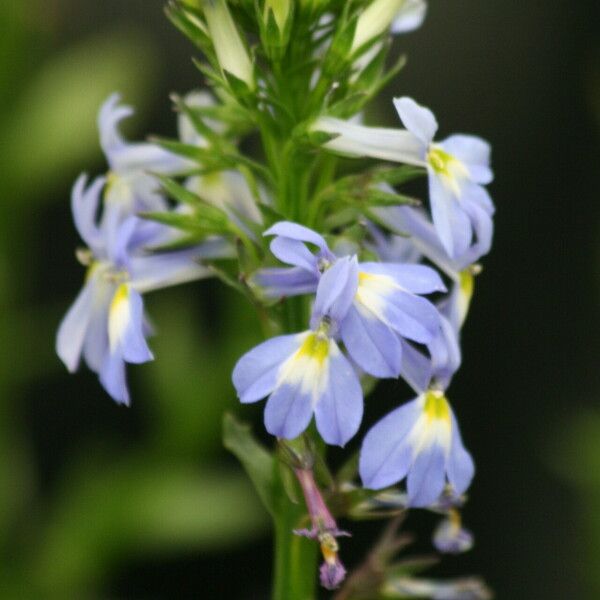
Plant Overview
Often called the Robust Lobelia or Galpin’s Lobelia, this South African native is a coastal powerhouse that defies the "delicate" reputation of its cousins. Unlike the common trailing varieties, Lobelia valida stands tall with a bushy, semi-succulent form and produces some of the most intense blue flowers in the plant kingdom. It is a rugged survivor, originally hailing from the windy, sandy cliffs of the Cape, making it a favorite for gardeners looking for both beauty and grit.
🔍 How to Identify
- 💙 The Blooms: Clusters of vivid, deep-blue to violet flowers, each featuring a distinct white "eye" or throat and five asymmetrical petals.
- 🍃 The Foliage: Unlike thinner lobelias, these leaves are thick, fleshy, and wedge-shaped (oblanceolate) with slightly toothed edges, helping the plant store moisture.
- Standing Tall:** It maintains an upright, mounding habit, typically reaching about 12 to 20 inches in height, rather than cascading over pots.
🏡 In Your Garden
- 🌊 Coastal Specialist: This plant is "salt-tolerant," meaning it won't shrivel up when hit by sea breezes or salty air, making it ideal for seaside window boxes.
- ☀️ Sun & Drainage: While it loves the sun, its "robust" nature comes from its ability to handle poor, sandy soils. The most common mistake is overwatering; it requires excellent drainage to prevent its fleshy stems from rotting.
- 🦋 Pollinator Magnet: The high-contrast white centers of the blue flowers act as "landing strips" for bees and butterflies, ensuring your garden stays buzzing with life.
⚠️ Safety & Toxicity
- 🐾 Moderate Toxicity: Like most members of the Lobelia family, it contains an alkaloid called lobeline.
- 🚫 Keep Away: It is considered toxic to dogs, cats, and horses if ingested in large quantities, potentially causing vomiting or lethargy. It’s best to keep this beauty out of reach of curious nibblers.
- 🧤 Skin Sensitivity: The milky sap can occasionally cause mild skin irritation for those with sensitive skin; wearing gloves during heavy pruning is a good precaution.
✨ Fun Fact
In its native South African "fynbos" habitat, Lobelia valida has adapted to be a "resprouter." This means if a coastal fire or extreme weather knocks it back, it can often grow back from its woody base, living up to its name "valida," which means "strong" or "powerful" in Latin!

Detailed Care Instructions
To grow Lobelia Valida plant, follow these steps:
- Choose a suitable location: Lobelia Valida prefers partial shade to full sun. Ensure that the location has well-drained soil.
- Prepare the soil: Loosen the soil in the planting area using a garden fork or tiller. Remove any weeds or large rocks from the area. Lobelia Valida prefers slightly acidic soil with a pH of 5.5 to 6.5. If your soil is alkaline, you may need to amend it with peat moss or another acidic compound.
- Start seeds indoors: Lobelia Valida can be grown from seeds. Start seeds indoors about 8-10 weeks before the last frost date in your area. Plant the seeds in seed-starting trays or small containers filled with a well-draining seed starting mix. Sow the seeds on the soil surface and lightly cover them with a thin layer of soil. Keep the soil consistently moist and provide bright, indirect light. Transplant the seedlings outdoors once they have developed a few sets of leaves.
- Transplant outdoors: When the danger of frost has passed and the seedlings have grown stronger, transplant them outdoors. Dig a hole slightly larger than the root ball and place the seedling in the hole, making sure the top of the root ball is level with or slightly above the soil surface. Fill in the hole with soil and gently firm it around the plant. Space multiple plants about 6-12 inches apart.
- Watering and care: Lobelia Valida requires regular watering to maintain soil moisture. Water the plants thoroughly, ensuring the water reaches the root zone. Avoid overwatering, as it can lead to root rot. Mulching the soil around the plants can help retain moisture.
- Fertilization: Apply a balanced, slow-release fertilizer to the plants in early spring. Follow the package instructions for proper dosage and application. Avoid over-fertilizing, as it can result in excessive foliage growth at the expense of flower production.
- Pruning: Pinching back the tips of Lobelia Valida plants can promote bushier growth and more flowers. Pinch off the top inch or two of each stem once the plants have reached a height of 6 inches.
- Pests and diseases: Lobelia Valida is generally resistant to pests and diseases. However, keep an eye out for aphids, slugs, and snails. Use organic pest control methods or insecticidal soap if necessary.
- Propagation: Lobelia Valida can also be propagated by division. Divide mature plants in spring or fall by carefully separating the root ball into sections, ensuring each section has roots and stems attached.
By following these steps, you can successfully grow Lobelia Valida plant in your garden.

Place in a bright room that is sun drenched almost all day. Or directly in a south-facing window.

When watering this plant, it is important to ensure that the soil is consistently damp but not waterlogged. The frequency of watering will depend on factors such as the climate, sunlight, and humidity. One should monitor the moisture levels in the soil regularly and adjust the watering accordingly. Over-watering can cause the roots to rot, while under-watering can lead to wilting and stunted growth. It is also important to avoid wetting the leaves and flowers as this can promote the development of fungal diseases. Instead, water the base of the plant, preferably in the morning or evening when the temperature is cooler. In times of high heat or dry weather, misting the plant with a spray bottle can help to increase humidity. Overall, consistent and appropriate watering is crucial for the health and vitality of this beautiful plant.
To fertilize the Lobelia Valida plant, it is recommended to follow the following instructions:
- Choose a balanced, water-soluble fertilizer with equal amounts of nitrogen, phosphorous, and potassium.
- Dilute the fertilizer according to the instructions provided on the packaging.
- Water the plant thoroughly before applying the fertilizer to ensure the soil is moist.
- Use a watering can or sprayer to evenly distribute the diluted fertilizer onto the soil around the base of the plant. Avoid getting the fertilizer on the foliage.
- Fertilize the plant once every two to four weeks during the active growing season, which is typically from spring to early fall.
- Be cautious not to over-fertilize as this may lead to nutrient burn or other issues.
- Monitor the plant for signs of nutrient deficiencies or excesses, such as yellowing leaves or stunted growth. Adjust the fertilization frequency or strength accordingly.
- During the dormant period or winter months, suspend fertilization as the plant's growth slows down.
- Regularly water the Lobelia Valida plant, ensuring the soil remains evenly moist but not waterlogged. Adequate hydration will also help distribute nutrients from the fertilizer effectively.
- Lastly, consider using organic fertilizers or supplementing with compost to provide a natural source of nutrients for the plant.
Lobelia Valida prefers a soil that is well-drained, moderately fertile, and rich in organic matter. A mix of loamy soil, sand, and peat moss is suitable for this plant. It is important to avoid using heavy clay soils as they are likely to retain too much water, leading to root rot. The pH of the soil should be slightly acidic to neutral, between 5.5 and 6.5. Before planting, it’s recommended to amend the soil with compost or well-rotted animal manure to help improve the soil structure. Additionally, regular fertilization with a balanced fertilizer can help maintain the plant's overall health and vigor.
Propagation of Lobelia valida can be carried out through various methods such as division, seeds, or cuttings. Here's a detailed description of each method:
- Division:
- Select a mature and healthy Lobelia valida plant.
- Carefully dig around the base of the plant to expose the root system.
- Gently separate the plant into smaller clumps or divisions, ensuring that each division has an ample amount of roots.
- Transplant the divisions into individual pots or directly into the desired growing area. Use a high-quality, well-draining potting mix.
- Water the divisions thoroughly and place them in a location with indirect sunlight until they establish a strong root system.
- Seeds:
- Harvest seeds from mature Lobelia valida plants. Collect the seeds when the seed pods turn brown and start to split open.
- Fill a seed tray or small pots with a well-draining potting mix.
- Sprinkle the Lobelia valida seeds evenly across the surface of the soil, and lightly press them into the soil. Avoid burying them too deeply.
- Cover the tray or pots with a transparent plastic lid or wrap it in plastic to create a greenhouse-like environment, which helps to maintain moisture and warmth.
- Place the tray or pots in a warm area with indirect sunlight, ensuring that the soil remains consistently moist.
- After the seeds germinate and develop into seedlings with a few sets of true leaves, transplant them into larger pots or their designated growing area.
- Cuttings:
- Select healthy Lobelia valida stems that are free from diseases and pests.
- Using a clean and sharp pair of scissors or garden shears, take 3-4 inch cuttings from the tip of the stem, just below a leaf node.
- Remove any leaves from the lower half of the cutting to expose the node.
- Optionally, you can dip the cut end of the stem in a rooting hormone to enhance root development.
- Fill a small pot with a well-draining potting mix and create planting holes using a pencil or stick.
- Insert the cuttings into the planting holes, gently firming the soil around them.
- Water the cuttings thoroughly and place the pot in a warm and bright area, away from direct sunlight.
- Enclose the pot within a plastic bag or use a propagator cover to create a humid environment.
- Mist the cuttings regularly to maintain moisture levels until they root, which usually takes a few weeks.
- Once the roots develop and new growth appears, transplant the cuttings into individual pots or their intended growing area, following the appropriate care guidelines for Lobelia valida.
Remember to provide proper care and suitable growing conditions to ensure the successful propagation of Lobelia valida plants.
Common pests of the galjoen lobelia include Spider mites, larvae. Make a habit of checking your galjoen lobelia frequently for pests so that any infestations can be caught and managed early.








