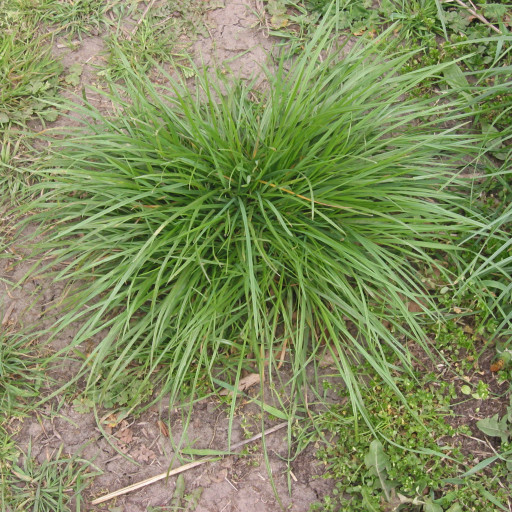
Plant Overview
Commonly known as the "Backbone of Lawns," Perennial Ryegrass is the marathon runner of the grass world. Famous for its rapid germination and deep green luster, it originated in Europe but has become the global standard for prestigious sports turfs and lush home gardens. If you have ever admired a perfectly striped soccer pitch or the emerald courts of Wimbledon, you were likely looking at this resilient and fast-growing survivor.
🔍 How to Identify
- 🍃 Glossy Underside: The most striking feature is the leaf blade's underside, which is remarkably smooth, shiny, and reflects light when the wind blows.
- 🌱 Reddish Base: If you pull back the foliage, the stems at the very base of the plant (near the soil) often show a distinct reddish or purple tint.
- 🌾 Stiff Flower Spikes: Its seed heads are long, slender spikes where the little flower clusters (spikelets) are attached directly to the stem in a flat, alternating "zig-zag" pattern.
🏡 In Your Garden
- 👟 High-Traffic Hero: This grass is incredibly "traffic-tolerant." It recovers quickly from trampling and heavy mowing, making it the primary choice for families with energetic dogs or backyard athletes.
- 🍴 Heavy Feeder: Because it grows so fast, it has a high "appetite." It requires regular nitrogen fertilization and consistent moisture to maintain its deep green color and prevent it from thinning out.
⚠️ Safety & Toxicity
- 🐾 Pet & Child Safe: Lolium perenne is non-toxic and perfectly safe for kids and pets to play on. It is a standard forage grass for many animals.
- 🤧 Allergy Alert: While the plant itself is safe, it is a high-pollen producer. If allowed to grow long and flower, it can be a significant trigger for those who suffer from seasonal hay fever.
✨ Fun Fact
Perennial Ryegrass is the exclusive grass used for the courts at the Wimbledon Tennis Championships. The groundskeepers maintain it at a precise height of exactly 8mm to ensure the fastest and most consistent ball bounce in the world!

Detailed Care Instructions
| Humidity | Normal |
| Lighting | Full Sun |
| Difficulty | Medium |
| Hardiness Zones | 5 - 7 |
To grow Lolium perenne, also known as perennial ryegrass, you can follow these steps:
- Choose the right location: Perennial ryegrass prefers full sun but can tolerate partial shade. Ensure the soil is well-draining and reasonably fertile.
- Prepare the soil: Remove any weeds, rocks, or debris from the planting area. Loosen the soil using a tiller or garden fork to a depth of about 6-8 inches.
- Seed selection: Purchase high-quality Lolium perenne seeds from a reputable supplier. Consider selecting a variety that suits your needs, such as one that is drought-tolerant or disease-resistant.
- Seed sowing: Spread the seeds evenly over the prepared soil. If sowing a large area, you can use a seed spreader for a more uniform distribution. Lightly rake the seeds into the soil, ensuring good seed-to-soil contact.
- Watering: Water the newly sown area gently but thoroughly. Keep the soil consistently moist during the germination period, which usually takes about 7-14 days.
- Fertilizer application: After the seedlings have emerged, apply a slow-release fertilizer according to the package instructions. This will provide the necessary nutrients for the grass to grow and establish.
- Mowing and maintenance: Once the grass reaches a height of 2-3 inches, you can start mowing it to encourage denser growth. Keep the grass blades around 1.5-2 inches tall for optimal health.
- Watering and watering: Provide regular watering, particularly during dry spells, to maintain healthy growth. Water deeply, allowing the root system to absorb moisture.
- Weed control: Keep an eye out for weeds and promptly remove them. Avoid using herbicides unless necessary, as perennial ryegrass can be sensitive to certain chemicals.
- Disease and pest management: Watch for common lawn diseases and pests, such as brown patch or grubs. Follow best practices for prevention and address issues promptly if they arise.
- Regular maintenance: Continue regular mowing, watering, and fertilizing as needed to keep the Lolium perenne plant healthy and vigorous.
By following these steps, you should be able to successfully grow Lolium perenne and enjoy a lush and vibrant lawn or pasture.

Place in a bright room that is sun drenched almost all day. Or directly in a south-facing window.

The plant in question belongs to a grass species and it requires regular watering during the growing season. The amount of water required depends on various factors such as the stage of growth, soil type, and weather conditions. However, it is important to avoid over-watering as this can lead to root rot and other diseases. To ensure that the plant is getting enough water, it is recommended to water deeply and infrequently rather than giving it small amounts of water frequently. Additionally, it is important to water in the morning or evening when the sun is not too intense to avoid evaporation.
To fertilize this plant, apply a balanced fertilizer with equal amounts of nitrogen, phosphorus, and potassium at the beginning of the growing season. Repeat fertilizer application every 6-8 weeks during the growing season. Avoid over-fertilization as it can lead to excessive growth at the expense of plant health. Water the plant thoroughly after fertilization to prevent nutrient burn.
For optimal growth and health, it is recommended to use a well-draining, fertile soil with a pH range of 6.0-7.5. The soil should be enriched with organic matter such as compost or aged manure to provide essential nutrients for the plant's development. It is important to avoid compacted soils as this can hinder root growth and nutrient uptake. Additionally, regular soil testing can help maintain appropriate nutrient levels and pH balance.
To propagate this plant, first, choose a healthy individual and observe its growth and development. Identify the suitable time for propagation and select the appropriate method, such as seed propagation, division, or stem cutting.
For seed propagation, collect ripe seeds from the plant and sow them in well-prepared soil. Keep the soil moist and provide adequate sunlight and temperature to facilitate germination.
For division, dig up the plant during its dormant period and separate the clumps into smaller sections. Make sure each section has enough roots and shoots for planting.
For stem cutting, take a healthy stem cutting from the plant, ideally with a few leaves attached. Remove the lower leaves and cut the remaining stem at an angle before placing it in well-draining soil. Keep the soil moist and cover the cutting with a plastic bag to maintain humidity.
Carefully monitor the propagation method chosen and provide the necessary care and attention to ensure a successful outcome.
Common pests of the perennial ryegrass include Thrips. Make a habit of checking your perennial ryegrass frequently for pests so that any infestations can be caught and managed early.








