Plant Overview
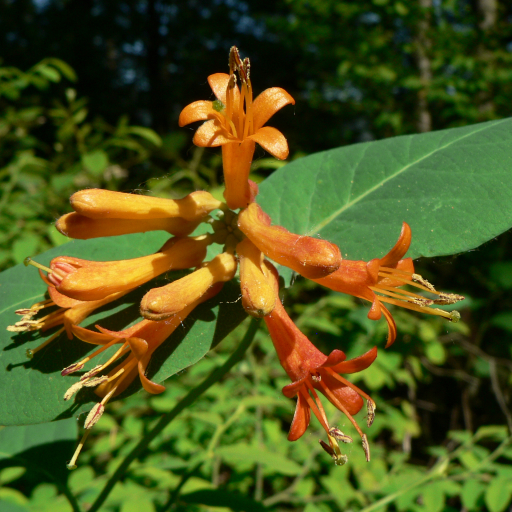
Known affectionately as the Western Trumpet Honeysuckle, Lonicera ciliosa is a native showstopper of the Pacific Northwest. This woody vine is famous for its vibrant clusters of orange blossoms that look like tiny torches lighting up the forest edge. It is a favorite among local wildlife, acting as a primary "gas station" for migrating hummingbirds.
🔍 How to Identify
- 🎺 The Flowers: Clusters of long, trumpet-shaped blooms that range from bright orange to a reddish-yellow. They lack the intense perfume of some garden honeysuckles but make up for it with high nectar volume.
- 💿 Fused Leaves: A key identifying trait is the uppermost pair of leaves, which are fused together to form a single, circular disk (or "collar") that the flower stalk grows right through.
- 🌿 Growth Habit: This is a twining vine that doesn't use tendrils; instead, the woody stems wrap themselves firmly around trellises, fences, or the branches of neighboring trees.
🏡 In Your Garden
- 🧗 Support Systems: Because it is a vigorous climber, it needs a sturdy structure to scramble over. It is perfect for "wilder" areas of the garden where it can mimic its natural habitat of climbing through Douglas firs or Maples.
- 💧 Root Protection: While the vine loves to reach for the sun to produce the best flowers, it prefers its "feet" (the root system) to be kept cool, moist, and shaded by mulch or smaller companion plants.
- 🦋 Wildlife Magnet: If you plant this, expect visitors. It is specifically evolved to be pollinated by hummingbirds and large butterflies, making it an essential pick for a pollinator-friendly landscape.
⚠️ Safety & Toxicity
- 🚫 Status: Mildly Toxic.
- 🤢 Details: While the nectar is sweet, the translucent red berries that appear in late summer are not for snacking. Ingesting the berries can cause stomach upset, nausea, and vomiting in humans and pets. Always supervise small children around the fruit.
✨ Fun Fact
The specific epithet ciliosa refers to the "cilia" or tiny hairs found along the margins of the leaves. If you look very closely at a young leaf, you’ll see a delicate, fringe-like border that helps distinguish it from other local vines!

Detailed Care Instructions
To grow Lonicera ciliosa (Orange Honeysuckle) plant, follow these steps:
- Obtain the seeds or purchase seedlings from a reputable nursery. You can also collect seeds from mature fruits of existing plants.
- Choose a suitable location: Lonicera ciliosa prefers partial shade to full sun and well-draining soil. It is important to select a spot that offers good air circulation to prevent fungal diseases.
- Prepare the soil: Loosen the soil and remove any weeds, rocks, or debris that may hinder root development. Mix in organic matter such as compost to improve soil fertility and drainage.
- Plant the seeds or seedlings: If using seeds, sow them in the spring or fall at a depth of ¼ inch (6 mm). If using seedlings, dig a hole slightly larger than the root ball and place the plant in the hole at the same depth it was growing in its container.
- Water the plant: After planting, water the plant thoroughly and maintain consistent moisture during the growing season. However, avoid overwatering, as this can lead to root rot.
- Mulch the soil: Apply a layer of organic mulch around the base of the plant to help retain moisture, suppress weed growth, and regulate soil temperature.
- Prune when necessary: Lonicera ciliosa benefits from regular pruning to promote shape, airflow, and vigor. Prune the plant in late winter or early spring before new growth emerges.
- Fertilize: Apply a balanced, organic fertilizer in the spring to provide nutrients for healthy growth. Follow the manufacturer's instructions for proper application.
- Provide support: Lonicera ciliosa is a twining vine and benefits from a trellis, arbor, or other support structure. Install the support system near the plant to offer stability and encourage upward growth.
- Monitor for pests and diseases: Inspect the plant regularly for signs of pest infestation or disease (such as aphids, powdery mildew, or leaf spot). Treat any issues promptly with appropriate organic pesticides or remedies.
- Regularly monitor and water the plant: Ensure the plant receives adequate water and monitor its growth and health. Adjust watering frequency and quantity as needed, especially during hot and dry periods.
By following these steps, you should be able to successfully grow the Lonicera ciliosa plant.

Place in a bright room that is sun drenched almost all day. Or directly in a south-facing window.

To water this plant, it is important to first examine the soil moisture level. Stick your finger into the soil about an inch deep and feel if it is dry or moist. If it is dry, it is time to water the plant.
When watering, make sure to water the soil directly at the base of the plant and avoid getting water on the leaves. Water slowly and deeply to ensure that the roots are properly hydrated.
In addition, it is important to not let the soil become completely dry as this can harm the plant. However, it is equally important to not over-water the plant as too much moisture can lead to root rot.
Overall, keep an eye on the soil moisture and water as needed, ensuring that the soil is consistently moist but not overly saturated.
To fertilize this plant, apply a balanced, all-purpose fertilizer in early spring and again in mid-summer. Follow the package instructions for the recommended amount of fertilizer to apply per square foot of soil. It's best to sprinkle the fertilizer evenly over the soil around the base of the plant and then water it in thoroughly. Avoid applying fertilizer directly to the leaves or stems of the plant, as this may cause burning or damage.
Lonicera ciliosa is a perennial plant that grows best in well-draining, fertile soil that has a pH of 5.0 to 7.5. The soil should be rich in organic matter and should be amended with compost or aged manure. The plant prefers loamy or sandy soils and does not tolerate heavy clay soils. The soil should be moist but not waterlogged, and the plant should be grown in full sun to partial shade. The soil should be kept consistently moist during the growing season, but the plant should be allowed to dry out slightly between waterings to prevent root rot. The use of a slow-release fertilizer is recommended to ensure adequate nutrition throughout the growing season.
Lonicera ciliosa can be propagated through several methods including stem cuttings and layering.
For stem cuttings, select a healthy stem from the parent plant that is not flowering and cut a 6-8 inch section just below a node. Remove the lower leaves from the cutting and dip the cut end in rooting hormone. Place the cutting in a pot with well-draining soil and keep it moist in a bright, indirect light location. After a few weeks, roots should begin to grow from the base of the cutting. Once the roots have established, the new plant can be transplanted to its final location.
For layering, choose a low-growing branch and gently remove a section of the bark and remove any leaves from the section. Place a small amount of rooting hormone on the exposed area and then bury the section of the branch in the soil. Keep the soil moist and in a few months, the buried section should have developed roots. Cut the section off from the parent plant and transplant it to its final location.
Propagation can also be done through division, where the parent plant is divided into smaller sections and planted separately. However, this method may not be suitable for Lonicera ciliosa as it tends to have a woody stembase that can be difficult to divide.
Common pests of the orange honeysuckle include Spider mites, aphids, larvae. Make a habit of checking your orange honeysuckle frequently for pests so that any infestations can be caught and managed early.








